
PG 64-22 Bitumen: Properties, Specifications, Uses, and Buying Guide

PG 64-22 Bitumen is a performance-graded asphalt binder designed for pavements that must resist both high summer temperatures and moderate low-temperature cracking. In simple terms, it is engineered to perform at high pavement temperatures up to 64°C and low pavement temperatures down to -22°C under the Superpave grading system. That makes it a practical choice for many highways, urban roads, parking lots, and rehabilitation projects where both rutting resistance and thermal cracking resistance matter.
Unlike older penetration-based grades that focus mainly on basic physical properties, PG grading is based on expected field performance. This is one of the reasons many engineers, contractors, and buyers now compare PG binders alongside conventional grades such as Bitumen 60/70, Bitumen 80/100, and Bitumen 40/50 when selecting the right binder for climate and traffic conditions. If your goal is to choose a binder that matches actual pavement temperature exposure rather than only penetration range, PG 64-22 is an important grade to understand.
What Is Performance Grade or PG 64-22 Bitumen?
PG 64-22 Bitumen is a paving binder classified under the Performance Grade system developed through Superpave methodology. The grade name is directly related to pavement service temperatures:
- 64 = the average 7-day maximum pavement design temperature in °C
- -22 = the minimum pavement design temperature in °C
This means PG 64-22 is selected for locations where pavement surfaces can experience summer heat around 64°C while also needing to remain flexible enough to resist cracking at winter temperatures near -22°C.
This grading approach is more performance-oriented than many traditional systems discussed in guides like Introduction to Types of Bitumen and Their Applications. It helps engineers match asphalt binder behavior to local climate and traffic demand, not just to a lab penetration result.
Why the Performance Grade System Matters
The PG system was developed to improve binder selection by connecting laboratory properties to real pavement performance. Instead of asking only whether a binder is hard or soft, the PG system asks whether it can:
- resist rutting at high service temperatures
- resist fatigue damage at intermediate temperatures
- resist thermal cracking at low temperatures
- maintain workable viscosity during mixing and compaction
This is why PG grades are widely used in advanced pavement design. They complement the broader technical understanding found in Most Commonly Used Bitumen Grades and offer a more climate-specific selection method than conventional paving-grade systems.
What Does “64-22” Mean in Practical Terms?
For non-technical readers, PG 64-22 can be understood as a binder for moderate-to-warm climates with meaningful winter cold exposure. It is not the softest or hardest PG grade, but a balanced binder that performs well across a broad range of road applications.
In practical pavement engineering terms, PG 64-22 is commonly chosen when the project requires:
- good rutting resistance in warm weather
- adequate flexibility against cold-weather cracking
- suitability for medium to high traffic conditions
- dependable performance in asphalt mixtures used for roads, highways, and overlays
When climate is hotter or traffic loads are more severe, an engineer may shift toward a grade such as PG 70-10 or a polymer-enhanced binder. When low-temperature flexibility is more critical, a grade such as PG 58-28 may be more suitable.

PG 64-22 vs Other Common PG Grades
The table below compares PG 64-22 with several commonly referenced PG grades. This comparison helps readers understand not only the climate range, but also how the grade fits into binder selection decisions.
PG 64-22 Comparison with Other Common PG Grades
| PG Grade | High Temp | Low Temp | Climate Suitability | Rutting Resis. | Cracking Resis. | Mod. Need |
|---|---|---|---|---|---|---|
| PG 58-28 | 58°C | -28°C | Cooler / Cold Winters | Moderate | Very Good | Unmodified |
| PG 64-22 | 64°C | -22°C | Moderate / Cold Winters | Good | Good | Usually Unmod. |
| PG 64-10 | 64°C | -10°C | Warm / Mild Winters | Good | Limited | Unmodified |
| PG 70-10 | 70°C | -10°C | Hot / Heavy Traffic | Very Good | Mod. to Lim. | Often Modified |
| PG 76-22 | 76°C | -22°C | Hot / Heavy Demand | Excellent | Good | Commonly Mod. |
Key takeaway from the comparison
PG 64-22 often serves as a middle-ground solution. It offers stronger high-temperature performance than colder-climate grades like PG 58-28, while offering much better low-temperature cracking resistance than PG 64-10. For buyers who are still comparing PG and penetration grades, this is also where resources such as Comparison of 40/50 and 60/70 Bitumen and Comparison of Bitumen 60/70 and 80/100 become useful.
PG 64-22 Bitumen Technical Specifications
Below is a practical specification table based on the standard logic of AASHTO M 320 for PG 64-22. Actual supplier documentation may vary slightly in formatting, but the core performance requirements follow the same framework.
PG 64-22 Bitumen Analysis Specification
| Property | Unit | Requirement / Limit | Test Method |
|---|---|---|---|
| Flash Point | °C | Min 230 | AASHTO T48 |
| Rotational Viscosity at 135°C | Pa·s | Max 3.0 | AASHTO T316 |
| Dynamic Shear, G*/sin delta on Original Binder at 64°C | kPa | Min 1.0 | AASHTO T315 |
| Mass Change after RTFOT | % | Max 1.0 | AASHTO T240 |
| Dynamic Shear, G*/sin delta after RTFOT at 64°C | kPa | Min 2.2 | AASHTO T315 |
| PAV Aging Temperature | °C | 100 | AASHTO R28 /
related procedure |
| Dynamic Shear, G*·sin delta after PAV at 25°C | kPa | Max 5000 | AASHTO T315 |
| BBR Creep Stiffness S at -12°C, 60 s | MPa | Max 300 | AASHTO T313 |
| BBR m-value at -12°C, 60 s | – | Min 0.300 | AASHTO T313 |
| Direct Tension Failure Strain at low temperature | % | As applicable if required by specification pathway | AASHTO T314 |
A buyer reviewing a supplier offer should always request a recent test report or Sample Bitumen Certificate of Analysis before confirming a purchase, especially for export cargoes and large-volume supply contracts.
How to Read These Test Results
For many readers, the table above is useful only if the terms are explained clearly. Here is what the most important tests mean:
Rotational Viscosity at 135°C
This indicates how workable the binder is during pumping, mixing, and handling. If viscosity is too high, field operations become more difficult and energy demand increases.
Dynamic Shear Rheometer (DSR)
DSR measures the binder’s rheological behavior at higher and intermediate temperatures. For PG 64-22, it helps confirm rutting resistance before aging and after short-term aging.
Rolling Thin Film Oven Test (RTFOT)
RTFOT simulates short-term aging during mixing and placement. This is important because asphalt binder changes during production and paving.
Pressure Aging Vessel (PAV)
PAV simulates longer-term in-service aging. It helps evaluate how the binder may behave after years of pavement service.
Bending Beam Rheometer (BBR)
BBR evaluates low-temperature stiffness and relaxation ability. These results are essential for understanding whether the binder can resist cracking in cold conditions.
For broader evaluation methods, readers may also want to review Bitumen Quality Test and Differences Between High-Quality and Low-Quality Bitumen.

Is PG 64-22 Modified or Unmodified?
PG 64-22 is often supplied as an unmodified binder, but this is not an absolute rule. The final formulation depends on the producer, local standard, climate severity, and project performance targets.
A common field rule is the so-called Rule of 90 or Rule of 92. In simplified industry practice:
- if the sum of the high and low temperature grades is relatively low, the binder is often unmodified
- as the temperature span becomes wider, modification becomes more likely
- grades with very demanding performance windows often require polymers or other modifiers
For example:
- PG 64-10 = 74
- PG 64-22 = 86
- PG 76-22 = 98
That is one reason PG 76-22 is much more often associated with Polymer Modified Bitumen, while PG 64-22 may or may not be modified depending on the source and project requirements.
Important note: this rule is a practical shortcut, not a replacement for actual specification review.
Recommended Working Temperatures for PG 64-22
Working temperatures can vary by refinery source, additive package, and contractor practice, but the ranges below are commonly used as general guidance.
Table 3: Typical Working Temperature Guidance for PG 64-22
| Operation | Typical Temperature Range |
|---|---|
| Storage / Handling Temperature | Follow supplier recommendation; avoid overheating |
| Mixing Temperature | 150–160°C |
| Paving / Working Temperature | 145–160°C |
| Compaction Temperature | 145–155°C |
| Maximum Heating Temperature | Usually around 170°C upper limit, unless supplier specifies otherwise |
Overheating can accelerate oxidation, reduce binder quality, and increase handling risks. This is especially relevant when discussing Cold and Hot Bitumen and when managing storage duration for projects with extended timelines. Long holding periods should also be reviewed in relation to Bitumen Shelf Life.
Where Is PG 64-22 Bitumen Used?
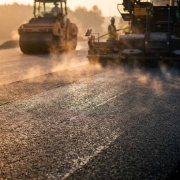
PG 64-22 is widely used in paving and rehabilitation projects because it balances heat resistance with reasonable low-temperature flexibility.
Common applications
- highways and expressways
- urban roads and arterial streets
- parking lots and commercial access roads
- bridge approaches and some bridge deck systems
- airport service areas and selected runway or taxiway applications
- overlay and pavement rehabilitation projects
This makes it one of the more versatile binders in the broader family of Bitumen Applications. Compared with highly specialized binders, PG 64-22 is often selected when the climate is neither extremely hot nor extremely cold, but still requires reliable multi-season performance.
Why it performs well in these applications
- Resists rutting under warm-weather traffic
- Maintains flexibility better than warmer-only grades
- Supports balanced pavement design in mixed seasonal conditions
- Fits many standard hot mix asphalt applications
When another grade may be better
Another grade may be preferable when:
- the climate is significantly colder: PG 58-28 may be better
- the project faces extremely high heat or traffic: PG 70-10 or PG 76-22 may be better
- special performance properties are needed, such as high elasticity or improved fatigue resistance
PG 64-22 vs Penetration Grades
Many international buyers still work heavily with penetration grades, especially in export markets. That is why it helps to position PG 64-22 against familiar products like Bitumen 60/70, Bitumen 80/100, and Bitumen 40/50.
The key difference is this:
- penetration grades classify binder mainly by hardness at standard test conditions
- PG grades classify binder by expected field temperature performance
This does not mean one system is universally better for every context; it means the systems are designed around different decision frameworks. Traditional grades remain very important in many countries, while PG binders are particularly useful where climate-based performance selection is a priority.
For readers exploring the full family of products, related materials such as Blown Bitumen, Bitumen Emulsion, Cutback Bitumen, Oxidized Bitumen 85/25, and Oxidized Bitumen 90/15 serve very different functions from paving-grade PG binders.

Packaging Options for PG 64-22 Bitumen
Packaging depends on shipment size, destination, heating infrastructure, and buyer preference. The most common options include:
- Steel drums: widely used for export flexibility and smaller shipment segmentation
- Jumbo bags: practical in some markets where handling systems support bagged bitumen
- Bulk cargo: efficient for large-volume projects with storage and heating facilities
- Bitutainers: useful for controlled international transport and easier unloading in some supply chains
The right format depends on project scale, delivery route, and unloading equipment. Buyers comparing logistics strategies should also review Types of Bitumen Packaging and shipping risks such as Causes of Leakage in Export Bitumen Drums.
Storage, Transport, and Handling Considerations
PG 64-22 should be handled as a temperature-sensitive industrial material. Best practices include:
- avoid repeated overheating
- maintain clean storage tanks and transfer lines
- protect material from contamination
- confirm unloading readiness before shipment arrival
- align temperature management with supplier recommendations
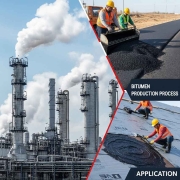
For international buyers, transport reliability also depends on refinery consistency, documentation quality, and export packaging integrity. A basic understanding of Bitumen Production Process, Bitumen Refining, and the wider category of Petroleum Products helps procurement teams make better sourcing decisions.
Market-oriented buyers may also compare origin advantages by reviewing Top Bitumen Exporting Countries and Top Bitumen Producing Countries.
Quality Control Checklist Before Buying PG 64-22
Before purchase, buyers should verify more than just the grade name. A practical checklist includes:
- Confirm the specification basis, ideally aligned with AASHTO M 320
- Request a recent certificate of analysis
- Check viscosity, flash point, DSR, RTFOT, and BBR values
- Confirm packaging type and net weight
- Review storage and heating recommendations
- Verify shipment condition and loading date
- Check whether the binder is modified or unmodified
- Confirm suitability for the project climate and traffic category
If the project team is still at the selection stage, resources such as Simple Guide to Choosing the Right Bitumen can support the decision process.
Who Should Use PG 64-22 Bitumen?
PG 64-22 is a strong candidate for:
- road agencies working in moderate-to-warm climates with winter cold exposure
- contractors seeking a balanced paving binder for general roadworks
- procurement teams sourcing a versatile grade for road and municipal projects
- consultants evaluating binders for mixed traffic and seasonal performance
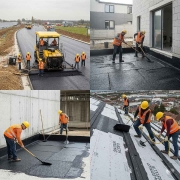
It is usually less suitable where roofs, waterproofing layers, or non-paving industrial uses are the main concern. For those cases, materials discussed in Best Bitumen for Roof Insulation may be more relevant than a paving-grade PG binder.

Common Causes of Pavement Problems Despite Using the Right Grade
Even a correct binder grade does not guarantee pavement success if the rest of the system is weak. Failures may still happen due to:
- poor aggregate quality
- weak mix design
- wrong compaction temperature
- moisture damage
- insufficient drainage
- overloaded traffic
- poor workmanship
That is why pavement distress should not automatically be blamed on binder grade alone. In many cases, the real issue is explained better by construction defects or structural design problems, similar to those discussed in Causes of Asphalt Cracking.
FAQ About PG 64-22 Bitumen
Is PG 64-22 suitable for hot climates?
Yes, it is suitable for moderate to warm climates, especially where the high pavement design temperature is around 64°C. For hotter and heavier-duty conditions, higher high-temperature grades may be preferred.
Is PG 64-22 the same as 60/70 bitumen?
No. They belong to different grading systems. PG 64-22 is performance-based, while 60/70 is penetration-based.
Does PG 64-22 always contain polymer?
No. It is often unmodified, but this depends on the producer and performance requirements.
What should buyers request from a supplier?
Buyers should request a specification sheet, certificate of analysis, packaging details, and confirmation of applicable test standards.
Is PG 64-22 used only in highways?
No. It is also used in urban roads, parking lots, overlays, and other paving applications.
Final Thoughts: Is PG 64-22 the Right Choice?
PG 64-22 Bitumen is one of the most practical performance grades for pavements that need balanced protection against rutting and low-temperature cracking. Its value lies in how it connects binder selection to real service conditions rather than relying only on traditional hardness-based grading.
For engineers, it offers a reliable middle-range performance option. For buyers, it offers a grade that is easier to evaluate when supported by proper testing and documentation. For general readers, it is a useful example of how modern pavement materials are selected based on performance, not just appearance or basic lab numbers.
If your project is in a moderate-to-warm region with meaningful winter exposure, PG 64-22 is often a smart and technically defensible choice. If you want to continue exploring related materials, comparative grading systems, and market insights, start with Bitumen Articles and expand into topics such as Global Bitumen Price Forecast for procurement planning.






Leave a Reply
Want to join the discussion?Feel free to contribute!