
Bitumen Uses and Applications: Beyond the Horizon of Road Construction
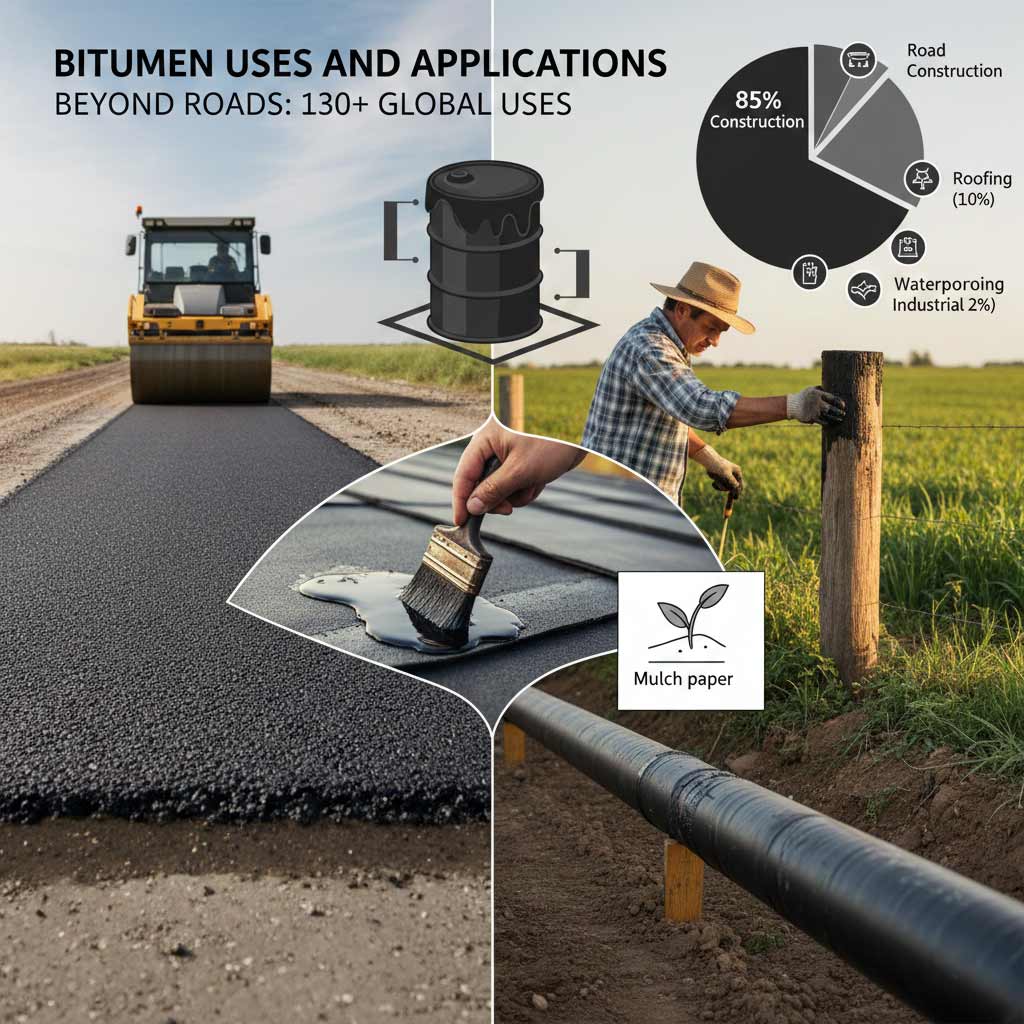
Bitumen is not just for roads; it is a versatile engineering marvel used in everything from high-tech waterproofing membranes to the nuclear industry and specialized agriculture. While most recognize it as the black binder in asphalt, its unique viscoelastic properties make it indispensable across 7 major industrial fields and more than 130 specific applications.
In this comprehensive guide, we explore the global landscape of bitumen applications, its consumption statistics, and why it remains the backbone of modern pavement technology.
Global Bitumen Consumption by Application
To understand the importance of this material, we must look at where the world’s supply goes. Global demand is driven by infrastructure, but industrial niches are growing rapidly.
| Application Field | Global Consumption (%) | Primary Bitumen Grades Used |
| Road Construction & Paving | 85% | Penetration & Viscosity Grades |
| Roofing & Residential | 10% | Oxidized (Blown) Bitumen |
| Waterproofing & Sealing | 3% | Cutback Bitumen & Emulsions |
| Industrial & Specialized | 2% | Hard Grades & Modified Bitumen |
1. Road Construction: The Domain of Asphalt Binder
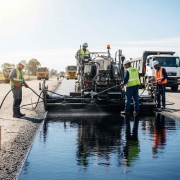
The vast majority of bitumen acts as an asphalt binder. Modern pavement technology relies on bitumen to glue aggregates together, creating a flexible surface that can withstand heavy traffic and temperature fluctuations.
-
Hot Mix Asphalt (HMA): Used for high-traffic highways where durability is paramount.
-
Cold Mix Asphalt: Often utilizes bitumen emulsion for rural road repairs and eco-friendly paving.
-
Surface Dressing: Providing a skid-resistant layer to aging roads.
For a deeper dive into the chemical makeup of these binders, see our Introduction to Types of Bitumen.
2. Waterproofing and Roofing Systems
Bitumen’s hydrophobic nature makes it the gold standard for keeping water out of structures.
-
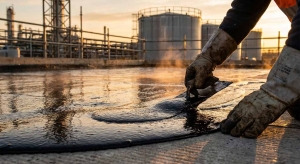
Waterproofing Membranes: Used in foundations and basements to prevent groundwater seepage.
-
Roofing Shingles: In regions with high rainfall, bitumen-saturated felt and shingles provide decades of protection.
-
Pipe Coating: Used in the oil and gas industry to protect steel pipelines from corrosion.
3. Specialized Industrial Applications
Beyond the “big two,” bitumen is utilized in high-stakes environments:
-
Nuclear Waste Isolation: Due to its stability, certain grades are used to seal radioactive waste containers.
-
Electrical Insulation: Used in cable jointing compounds and battery boxes.
-
Agriculture: Used as a protective coating for fence posts and as a “mulch” paper to retain soil moisture.
Pro Tip: The efficiency of these applications often depends on the refining process. Learn more about how it’s made at a Bitumen Refinery or the Bitumen Production Process.
Complete Encyclopedia of Bitumen Applications
Bitumen’s versatility spans over 130 specific uses. Below is a detailed breakdown by industrial sector:
| Field | Specific Applications |
| Agriculture | Disinfectants, fence post coating, mulches, mulching paper, paved barn floors, protecting tanks/vats, tree paints. |
| Buildings | Water/moisture barriers, floor compositions, tiles, insulating fabrics, step treads, building papers, caulking compounds, shingles, plasterboards, putty, soundproofing. |
| Hydraulic Control | Canal linings, reservoir linings, dam groutings, ditch linings, drainage gutters, levee protection, mattress for bank protection, swimming pools, waste ponds. |
| Industrial | Pipe wrapping, conduit insulation, battery boxes, electrical insulating compounds, printing inks, well drilling fluid, explosives, rubber molded compositions, shoe fillers. |
| Railways | Ballast treatment, dust laying, paved ballast, freight yards, station platforms. |
| Recreation | Dance pavilions, gymnasiums, sport arenas, playgrounds, race tracks, running tracks, tennis courts, synthetic playing fields. |
Comparison Table: Bitumen Grades vs. Main Applications
This table identifies which specific type of bitumen is best suited for various industrial needs.
| Application | Recommended Bitumen Type | Key Benefit |
| Highway Paving | Viscosity Grades (VG-30/VG-40) | High rutting resistance |
| Cold Weather Repair | Cutback Bitumen | Workability at low temps |
| Flat Roof Sealing | Blown/Oxidized Bitumen | High softening point |
| Bridge Decks | Polymer Modified Bitumen (PMB) | Enhanced elasticity |
Industrial Synergies: Bitumen and Other Petroleum Products
Bitumen is the “bottom of the barrel” in the refining process, but it shares a production lineage with other essential fuels. While refineries produce Gasoline, Diesel, and Kerosene, the heavy residue is transformed into the bitumen we use today.
Understanding the output of Top Bitumen Producing Countries and the movements of Top Bitumen Exporting Countries is vital for market players, especially when looking at the Bitumen Price Forecast in 2026.
FAQ: Common Questions About Bitumen
What is the main use of bitumen?
The primary use of bitumen is in road construction, where it accounts for approximately 85% of global consumption. It serves as the binding agent (asphalt binder) that holds stones and sand together to create asphalt pavement.
What are the 4 types of bitumen?
While there are many sub-categories, the four most common types are:
-
Penetration Grade: Classified by hardness (e.g., 60/70).
-
Viscosity Grade: Classified by flow resistance (e.g., VG-30).
-
Oxidized Bitumen: Created by blowing air through the mix to increase the softening point.
-
Cutback Bitumen: Bitumen dissolved in a solvent (like kerosene) for easy application.
What is the difference between asphalt and bitumen?
In technical terms, bitumen is the liquid binder (the “glue”), while asphalt (or asphalt concrete) is the final mixture of bitumen, sand, and rocks used for paving. In some regions like the US, the term “asphalt” is often used interchangeably with bitumen.
Exploring the Future of Bitumen
As we move toward 2026, the industry is shifting toward sustainable practices, including the use of Natural Bitumen and recycled asphalt. For more insights, you can browse More Articles About Bitumen to stay updated on the latest trends and technical specifications.







Leave a Reply
Want to join the discussion?Feel free to contribute!