
Bitumen Shelf Life: Does Bitumen Expire? Storage Time Limits
Every buyer, contractor, importer, or procurement manager eventually asks the same question:
“Does bitumen expire?”
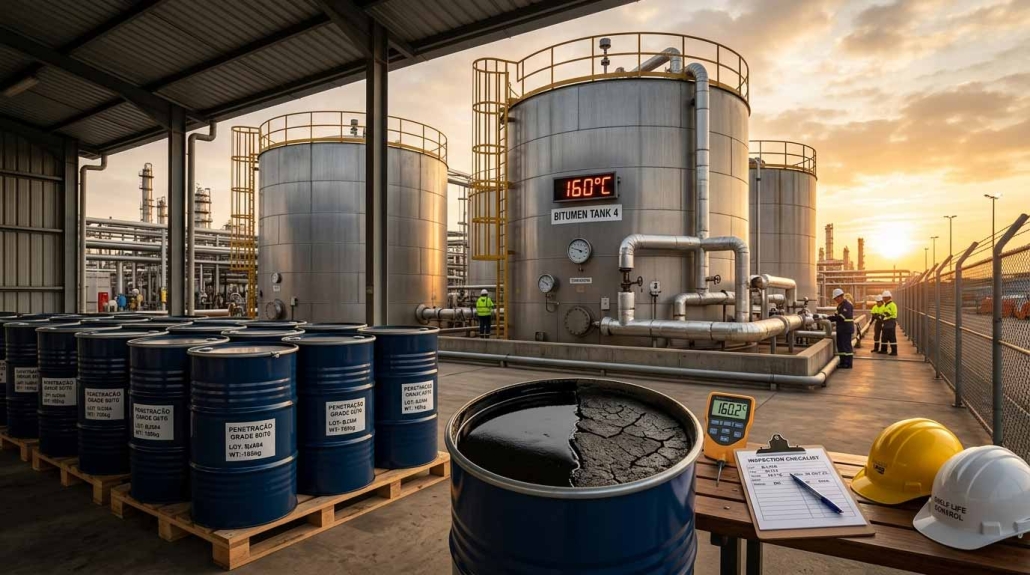
While bitumen does not have a strict expiration date like chemicals or food products, it does change over time. Improper storage accelerates bitumen oxidation, hardening, viscosity increase, and performance degradation, which can result in costly failures at the project site.
For buyers making large‑volume purchases—especially for export—understanding bitumen shelf life and realistic storage limits is essential for quality control, budgeting, and logistics planning. This guide provides a clear, technical, and practical explanation designed for real‑world decision‑making.
How Long Does Bitumen Last? Shelf Life by Grade
Different bitumen grades have different stability profiles. Chemical composition, viscosity, and additives all influence how long a grade can be safely stored.
Below is a buyer‑oriented, field‑tested timeline for each major type.
1. Penetration Grade Bitumen (60/70, 80/100)
These refinery‑produced grades (also read: Bitumen production process) are among the most stable.
Shelf Life:
- Drums: 12–24 months
- Bulk heated tanks: 6–12 months
- Ambient storage (unopened drums): Up to 3 years
Stability level: High
Why: No modifiers, minimal temperature sensitivity.

2. Viscosity Grade Bitumen (VG‑10, VG‑30, VG‑40)
Very stable under high temperatures and widely used in India, Africa, and GCC.
Shelf Life:
- Drums: 12–18 months
- Bulk tanks: 6–9 months
Notes:
- VG‑10 ages faster due to low viscosity.
- VG‑40 is most stable under long storage.
3. Performance Grade Bitumen (PG Grades)
Engineered for climate conditions but sensitive to long‑term heat exposure.
Shelf Life:
- 6–12 months, depending on PG grade
Higher‑polymer PG grades degrade faster.
Testing before use is recommended. also read: Bitumen quality testing.
4. Oxidized / Air‑Blown Bitumen
Produced by blowing air into penetration bitumen (also read: Oxidized (blown) bitumen).
Shelf Life:
- 2–5 years
Stability level: Very high
Ideal for roofing, waterproofing, and industrial uses.
5. Polymer‑Modified Bitumen (PMB)
PMB is high‑performance but low‑stability due to polymer aging and phase separation (also read: Polymer‑modified bitumen).
Shelf Life:
- 3–6 months maximum
Important: MUST be agitated in storage tanks.
6. Cutback Bitumen
Contains volatile solvents (also read: Cutback bitumen).
Shelf Life:
- 6–12 months
Volatile loss occurs quickly in hot climates.
7. Natural Bitumen (Gilsonite, Rock Asphalt)
Extremely stable geological material (also read: Natural bitumen).
Shelf Life:
- 5+ years
- Low risk of degradation
What Happens When Bitumen Ages? (Buyer‑Friendly Explanation)
Long‑term storage or excessive heating causes predictable material changes:
1. Oxidation
Bitumen stiffens when exposed to oxygen.
Result: Reduced pavement flexibility.
2. Increased Viscosity
Material becomes hard to pump or apply.
3. Penetration Drop
A key indicator of aging and stiffness.
4. Loss of Ductility
Leads to cracks during cold weather.
5. Polymer Separation (PMB)
Polymers float or settle without agitation.
6. Volatile Evaporation (Cutback)
Reduced workability and slower curing.
Understanding these effects helps buyers decide when to retest, reuse, or reject supply. For help choosing the right product, also read: Bitumen grade selection guide.
Best Storage Practices to Maximize Bitumen Shelf Life
Proper storage is the only way to prevent premature aging.
1. Recommended Storage Temperatures
Keep temperatures stable:
- Penetration grades: 140–160°C
- Viscosity grades: 150–170°C
- PG grades: Follow manufacturer recommendations
- PMB: Heat‑sensitive — avoid overheating
Temperature accuracy is essential because bitumen aging doubles with every 10°C increase.
2. Limit Heating Duration
Continuous heating accelerates aging.
Better to maintain stable temperature than heat repeatedly.
3. Insulate Storage Tanks Properly
High‑quality insulation reduces fuel consumption and oxidation.
also read: Bitumen refinery.
4. Prevent Air Exposure
Keep tanks topped up.
Nitrogen blanketing is ideal for long‑term storage.
5. Agitate Polymer‑Modified Bitumen
Prevents separation and maintains consistency.
6. Store Drums Correctly
- Keep indoors or shaded
- Avoid direct sunlight
- Use pallets
- Rotate inventory (FIFO)
7. Best Practices for Export Shipments
For long‑distance shipping:
- Bulk shipments perform better than drums
- Drums risk deformation and leakage
- Check destination climate (also read: Top 10 bitumen‑producing countries for global context)
Prices can be influenced by freight conditions; also read: Global bitumen price forecast.
Comparison Table: Shelf Life by Grade
| Bitumen Type | Typical Shelf Life | Stability | Buyer Risk Level |
|---|---|---|---|
| Penetration grade | 1–2 years | High | Low |
| Viscosity grade | 1–1.5 years | Medium‑High | Low |
| PG bitumen | 6–12 months | Medium | Medium |
| Oxidized bitumen | 2–5 years | Very High | Very Low |
| PMB | 3–6 months | Low | High |
| Cutback bitumen | 6–12 months | Medium | Medium |
| Natural bitumen | 5+ years | Very High | Very Low |
Common Storage Mistakes (Buyers Should Avoid)
- Overheating above 180°C
- Storing PMB without agitation
- Leaving tanks half‑filled
- Exposing drums to sunlight
- Ordering more stock than needed
- Reheating bitumen multiple times
Warning Signs of Aged or Expired Bitumen
Reject or retest supply if you notice:
- Abnormal thickening
- Strong burnt smell
- Penetration drop outside grade limits
- Polymer separation (PMB)
- Lower flash point
- Unusual sedimentation
Testing helps prevent costly failures.
also read: Bitumen quality testing.
Buyer Checklist: Before Accepting Stored Bitumen
- Check manufacturing date
- Review storage logs (temperature + duration)
- Request COA and compare values
- Inspect drum condition
- Request re‑testing if storage exceeds 6 months
- Confirm grade suitability (also read: Applications of bitumen)
FAQ: Bitumen Shelf Life
1. Does bitumen expire?
Not exactly, but it ages and loses performance when stored improperly.
2. What is the best storage temperature?
Typically 140–170°C, depending on the grade.
3. How long can bitumen stay heated?
Ideally under 72 hours continuously.
4. Does drum storage last longer than bulk?
Yes — drums reduce oxidation and thermal stress.
5. How long does PMB last?
Only 3–6 months due to polymer degradation.
Conclusion
Bitumen shelf life varies widely by grade, storage condition, and heating history. While most refinery‑produced grades last 12–24 months, PMB and cutbacks degrade much sooner. Buyers who understand these timelines—and follow proper storage practices—can avoid material loss, performance issues, and financial risk.
For deeper guidance on quality, sourcing, and application, explore our related resources:
If you need procurement support or grade‑selection advice for your project or export shipment, our team is ready to assist.
Global Petroleum Trade Solutions | Universal Trades
As a reputable international petroleum trading enterprise, Universal Trades specializes in the reliable procurement, export, and supply chain management of high-grade petroleum commodities, refined fuels, and industrial feedstocks designed to meet rigorous global standards.








Leave a Reply
Want to join the discussion?Feel free to contribute!