
What Is Polymer Modified Bitumen (PMB)? Types, Benefits, and Uses
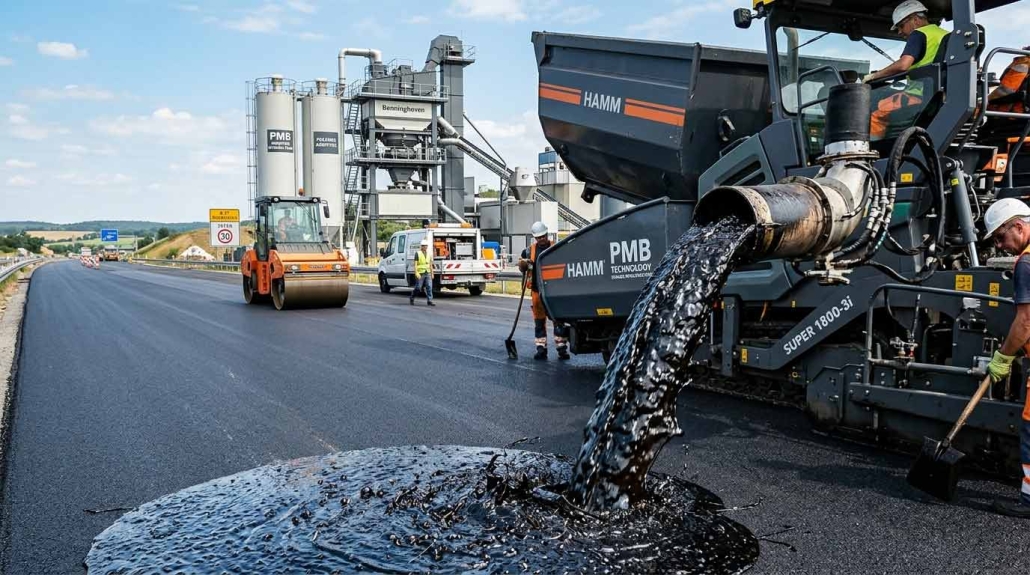
Polymer Modified Bitumen (PMB) has become a cornerstone material in modern road construction, waterproofing systems, and high‑performance asphalt mixes. As traffic loads increase, climate becomes more extreme, and infrastructure design life expectations rise, conventional paving bitumen often fails to deliver the required durability and performance.
PMB bridges this gap by combining traditional bitumen with polymers to enhance elasticity, temperature susceptibility, fatigue resistance, and long‑term stability. For contractors, pavement engineers, and industrial buyers, understanding PMB is critical for making informed procurement and design decisions.
In this article, we explain what PMB is, how it is produced, types of polymer modification, key benefits and limitations, typical PMB grades and properties, and how PMB compares with conventional bitumen. We also examine global market trends, sector‑specific usage, and provide a practical grade selection guide and FAQ section.
2. What Is Polymer Modified Bitumen (PMB)?
Polymer Modified Bitumen (PMB) is a type of bitumen whose properties have been enhanced by blending it with one or more polymers, typically elastomers or plastomers. The goal is to improve performance characteristics that conventional bitumen cannot provide reliably, such as:
- Higher resistance to permanent deformation (rutting) at high service temperatures
- Better flexibility and crack resistance at low temperatures
- Improved fatigue life under repeated loading
- Enhanced adhesion to aggregates and moisture resistance
- Greater elasticity and recovery after deformation
PMB is widely used in high‑traffic pavements, bridges, airports, heavy‑duty industrial floors, and waterproofing membranes. It complements other bitumen types and technologies such as Types of Bitumen, Cutback Bitumen, Emulsified Bitumen, and Blown Bitumen depending on application and environmental conditions.
3. Production Methods and Mechanisms of Polymer Modification
3.1 Base Bitumen Selection
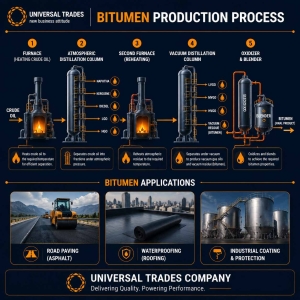
PMB production starts with carefully selected base bitumen. The base binder is typically derived from Vacuum Bottom through standard Bitumen Production Process steps including distillation and possible air blowing. Selecting a stable, compatible base binder is crucial to ensure good interaction with the polymer and long‑term storage stability.
3.2 Types of Polymers Used
The most common polymers used in PMB are:
-
Elastomers (rubber‑like)
- Styrene‑Butadiene‑Styrene (SBS)
- Styrene‑Butadiene Rubber (SBR)
- Crumb Rubber (recycled tires)
-
Plastomers (plastic‑like)
- Ethylene‑Vinyl Acetate (EVA)
- Atactic Polypropylene (APP)
- Polyethylene (PE)
Elastomers primarily enhance elasticity and fatigue resistance, while plastomers improve stiffness and deformation resistance.
3.3 Production Process
A typical PMB production line includes:
- Heating and circulation of base bitumen to reach a suitable blending temperature.
- Addition of polymer under controlled mixing conditions.
- High‑shear mixing to ensure uniform dispersion of the polymer throughout the binder.
- Maturation (swelling) period, allowing the polymer to absorb aromatics and develop the desired network within the bitumen.
- Quality control, including tests for penetration, softening point, viscosity, elastic recovery, storage stability, and phase separation.
These steps are usually conducted in specialized units in or near a Bitumen Refinery, where consistent feedstock and process control are available.
3.4 Mechanism of Modification
- Elastomeric PMB (e.g., SBS) forms a three‑dimensional network within the bitumen. This network stores and releases strain energy, creating improved elasticity and recovery.
- Plastomeric PMB (e.g., EVA) increases stiffness and high‑temperature strength by forming a dispersed plastic phase that reinforces the binder.
- Crumb Rubber Modified Bitumen (CRMB) incorporates ground tire rubber, which swells and interacts with the bitumen, improving viscosity, elasticity, and resistance to cracking and aging.
4. Types and Classification of PMB
PMB can be classified in several ways:
4.1 By Polymer Type
- SBS‑Modified Bitumen: The most widely used elastomeric PMB for road applications, combining high elasticity with good temperature performance.
- EVA‑Modified Bitumen: Often used for roofing, waterproofing sheets, and industrial applications requiring stiffness and high softening point.
- CRMB (Crumb Rubber Modified Bitumen): Popular for sustainable pavements, utilizing recycled rubber for enhanced performance and environmental benefit.
- APP‑Modified Bitumen: Common in roofing and membranes due to high heat resistance and good dimensional stability.
4.2 By Performance Grade
Different countries and agencies use their own PMB specifications (e.g., PMB 25/55-60, PMB 45/80-75, etc.). These grades define ranges for penetration, softening point, elastic recovery, and other properties to ensure consistent performance.
5. Comparison: PMB vs Conventional Bitumen
Compared with standard paving bitumen (e.g., 40/50, 60/70, 80/100), PMB offers several advantages:
5.1 Performance Advantages
- Rutting resistance: Higher stiffness and improved high‑temperature performance reduce permanent deformation in heavy traffic conditions.
- Crack resistance: Improved low‑temperature flexibility and elasticity reduce thermal and fatigue cracking.
- Fatigue life: PMB pavements withstand more load repetitions before cracking or deformation.
- Adhesion and moisture resistance: Better bonding with aggregates and resistance to stripping in wet environments.
These enhancements make PMB attractive in applications where conventional binders or even specialty grades like Cutback Bitumen or Emulsified Bitumen might not meet the required performance level.
5.2 Practical Considerations
- Cost: PMB is more expensive than conventional bitumen due to polymer costs and specialized production. However, improved performance often leads to lower life‑cycle costs.
- Handling and storage: PMB may require higher storage temperatures, continuous agitation, and careful quality control to avoid phase separation.
- Construction: Mixing and laying temperatures must be adjusted, and contractors need experience with PMB to avoid defects.
6. Key Benefits and Challenges of PMB
6.1 Key Benefits
- Extended pavement life and reduced maintenance
- Enhanced performance in extreme climates (both hot and cold)
- Improved safety through better skid resistance and deformation control
- Better resistance to reflective cracking and fatigue
- Potential for thinner pavement structures due to higher performance
These benefits complement the broader Applications of Bitumen across infrastructure, industrial, and waterproofing sectors.
6.2 Challenges and Limitations
- Higher initial material cost
- Need for specialized production and quality control
- Possible storage stability issues if formulation and handling are not optimized
- More complex logistics and longer lead times compared with conventional binders
- Increased risk if PMB quality is inconsistent or if Disadvantages of Low-Quality Bitumen (e.g., poor feedstock, improper modification, inadequate testing) are not properly addressed
7. Technical Table: PMB Grades, Properties, and Applications
Note: The following table is a representative example. Actual values may vary depending on standards, suppliers, and regional specifications.
| PMB Grade | Typical Viscosity (at 135°C, cP) | Penetration (25°C, 0.1 mm) | Softening Point (°C) | Elastic Recovery (at 25°C, %) | Typical Applications |
|---|---|---|---|---|---|
| PMB 25/55-60 | 1500–2500 | 25–55 | 60–70 | ≥ 70 | High‑traffic highways, urban arterial roads |
| PMB 45/80-55 | 1000–2000 | 45–80 | 55–65 | ≥ 60 | Expressways, regional roads, roundabouts |
| PMB 10/40-65 | 2000–3500 | 10–40 | 65–80 | ≥ 75 | Bridges, heavy‑load pavements, industrial yards |
| CRMB 60 | 2000–4000 | 40–60 | 60–70 | ≥ 50 | Sustainable pavements, noise‑reducing asphalts |
| EVA‑PMB (Roof) | 1500–3000 | 20–50 | 90–110 | ≥ 30 | Roofing membranes, waterproofing sheets |
These grades can be used in combination with different bituminous technologies such as Difference Between Cold and Hot Bitumen, certain Emulsified Bitumen systems, or specialized membranes depending on project design.
Frequently Asked Questions About PMB
Does PMB perform well in extremely hot climates?
Yes. One of the key advantages of Polymer Modified Bitumen (PMB) is its higher softening point and superior resistance to rutting at elevated temperatures. This makes PMB significantly more suitable than conventional bitumen for tropical, desert, and high‑temperature regions where asphalt deformation is a major concern.
Is PMB more expensive?
The initial cost of PMB is indeed higher. However, based on pavement life‑cycle analysis and insights from bitumen price forecasting, PMB often proves more economical in the long run because it reduces maintenance frequency and significantly extends service life.
Is PMB compatible with different types of aggregates?
Generally, yes. PMB provides better adhesion compared to conventional penetration‑grade bitumen and improves resistance to moisture damage and aggregate stripping. This enhanced bonding is especially valuable in rainy climates or in pavements exposed to frequent water contact.
What resource is recommended for further reading?
For a comprehensive set of technical articles on bitumen and bituminous materials, refer to the Bitumen Articles section.
Global Petroleum Trade Solutions | Universal Trades
As a reputable international petroleum trading enterprise, Universal Trades specializes in the reliable procurement, export, and supply chain management of high-grade petroleum commodities, refined fuels, and industrial feedstocks designed to meet rigorous global standards.





Leave a Reply
Want to join the discussion?Feel free to contribute!