
Bitumen Export Price Guide: VG Grades, Penetration 60/70 & 80/100 Bulk Supply
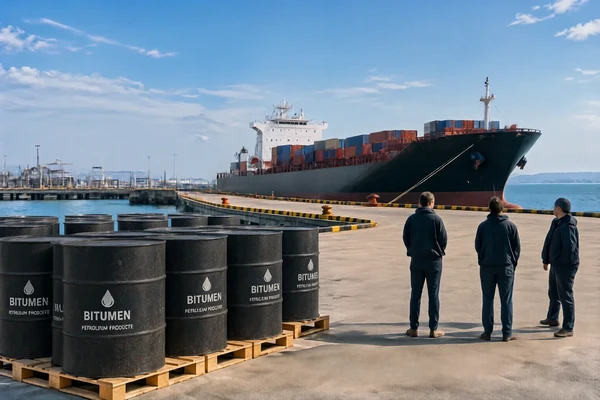
A practical B2B guide for importers, road construction contractors, and trading companies seeking reliable bulk bitumen supply, current bitumen price per ton insights, ASTM-based grade comparison, packaging options, shipping methods, and compliance considerations for international trade.
Quick Answer: What affects bitumen export price per ton?
Bitumen export price per ton mainly depends on grade type (VG or Penetration), refinery origin, packing method (steel drums, Bitubag, or bulk hot bitumen), inspection and ASTM test compliance, freight route, port charges, and the selected Incoterm such as FOB, CFR, or CIF. For bulk buyers, the most competitive pricing usually comes from matching the correct grade and packaging format to the destination’s discharge facilities and project requirements.
1. Understanding Export Bitumen for B2B Buyers
In international road construction and infrastructure supply chains, bitumen remains one of the most strategically purchased petroleum products. Buyers searching for a bulk bitumen supplier are typically concerned with more than price alone. They also evaluate grade suitability, thermal stability during loading and discharge, packaging efficiency, shipping safety, documentation, and conformity with ASTM-based quality benchmarks.
The two most common categories in export markets are Penetration Grades such as Bitumen 60/70 and Bitumen 80/100, and Viscosity Grades (VG) such as VG-10, VG-30, and VG-40. Each category serves different pavement and climate requirements, making correct technical selection essential for cost control and long-term asphalt performance.
2. Bitumen Price Per Ton: Key Commercial Factors
For professional buyers, bitumen pricing should be analyzed as a landed cost structure rather than just a refinery base number. The following variables usually shape the final export quotation:
- Grade specification: Penetration 60/70, 80/100, VG-30, or VG-40 can carry different supply-demand pricing patterns depending on season and destination market.
- Packing method: New steel drums, Bitubag, polybags, or bulk tanker loading all produce different unit costs.
- Order volume: Trial shipments, full-container loads, and vessel-scale quantities usually receive different commercial terms.
- Refinery source and consistency: Buyers often pay more for stable quality, cleaner loading operations, and reliable test reports.
- Freight and port charges: Ocean freight, terminal handling, demurrage risk, and inland trucking materially affect delivered price.
- Inspection and documentation: Independent inspection, Certificate of Analysis, and destination-required documents add compliance costs but reduce trade risk.
- Incoterms: FOB, CFR, and CIF quotations are not directly comparable unless freight, insurance, and local charges are clearly separated.
Serious buyers should request price offers with clear reference to grade, packing, net weight tolerance, loading port, delivery term, and validity period. Without these details, “bitumen price per ton” comparisons can be misleading.
3. Technical Comparison: Penetration Grades vs VG Grades
The choice between penetration grade and viscosity grade depends on climatic conditions, traffic load, road design standards, and the technical framework used by the destination market. Below is a practical comparison for international buyers:
| Bitumen Grade | Key ASTM / Technical Indicator | Typical Use | Buyer Note |
|---|---|---|---|
| Penetration 60/70 | Penetration at 25°C: 60–70 dmm | Standard road surfacing in moderate climates | One of the most traded export grades globally |
| Penetration 80/100 | Penetration at 25°C: 80–100 dmm | Cooler regions and more flexible pavement needs | Useful where crack resistance is a priority |
| VG-30 | Viscosity-focused performance at high service temperatures | Highways, heavy-traffic roads, warm climates | Frequently preferred in technically controlled paving systems |
| VG-40 | Higher viscosity for severe load and temperature conditions | Intersections, ports, heavy-duty pavements | Selected when rutting resistance matters most |
In many export transactions, buyers still request penetration grades due to long-established tender language. However, viscosity grades can offer more functional performance control in projects exposed to high temperatures and heavy axle loads.
4. ASTM Testing Standards Buyers Should Check
ASTM-related quality control is a major part of export bitumen transactions. Before shipment confirmation, commercial buyers should ensure the material is supported by a technical data sheet and a recent inspection report showing conformity with the requested grade. Common quality checkpoints include:
Penetration Test
Measures hardness/softness by needle penetration at controlled temperature and load conditions.
Softening Point
Indicates thermal resistance and helps estimate performance at elevated service temperatures.
Ductility
Evaluates elongation capacity before breaking, relevant for flexibility and crack behavior.
Flash Point
A critical safety parameter for hot handling, storage, and marine transport operations.
Viscosity
Essential for VG grades and pumping/application behavior at production and laying temperatures.
Loss on Heating / Solubility
Used to assess volatility, stability, and purity characteristics during supply evaluation.
5. Export Bitumen Packaging Guide: Drum, Bitubag, and Bulk Pumpable Supply
Packaging selection affects not only logistics cost, but also unloading speed, product temperature retention, waste management, and the buyer’s operational convenience at destination.
New Steel Drums
Common fill: 150 kg, 180 kg, or 220 kg net weight.
Best for: Buyers needing easy storage, smaller discharge batches, and simple handling at project level.
Main considerations: Higher packaging cost, drum disposal or recycling requirement, and more labor-intensive unloading.
Bitubag
Common fill: Around 1 MT flexible bags, depending on supplier design.
Best for: Containerized export programs where unloading efficiency and reduced steel waste matter.
Main considerations: Buyer must confirm compatibility with their melting/discharge process and local handling equipment.
Bulk Hot Bitumen / Pumpable Supply
Common mode: Tankers, insulated vessels, or ISO tank solutions depending on route and infrastructure.
Best for: High-volume industrial consumers with heated tanks and pumping facilities.
Main considerations: Lowest packaging waste, but requires strict temperature control and suitable receiving installations.
In practical terms, drummed bitumen remains the safest standard for many developing markets, Bitubag often improves logistics economics for container trade, and bulk pumpable bitumen is usually the most efficient option for large industrial buyers with proper infrastructure.
6. Shipping Methods and Export Logistics Guide
Export bitumen logistics must be designed around both the product’s temperature-sensitive nature and the destination terminal’s receiving capability. Common shipping methods include:
- 20-foot container shipments: Common for steel drums and Bitubag cargo. Suitable for multi-destination export programs and buyers needing flexible lot sizes.
- Breakbulk vessel loading: Often used for larger drummed programs where container availability is limited or project timing is critical.
- Bulk heated tanker / vessel supply: Appropriate for large infrastructure buyers or terminals equipped with heated storage and discharge systems.
- Multimodal delivery: Sea shipment plus inland truck transfer may be required where port access and final job site location differ significantly.
Buyers should always confirm discharge readiness before shipment. A competitively priced cargo can still become expensive if the consignee lacks heating systems, adequate labor, crane access, or fast customs clearance arrangements.
7. Practical Transport Tips for Traders and Commercial Buyers
Experienced merchants do not treat logistics as a post-sale issue. Transport planning should begin before contract finalization. The following points are especially important:
- Confirm loading temperature protocol: Hot bitumen must be loaded within a technically safe range to preserve product quality and reduce handling risk.
- Check container or vessel suitability: Cargo securing, floor condition, lining requirements, and load distribution matter for safety and claims prevention.
- Plan for discharge equipment in advance: Buyers should verify pumps, heating coils, drum decanters, forklifts, and labor availability before vessel arrival.
- Protect against demurrage and detention: Customs delay, port congestion, and incomplete documents can quickly damage shipment economics.
- Use cargo insurance with appropriate scope: Marine cargo insurance should reflect the product’s hot-loading and handling risk profile.
- Request pre-shipment photos and inspection proof: This helps reduce disputes over packaging integrity, marking, and actual loading condition.
- Align weight tolerance in the contract: Net weight, filling tolerance, and acceptable quantity variance should be stated clearly in the sales agreement.
8. Legal and Compliance Points for Trading and Shipping Companies
Because bitumen is a petroleum-derived export commodity, legal accuracy and documentation discipline are essential. Trading companies and logistics providers should pay close attention to the following:
Contract Clarity
Define grade, packaging, quantity tolerance, shipment window, port, inspection basis, and dispute resolution terms precisely.
Inspection & CoA
Use an independent inspection company when required and ensure the Certificate of Analysis matches the contracted grade specification.
Customs & HS Code Accuracy
Incorrect customs classification or incomplete export declarations can cause delay, fines, or cargo hold issues.
Marking & Packaging Compliance
Drums and shipping units should include traceable marks such as product name, batch reference, net weight, and origin data where required.
Incoterms 2020
FOB, CFR, and CIF should be used carefully, with clear transfer of risk, freight scope, and insurance responsibility.
Destination Regulatory Review
Some countries require local laboratory approval, consignee registration, or pre-arrival document legalization.
9. Recommended Buyer Checklist Before Placing an Order
- Confirm the exact grade required by project specification or tender document.
- Decide whether drums, Bitubag, or bulk delivery best matches destination handling capability.
- Request recent test data and confirm ASTM-oriented compliance indicators.
- Verify load port, shipment schedule, and realistic transit timing.
- Review the quotation under the correct Incoterm and compare landed cost, not just base price.
- Check document list: invoice, packing list, bill of lading, CoA, certificate of origin, and inspection report if needed.
- Align payment terms, quantity tolerance, and claim procedure before issuing purchase confirmation.
Frequently Asked Questions (FAQ)
What is the difference between Penetration Grade and VG Grade bitumen?
Penetration grade is classified by needle penetration at 25°C, while VG grade is classified mainly by viscosity behavior at elevated temperatures. VG grades often provide better control for high-temperature pavement performance.
Which packaging method is best for export bitumen?
There is no single best method. Steel drums are widely accepted and easy to store, Bitubag can improve logistics efficiency, and bulk hot bitumen is ideal for high-volume buyers with heated storage and discharge facilities.
Why can two suppliers offer different bitumen price per ton for the same grade?
Because pricing may differ due to refinery source, packaging type, order volume, shipment term, inspection scope, drum quality, freight assumptions, and delivery schedule.
What documents should a bulk bitumen buyer request?
At minimum, buyers commonly request a commercial invoice, packing list, bill of lading, certificate of origin, certificate of analysis, and where required, an independent inspection certificate.
How can a buyer reduce risk in international bitumen trade?
Use a clear contract, verify specifications before loading, match packaging to destination infrastructure, confirm documents early, and use proper inspection and cargo insurance where appropriate.









Leave a Reply
Want to join the discussion?Feel free to contribute!