
Oxidized Bitumen 90/15: Specifications, Analysis, and Procurement
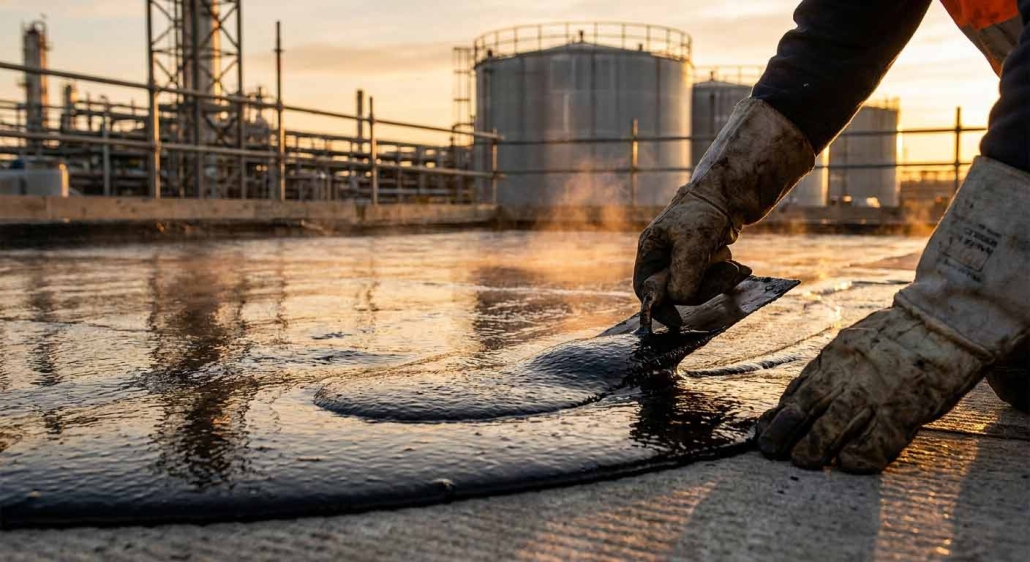
Selecting the correct asphalt grade is a critical decision in global construction, manufacturing, and industrial waterproofing. Among the specialized industrial blown grades, Oxidized Bitumen 90/15 (commonly referred to as blown asphalt 90/15) is highly valued for its structural stability, low thermal susceptibility, and durability under mechanical load.
This guide provides an in-depth technical and commercial analysis of Oxidized Bitumen 90/15. Whether you are an engineer assessing physical properties or a procurement manager examining the most common bitumen grades, this article details the chemical characteristics, industrial applications, and sourcing parameters of this versatile material.
What is Oxidized Bitumen 90/15?
Oxidized Bitumen 90/15 is a semi-solid, thermoplastic industrial-grade binder produced by modifying physical properties through a controlled oxidation process. Unlike standard road paving binders, oxidized grades are designated by a dual-number naming system that represents key thermal and physical thresholds:
- 90: The midpoint of the softening point range (90°C ± 5), tested via the Ring and Ball method (ASTM D36).
- 15: The midpoint of the penetration range (15 ± 5 decimillimeters or dmm) at 25°C (ASTM D5).
This ratio results in a highly rubberized, stable structure with a high penetration index. It maintains its shape and adhesion under high solar heat and does not sag at elevated temperatures, while remaining sufficiently flexible under colder ambient conditions. To evaluate this against other options, procurement teams should refer to a simple guide to choosing the right bitumen.
Chemical Composition and the Air-Blowing Process
The production of blown bitumen occurs inside a specialized blowing reactor at the bitumen refinery. The primary feedstocks are vacuum bottom (VB) and vacuum slops (VS), derived from the vacuum distillation of crude oil.
During the bitumen production process, air is blown through the heated feedstock at temperatures between 200°C and 300°C. This introduces oxygen, which reacts with hydrogen atoms in the hydrocarbon molecules to form water vapor. This reaction initiates polymerization, joining lighter asphaltic oils into heavier asphaltene structures.
The resulting material has a lower penetration value and a higher softening point than the original paving bitumen. Sourcing certified material prevents the differences between high and low quality bitumen; premium manufacturers run this process without adding chemical catalysts or non-asphaltic fillers, ensuring long-term elasticity and weather resistance.
Key Applications of Blown Asphalt 90/15
Due to its high softening point and moisture barrier characteristics, Oxidized Bitumen 90/15 is widely used across several major industries:
- Roofing Membranes & Felts: It serves as a primary waterproofing saturant and adhesive layer. Because it resists deformation, it is considered the best bitumen for roof waterproofing in climates with high solar exposure.
- Underground Pipe Coating: Applied to oil, gas, and water pipelines to form a protective layer that shields steel against soil acidity, electrical currents, and moisture.
- Automobile Undercoating: Formulated into under-carriage sealants for vehicles to provide rust prevention, dust sealing, and acoustic insulation.
- Civil Infrastructure & Joint Fillers: Used to seal expansion joints and concrete cracks where movement is minimal. This seal helps prevent water infiltration, which is a common cause of asphalt cracking.
- Specialty Mastics and Adhesives: Blended into carpet backing compounds, electrical joint sealants, and marine mastics.
For a broader look at how these bitumen applications fit into the wider petroleum industry, you can read our introduction to types of bitumen and their applications.

Technical Comparison: Penetration vs. Oxidized Grades
To select the correct material, it is helpful to compare Oxidized Bitumen 90/15 against paving grades like bitumen 60/70 and bitumen 80/100, as well as harder blown grades like oxidized bitumen 85/25.
The table below contrasts the mechanical properties of these different petroleum products:
Table 1: Technical & General Grade Comparison
| Bitumen Grade | Class-ification Type | Soft-ening Point (°C) | Penetration Value (at 25°C, 0.1 mm) | Duc-tility at 25°C (cm) | Kinematic Viscosity & Flow Behavior | Primary Applications |
|---|---|---|---|---|---|---|
| Oxidized 90/15 | Blown / Oxidized | 85 – 95 | 10 – 20 | 1.5 Min | Very high viscosity; highly resistant to high-temp deformation | Industrial waterproofing,
pipe coating, roofing membranes |
| Oxidized 85/25 | Blown / Oxidized | 80 – 90 | 20 – 30 | 3.0 Min | High viscosity; slightly more flexible at lower temps than 90/15 | Roofing felts, joint sealants,
damp-proof course (DPC) |
| Penetration 40/50 | Penetration Grade | 49 – 56 | 40 – 50 | 100 Min | High paving viscosity; subject to thermoplastic flow at high temps | Road paving in hot climates, heavy-traffic bases |
| Penetration 60/70 | Penetration Grade | 49 – 56 | 60 – 70 | 100 Min | Moderate viscosity paving grade; standard road binder | General road construction, asphalt mixtures, emulsions |
| Penetration 80/100 | Penetration Grade | 45 – 52 | 80 – 100 | 100 Min | Lower viscosity paving grade; highly susceptible to heat flow | Road construction in cold climates, light surface mixes |
For specific project specifications, engineers often review direct comparisons, such as a technical comparison of bitumen 40/50 and 60/70 or a detailed comparison of bitumen 60/70 and 80/100.
Specifications & Typical Certificate of Analysis (COA)
Every export batch of Bitumen 90/15 must be verified through laboratory testing. Below is the standard physical analysis profile required for a sample bitumen COA according to international standards (ASTM and EN):
Table 2: Technical Specifications of Oxidized Bitumen 90/15
| Quality Test Parameter | Unit of Measure | Specification Limit | Standard Test Method |
|---|---|---|---|
| Specific Gravity (at 25°C) | kg/m³ | 1.05 Approx. | ASTM D70 / EN 15326 |
| Penetration Value (at 25°C, 100g, 5s) | dmm | 10 – 20 | ASTM D5 / EN 1426 |
| Softening Point
(Ring & Ball) |
°C | 85 – 95 | ASTM D36 / EN 1427 |
| Ductility (at 25°C) | cm | 1.5 Min | ASTM D113 |
| Loss on Heating
(Weight Loss) |
% | 0.2 Max | ASTM D6 / EN 12607-1 |
| Flash Point
(Cleveland Open Cup) |
°C | 250 Min | ASTM D92 / EN ISO 2592 |
| Solubility in
Trichloroethylene / CS₂ |
% | 99.0 Min | ASTM D4 / EN 12592 |
| Spot Test | — | Negative | AASHTO T102 |
These values are verified using standardized bitumen quality testing protocols to ensure the material remains stable in the melting kettle.
Handling, Storage, and Melting Guidelines
Because of its high softening point, handling and melting Oxidized Bitumen 90/15 requires care:
- Heating Temperatures: The safe working temperature is between 180°C and 230°C. Do not exceed 250°C to avoid thermal degradation and safety risks.
- Melting Equipment: Use indirect heating systems (such as thermal oil heaters) and keep the material moving to prevent hot spots. Break solid blocks of bitumen into smaller pieces before placing them in the kettle to ensure even heating.
- Ventilation: Always open the bungs of drums before heating to release pressure and prevent deformation.
- Shelf Life: When stored in a dry, covered space away from direct sun and dirt, the bitumen shelf life can exceed 10 years.
Packaging Options and Export Logistics
Selecting the correct packaging helps reduce shipping costs and protects the material during transport. The main bitumen packaging types for industrial export are:
- New Steel Drums (150kg to 200kg): The standard choice for ocean freight, offering protection against leaks and weather.
- Kraft Paper or Polybags (20kg to 25kg): Easy to handle on-site, with meltable polybags reducing waste by dissolving in the melting kettle.
- Carton Boxes (25kg): Solid blocks packed in boxes with silicone liners, making them easy to stack on pallets.
For companies sourcing from the top bitumen exporting countries or the top bitumen producing countries, using quality drums and proper palletizing is essential. Substandard packaging can lead to product loss, which is a primary cause of drum leakage in export bitumen when transit temperatures rise.

Modified & Emulsified Alternatives
While Oxidized Bitumen 90/15 is standard for hot-applied roofing and industrial coatings, certain projects may require alternative binders:
- Polymer modified bitumen: Binders modified with polymers (like SBS) for high-traffic paving or flexible roofing membranes.
- bitumen emulsion: A suspension of bitumen in water, allowing cold application.
- cutback bitumen: Bitumen dissolved in solvents to reduce viscosity for cold-applied spray applications.
For a comparison of cold-applied vs. heated binders, read our guide on cold and hot bitumen.
Technical Summary and Market Outlook
Oxidized Bitumen 90/15 provides excellent heat resistance, water protection, and aging stability for demanding industrial uses. Sourcing consistent, certified batches helps avoid application failures and structural issues.
As global oil prices and shipping costs fluctuate, keeping track of refinery outputs is key for procurement. For our latest market analysis, read the global bitumen price forecast. You can also explore our technical library of bitumen articles for deep-dives into engineering standards.








Leave a Reply
Want to join the discussion?Feel free to contribute!