
D2 Diesel (Diesel No. 2): Specifications, Uses and Advantages
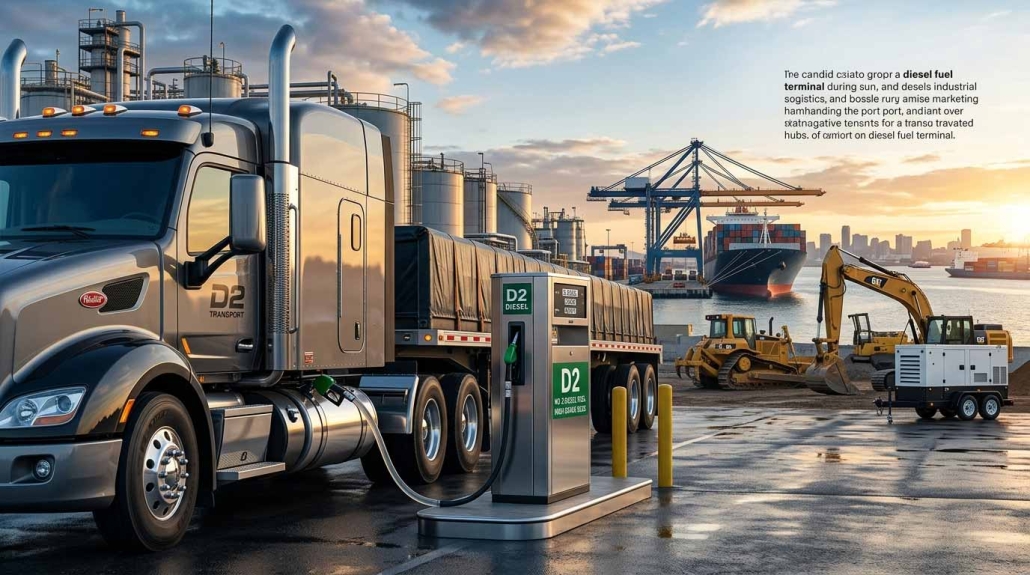
D2 Diesel (Diesel No. 2) is the most widely used diesel fuel grade worldwide, powering trucks, heavy machinery, generators, ships, and industrial equipment. Its balance of energy density, cost efficiency, and engine compatibility makes it the backbone of global transportation and logistics. Understanding how D2 compares to other diesel types is essential for choosing the right fuel for performance, climate, and regulatory compliance.
What Is D2 Diesel?
D2 (Diesel No. 2) is a middle‑distillate petroleum fuel produced through the Diesel Production Process and classified under broader Introduction to Petroleum Products. It is designed for high‑compression diesel engines operating in moderate to warm climates.
Key Technical Characteristics
- Cetane Number: Typically 40–55 (higher improves ignition quality; see Cetane Number)
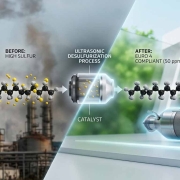
- Sulfur Content: Can range from high sulfur to ULSD (≤15 ppm) depending on regulations (see ULSD Diesel)
- Viscosity: Higher than D1, providing better lubrication
- Energy Density: ~35–38 MJ/L (higher than lighter diesel grades)
D2 dominates commercial fleets and freight networks and plays a major role in the global fuel trade, especially among the Top 10 Diesel‑Producing Countries. Pricing trends are closely tied to crude oil markets and refining margins (see Diesel Price Forecast).
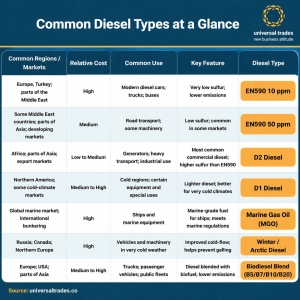
D2 Diesel vs Other Diesel Types (Comparison Table)
| Feature | D2 | D1 | ULSD | EN590 | Winter Diesel | Biodiesel (B5/B20) |
|---|---|---|---|---|---|---|
| Sulfur Content | Varies (often ULSD grade) | Usually low | ≤15 ppm | ≤10 ppm (EU) | Low | Very low sulfur |
| Cetane Number | 40–55 | 45–60 | 40–55 | ≥51 (EU standard) | Slightly higher for cold start | 45–65 |
| Cold Weather Performance | Moderate | Excellent | Moderate | Good | Excellent (anti‑gelling additives) | Can gel in cold |
| Energy Density | High | Slightly lower | Same as D2 | Similar to D2 | Slightly lower | Lower than petroleum diesel |
| Main Use Cases | Trucks, generators, heavy equipment | Cold climates | Regulated markets | EU vehicles | Cold regions | Renewable blending |
| Climate Suitability | Warm/temperate | Cold | All (regulated) | Europe | Winter climates | Warm/moderate |
| Advantages | High power, cost‑efficient | Better cold flow | Low emissions | Strict quality control | Prevents gelling | Renewable, cleaner |
| Disadvantages | Can gel in cold | Slightly lower energy | May cost more | Regional standard | Lower energy density | Oxidation, storage limits |
| Alternative Names | No.2 Diesel, Gas Oil | No.1 Diesel | Ultra‑Low Sulfur Diesel | EU Road Diesel | Winterized Diesel | Bio‑blend |
For more detailed technical insights, explore More Articles About Diesel Fuel.
Advantages & Disadvantages of D2 Diesel
Economic Advantages
- Lower refining cost compared to lighter fuels
- High availability worldwide
- Competitive pricing in bulk trading
Its global demand makes it a benchmark fuel in commercial markets.
Performance Strengths
- High energy density for better mileage
- Suitable for heavy‑duty engines
- Good lubrication properties
D2 remains the preferred fuel for logistics fleets, construction equipment, marine engines, and standby generators.
Cold Climate Limitations
D2 can gel in low temperatures, restricting fuel flow. In cold regions, D1 Diesel or Winter Diesel is often blended to improve cold flow performance.
Environmental Considerations
Modern markets require low sulfur content. Regions following European standards require compliance with EN590 Diesel and emission grades such as Euro 5 vs Euro 6 Diesel Comparison, Euro 4 vs Euro 5 Diesel Comparison, and Euro 4 vs Euro 3 Diesel Comparison.
Regulatory Aspects
Many countries mandate ULSD to reduce emissions. Environmental rules determine sulfur limits and blending ratios with Biodiesel.
Can D1 and D2 Diesel Be Mixed?
Yes, D1 and D2 can technically be mixed, and this is often done in colder climates to improve cold flow properties. However, the blend ratio should follow engine manufacturer recommendations and regional fuel standards.
Alternative Names & Regional Classification
D2 Diesel is also known as No. 2 Diesel, Gas Oil, or simply Automotive Diesel.
In North America, it is commonly sold as ULSD.
In Europe, comparable fuel falls under the EN590 standard, though EN590 includes stricter specifications.
To understand fuel quality indicators such as Diesel Color and Signs of Low‑Quality Diesel, proper testing and sourcing are essential.
When Should You Choose D2 Diesel?
Choose D2 Diesel when:
- Operating heavy‑duty engines in moderate or warm climates
- Seeking maximum energy efficiency
- Complying with standard commercial fuel regulations
Choose D1 in extremely cold conditions.
Choose EN590 or ULSD where emissions compliance is mandatory.
Consider Biodiesel blends for sustainability goals.
For broader context on fuel categories, see Difference Between Diesel and Gasoline and explore More Articles About Petroleum Products.
Final Thoughts
D2 Diesel remains the backbone of global diesel consumption due to its balance of cost, performance, and availability. While not ideal for extreme cold without additives or blending, it delivers strong engine performance and economic efficiency in most commercial applications.
Understanding fuel grades, emission standards, and climate requirements ensures optimal performance, regulatory compliance, and long‑term engine reliability.
Global Petroleum Trade Solutions | Universal Trades
As a reputable international petroleum trading enterprise, Universal Trades specializes in the reliable procurement, export, and supply chain management of high-grade petroleum commodities, refined fuels, and industrial feedstocks designed to meet rigorous global standards.






Leave a Reply
Want to join the discussion?Feel free to contribute!