
What is SN150 Base Oil? Specifications and Uses
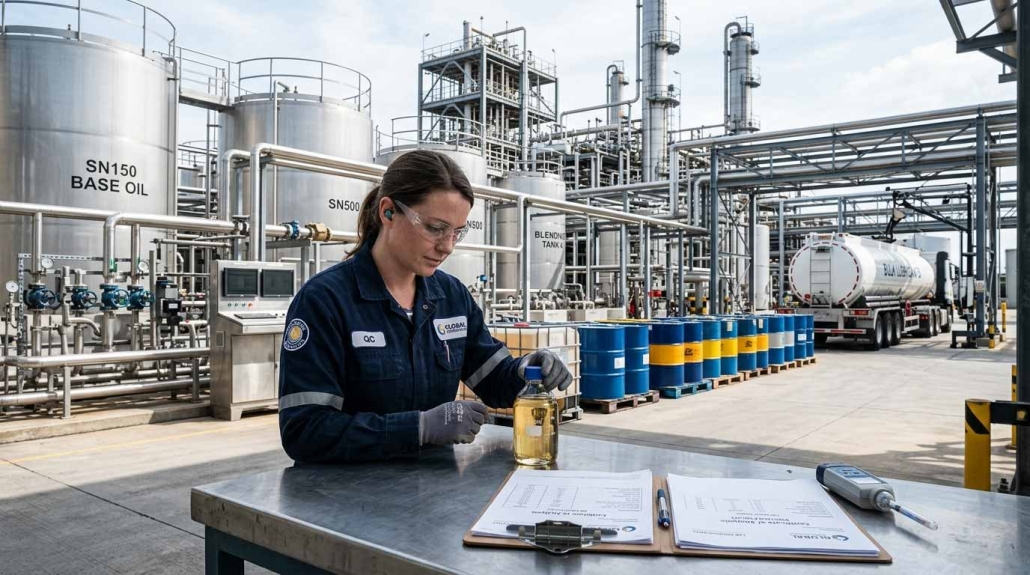
SN150 Base Oil is one of the most widely traded petroleum products used in lubricant manufacturing. As a light viscosity base oil, it plays a fundamental role in producing automotive engine oils, industrial lubricants, and metalworking fluids.
In the global lubricants supply chain, SN150 is valued for its balanced viscosity, good solvency, and cost‑effectiveness. It is commonly derived from mineral base oil refining streams and is primarily classified under Group 1 Base Oil, which remains widely used in many developing lubricant markets.
For lubricant manufacturers and industrial buyers, understanding the technical specifications, production process, and market dynamics of SN150 is essential when selecting the right base oil for blending operations.
Technical Specifications of SN150 Base Oil
SN150 belongs to the Group 1 Base Oil category because it is produced through solvent refining and contains higher levels of aromatics and sulfur compared to more refined base oils. Despite this, it offers good solvency properties that are valuable in lubricant formulations.
Typical technical properties include:
| Property | Typical Range |
|---|---|
| Kinematic Viscosity @ 40°C | 28 – 32 cSt |
| Viscosity Index (VI) | 90 – 105 |
| Flash Point | 200 – 220°C |
| Pour Point | -6 to -12°C |
| Color (ASTM) | 1.5 – 3.0 |
Compared with Group 2 Base Oil, SN150 generally has:
- Higher aromatic content
- Slightly lower oxidation stability
- Lower refining cost
- Better additive solvency in some lubricant formulations
In contrast, more advanced oils such as Group 3 Base Oil, Group 4 Base Oil, and Group 5 Base Oil offer higher purity and performance but come at a higher cost. These higher‑performance oils are often associated with synthetic base oil formulations used in premium lubricants.
Production Process of SN150
SN150 is produced during the base oil production process through solvent refining of vacuum distillates obtained from crude oil. During this process:
- Vacuum gas oil fractions are separated during crude distillation.
- Aromatics are partially removed using solvent extraction.
- Wax is reduced through solvent dewaxing.
- The oil is stabilized through hydrofinishing.
It is important to distinguish between lube cut vs base oil in this context. A lube cut refers to an intermediate refinery stream that still requires further refining before becoming a finished base oil such as SN150.
Most SN150 products are paraffinic base oils, although some markets also produce naphthenic variants, which differ in solvency and temperature performance. The comparison between paraffinic vs naphthenic base oil structures helps lubricant formulators select the most suitable raw material.
Refineries producing fuels such as gasoline and kerosene often integrate base oil units into their refining operations, allowing them to maximize value from crude oil fractions.
Applications and Industrial Uses
Due to its moderate viscosity and strong solvency characteristics, SN150 is widely used in lubricant blending.
Common applications include:
- Passenger car motor oils (PCMO)
- Industrial lubricants
- Hydraulic oils
- Metalworking fluids
- Grease formulations
- Agricultural machinery lubricants
In lubricant formulations that require higher viscosity, SN150 is often blended with heavier base oils such as Bright Stock Base Oil to improve film strength and load‑carrying capability.
For lighter lubricant formulations, SN150 may also be combined with higher‑purity oils such as Group 3 Base Oil or synthetic components to enhance oxidation resistance and thermal stability.
Quality Evaluation and Inspection
Before purchasing SN150 in bulk shipments, buyers typically perform a base oil technical evaluation using laboratory analysis. Key parameters to check include:
- Viscosity consistency
- Flash point safety margin
- Oxidation stability
- Contaminant levels
- Aromatic content
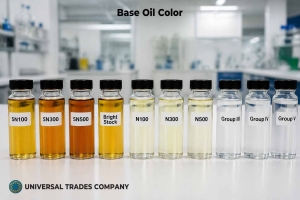
Another important visual indicator is base oil color, which can reveal contamination, oxidation, or improper refining. While color alone does not determine oil quality, darker shades may indicate higher impurity levels.
Industrial buyers should always review the product’s Certificate of Analysis (COA) and compare it against typical SN150 specifications to avoid purchasing off‑spec material.
Market Demand and Global Trade
Between 2024 and 2026, global demand for SN150 remains stable due to continued consumption of conventional lubricants in emerging markets. While synthetic lubricants are growing, mineral base oils still dominate many industrial sectors.
Production capacity is concentrated in regions included among the top 10 base oil producing countries, particularly:
- United States
- China
- South Korea
- Saudi Arabia
- India
- Iran
These countries supply large volumes of Group I base oils to Africa, the Middle East, and Southeast Asia.
For commodity traders, SN150 remains one of the most liquid and widely traded base oil grades because of its versatile applications and relatively stable demand.
Conclusion
SN150 Base Oil remains a cornerstone raw material in lubricant manufacturing. As a Group 1 mineral base oil, it offers a practical balance between performance, solvency, and cost, making it a preferred option for many industrial lubricant formulations.
Global Petroleum Trade Solutions | Universal Trades
As a reputable international petroleum trading enterprise, Universal Trades specializes in the reliable procurement, export, and supply chain management of high-grade petroleum commodities, refined fuels, and industrial feedstocks designed to meet rigorous global standards.










Leave a Reply
Want to join the discussion?Feel free to contribute!