
Understanding Fuel Oil CST: Why 380 CST is a Standard for Bunkering

In the complex ecosystem of marine fuels, the term CST (Centistokes) stands as a fundamental pillar for shipowners, traders, and engineers alike. As the maritime industry navigates through evolving environmental regulations and economic shifts in 2026, one grade remains the undisputed heavyweight of the bunkering world: 380 CST Fuel Oil.
What is CST? The Science of Kinematic Viscosity
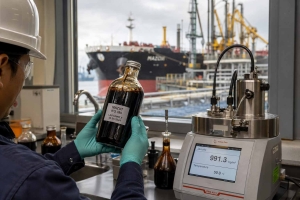
Before diving into market trends, it is essential to understand that CST is a unit of kinematic viscosity. In the context of Fuel Oil articles, viscosity measures a fluid’s resistance to flow. For marine engines, viscosity is measured at a standard temperature of 50°C.
While lighter distillates like Gasoline or Kerosene flow easily at ambient temperatures, heavy fuel oils require precise thermal management. The “380” designation means the oil has a viscosity of 380 mm²/s at 50°C—a thickness that strikes a perfect balance for heavy-duty marine propulsion.
Why 380 CST is the “Sweet Spot” of the Industry
The global preference for 380 CST (often referred to as RMG 380 under the ISO 8217 standard) over lighter grades like 180 CST or heavier 500 CST is driven by two primary factors:
1. Economic Efficiency (Cost vs. Energy)
Historically, 380 CST has always been priced lower than 180 CST. Since most modern merchant vessels are equipped with high-efficiency pre-heating systems, they can easily lower the viscosity of 380 CST to the required injection level (usually 10–15 CST) before it reaches the engine. Buying a thinner, more expensive fuel like 180 CST is often seen as an unnecessary expenditure for deep-sea vessels.
2. Engine Compatibility and Thermal Stability
Most slow-speed crosshead engines—the workhorses of global trade—are optimized for the thermal density of 380 CST. It provides a higher energy density per metric ton compared to lighter distillates, ensuring maximum range for long-haul voyages.
380 CST in the Era of VLSFO and IMO 2026
The maritime industry has undergone a radical shift due to sulfur regulations. Today, 380 CST is available in two main categories:
-
HSFO (High Sulfur Fuel Oil): Used by vessels equipped with “scrubbers” (Exhaust Gas Cleaning Systems).
-
VLSFO (Very Low Sulfur Fuel Oil): The standard for the majority of the global fleet to comply with environmental mandates.
Interestingly, the 380 CST viscosity remains the target for VLSFO blends because it provides the lubricity and stability that marine engines need to prevent catastrophic wear—a quality sometimes lacking in ultra-light chemical blends or certain Bitumen articles feedstocks.
Quality Control: Beyond the CST Number
When sourcing 380 CST through Universal Trades, an expert eye looks beyond just viscosity. A comprehensive Introduction to Fuel Oil analysis must include:
-
Flash Point: Must be above 60°C for safety.
-
Pour Point: Critical for storage in colder climates.
-
Al+Si (Catalytic Fines): High levels can cause engine failure within hours.
-
Sulfur Content: Ensuring compliance with regional SECA zones.
Conclusion: Partnering with Universal Trades
Understanding the nuances of 380 CST is the difference between a profitable voyage and a costly mechanical breakdown. As the global standard, 380 CST offers the reliability and economy that keeps the world’s fleet moving.
Global Petroleum Trade Solutions | Universal Trades
As a reputable international petroleum trading enterprise, Universal Trades specializes in the reliable procurement, export, and supply chain management of high-grade petroleum commodities, refined fuels, and industrial feedstocks designed to meet rigorous global standards.









Leave a Reply
Want to join the discussion?Feel free to contribute!