
CRS-2 Bitumen Emulsion: Technical Guide, Specification, and Uses
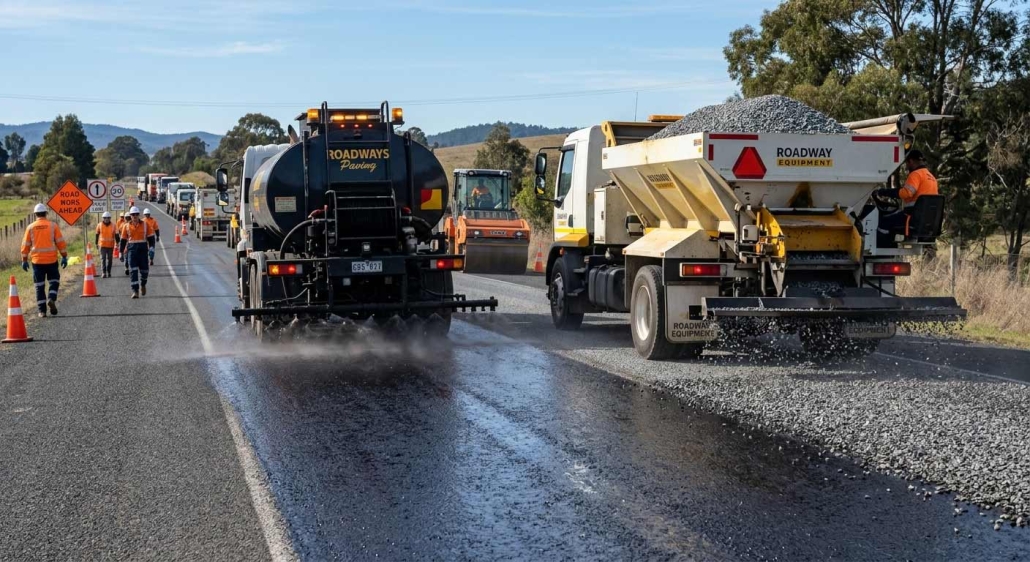
In the road maintenance industry, the success of a surface treatment project relies on the chemical interaction between the binder and the aggregate. Among the various types of Bitumen Emulsion, CRS-2 (Cationic Rapid-Setting) is recognized as a high-performance binder specifically engineered for chip seals and surface dressing applications.
For contractors and procurement specialists, understanding the technical nuances of CRS-2 is vital. Using an incompatible emulsion grade can lead to poor aggregate retention, premature breaking, or surface failure. This guide breaks down why CRS-2 is the preferred choice for rapid-setting requirements and how to verify its quality before supply.
AI Summary: CRS-2 Bitumen Emulsion
- CRS-2 stands for Cationic Rapid-Setting Grade 2 and is primarily used for chip seals and surface dressing.
- Its positive particle charge supports strong adhesion to compatible aggregates, while its rapid breaking helps shorten road-closure time.
- Typical CRS-2 requirements include 100–400 SFS viscosity at 50°C, minimum 65% residue by distillation, maximum 0.10% sieve residue, and a positive particle charge.
- CRS-2P is polymer-modified and generally offers better elasticity, aggregate retention, and performance under heavy traffic or demanding conditions.
- Unlike SS-1 and CSS-1, which are slow-setting emulsions, CRS-2 is formulated for applications requiring fast breaking and early binder–aggregate adhesion.
- CRS-2 must be protected from freezing, excessive heating, contamination, and prolonged improper storage, as these conditions may destabilize the emulsion.
- Before purchasing, buyers should verify the applicable standard, recent Certificate of Analysis (COA), residue content, viscosity, sieve result, particle charge, packaging, and recommended storage conditions.
- CRS-2 is not a universal binder. Final selection should consider aggregate compatibility, climate, traffic level, application equipment, and project specifications.
In short: CRS-2 is a high-viscosity, cationic rapid-setting bitumen emulsion designed mainly for chip-seal treatments where fast breaking, strong aggregate retention, and efficient road reopening are required.
Why CRS-2 Bitumen Emulsion Is Used for Chip Seals
CRS-2 is a cationic, rapid-setting emulsified asphalt. The “Rapid-Setting” (RS) designation indicates that the emulsion is designed to break quickly upon contact with aggregate, allowing for the rapid resumption of traffic and strong bond development.
For engineers, this provides two critical advantages:
- Strong Aggregate Retention: The cationic charge (positive) creates a superior bond with negatively charged aggregates (like silica), which is essential in chip seal operations.
- Operational Efficiency: Because it sets rapidly, road closures can be minimized, making it ideal for busy highways or maintenance schedules where time is a critical factor.
Compared to other binder types such as Cutback Bitumen, emulsions like CRS-2 are significantly safer and more environmentally friendly because they do not require high-temperature heating or volatile solvents.
If you are still evaluating binder categories for your project, our A Simple Guide to Choosing the Right Bitumen provides a comprehensive overview of how to select the correct product for your specific application.
Comparative Analysis: CRS-1, CRS-2, and CRS-2P
Selecting the right grade depends on your traffic volume, climate, and aggregate type. The table below compares common cationic rapid-setting grades.
| Property | CRS-1 | CRS-2 | CRS-2P (Polymer Modified) |
|---|---|---|---|
| Viscosity (SFS @ 50°C) | 20–100 | 100–400 | 100–400 |
| Setting Speed | Very Rapid | Rapid | Rapid |
| Primary Use | Light Surface Dressing | Standard Chip Seal | High-Traffic/Severe Conditions |
| Elasticity | Low | Moderate | High |
While standard CRS-2 is suitable for most maintenance works, Polymer-Modified Bitumen (CRS-2P) is increasingly selected for high-traffic freight corridors where extra elasticity and shear resistance are required.
Technical Specifications: CRS-2 Datasheet
When requesting a Sample Bitumen Certificate of Analysis (COA), these are the key parameters you should verify. ASTM D2397 provides the framework for these tests.
| Parameter | Specification | Test Method |
|---|---|---|
| Viscosity, Saybolt Furol @ 50°C | 100–400 SFS | ASTM D7496 |
| Storage Stability (24-h) | 1% max | ASTM D6930 |
| Sieve Test | 0.10% max | ASTM D6933 |
| Residue by Distillation | 65% min | ASTM D6997 |
| Particle Charge | Positive | ASTM D7402 |
For companies responsible for Bitumen Quality Tests, these values are the baseline. Even small variations in viscosity or residue content can reveal Differences Between High-Quality and Low-Quality Bitumen, which significantly impacts project longevity.
For more technical resources, you can browse our full collection of Bitumen Articles.

Use Case Analysis: The Engineering Role of CRS-2
CRS-2 is not an all-purpose binder. It is specifically formulated for situations where rapid curing and strong adhesion are the primary design priorities.
Resistance to Weather and Traffic
Because CRS-2 is designed for chip seal, it performs exceptionally well in sealing pavement cracks and preventing moisture ingress. However, proper application is crucial. If the emulsion is not applied under the right temperature or humidity, it can lead to Causes of Asphalt Cracking rather than preventing it.
High-Performance Environments
CRS-2 is commonly used in:
- Standard chip seal and surface dressing.
- Localized pavement maintenance.
- Projects requiring strong aggregate retention in moderate traffic conditions.
If your project requires lower stiffness or lighter application, you may need to compare this with 60/70 Bitumen or 80/100 Bitumen applications, though note that those are hot-applied binders, not emulsions.
Common Challenges and Solutions for CRS-2
Even a high-performance emulsion requires professional handling. Most field issues stem from storage or site management, not the product itself.
Temperature Sensitivity and Storage
CRS-2 must be stored in temperature-controlled tanks. Excessive heat will break the emulsion, while freezing will destroy it instantly. Always monitor Bitumen Shelf Life and ensure that storage tanks are free from contamination with other grades, such as Oxidized Bitumen 85/25 or Oxidized Bitumen 90/15, which are incompatible.
Transportation and Packaging
If you face Causes of Leakage in Export Bitumen Drums, it is usually related to the filling process. When transporting emulsions, ensure that the containers are compatible with cationic materials. You can learn more about Types of Bitumen Packaging to ensure safe transit to your job site.

Strategic Applications and Industry Context
For procurement planning, it is useful to view CRS-2 as part of a larger supply strategy. Understanding the Bitumen Production Process and monitoring the Global Bitumen Price Forecast can help you optimize your purchasing timeline.
For global buyers, identifying reputable sources among the Top Bitumen-Exporting Countries and Top Bitumen-Producing Countries is essential for maintaining supply chain reliability.
If your project involves waterproofing or industrial insulation rather than paving, you might require Blown Bitumen or look into the Best Bitumen for Roof Waterproofing rather than emulsion grades.
Conclusion
CRS-2 Bitumen Emulsion is a critical tool for infrastructure maintenance, offering superior setting speeds and adhesion for chip seal projects. Its effectiveness, however, relies entirely on choosing the right specification and ensuring proper handling throughout the supply chain.
Whether you are comparing 40/50 Bitumen with emulsion grades or determining the Applications of Bitumen for a specific road network, the goal is always to match the material’s properties with the physical demands of the road.
For project-specific guidance on binder selection, supply availability, or technical troubleshooting, contact our team to discuss your project requirements.

Frequently Asked Questions About CRS-2 Bitumen
What is CRS-2 bitumen?
CRS-2 is a cationic rapid-setting bitumen emulsion mainly used for chip seals and surface dressing. It breaks quickly after contact with aggregate, helping develop early adhesion and allowing roads to reopen sooner.
What does CRS-2 stand for?
CRS means Cationic Rapid-Setting, while 2 indicates a higher-viscosity grade than CRS-1. CRS-2 is formulated to hold cover aggregate effectively during chip-seal applications.
What is CRS-2P?
CRS-2P is a polymer-modified version of CRS-2. The added polymer can improve elasticity, aggregate retention, resistance to bleeding, and performance under heavy traffic or demanding climatic conditions.
What is the difference between CRS-2 and SS-1 emulsion?
CRS-2 is a high-viscosity, rapid-setting cationic emulsion primarily used for chip seals. SS-1 is an anionic slow-setting emulsion generally used for tack coats, fog seals, mixing, and other applications requiring longer workability.
What is bitumen emulsion in asphalt?
Bitumen emulsion is a dispersion of small bitumen droplets in water, stabilized by an emulsifying agent. It enables the binder to be applied at lower temperatures than hot bitumen and is widely used in pavement construction and maintenance.
What is CSS-1 bitumen?
CSS-1 is a cationic slow-setting bitumen emulsion. It is commonly selected for tack coats, fog seals, slurry applications, and mixtures requiring sufficient time for coating and placement.
What is SS-1-grade bitumen emulsion?
SS-1 is an anionic slow-setting emulsion with relatively low viscosity. Its typical applications include tack coats, fog seals, dust control, and cold-mix operations, subject to local project specifications.
What is anionic bitumen emulsion used for?
Anionic emulsions are used in applications where their chemical charge is compatible with the selected aggregate. Depending on the grade, they may be applied in tack coats, fog seals, slurry systems, cold mixes, or surface treatments.
What are the four main types of bitumen?
Bitumen can broadly be grouped into paving-grade bitumen, oxidized bitumen, cutback bitumen, and bitumen emulsion. Other important classifications include polymer-modified bitumen and grades based on penetration, viscosity, or performance.
What is Type 2 asphalt?
“Type 2 asphalt” does not have one universal meaning; it may refer to a locally defined asphalt mixture, aggregate gradation, or specification category. Buyers should check the relevant road authority or project standard rather than assuming it means CRS-2.
Which bitumen grade is best?
There is no single best bitumen grade for every project. Selection depends on the application, climate, traffic, aggregate characteristics, pavement design, and applicable technical standard; CRS-2 is particularly suitable for chip seals and surface dressing.
What does 60/70 bitumen mean?
60/70 is a penetration-grade bitumen with a penetration value of 60–70 units of 0.1 mm under specified test conditions. Unlike CRS-2, it is a conventional paving binder rather than a water-based bitumen emulsion.
How many grades of bitumen are there?
There is no fixed global number because bitumen is classified under several systems, including penetration, viscosity, performance, emulsion, cutback, oxidized, and polymer-modified grades. The available grades also vary according to regional standards and project requirements.
Is CRS-2 the same as CrS₂?
No. In road construction, CRS-2 refers to a cationic rapid-setting bitumen emulsion. In chemistry, CrS₂ may be interpreted as a chromium–sulfur compound, so questions about the “structure of CrS₂” are unrelated to bitumen.
What is “CRS-2 oil”?
“CRS-2 oil” is not the standard technical name for this product. The correct term is CRS-2 bitumen emulsion or CRS-2 emulsified asphalt, although some suppliers may informally describe it as an asphalt or bituminous oil.

Related Articles
General Guides and Categories
Petroleum Products: Explore the most important petroleum-derived products, their key properties, and their applications across road construction, manufacturing, energy, and other industrial sectors.
Technical Articles and Comparisons
40/50 vs. 60/70 Bitumen: Compare these two penetration grades in terms of hardness, penetration range, climate suitability, performance characteristics, and common paving applications.
Hot Bitumen vs. Cold Bitumen: Understand the differences between hot- and cold-applied bitumen, including application temperature, equipment requirements, handling conditions, safety considerations, and suitable uses.
Production, Storage, and Market Insights
Types of Bitumen and Their Applications: Compare penetration-grade, viscosity-grade, performance-grade, bitumen emulsion, and oxidized bitumen based on their specifications, performance, and industrial applications.







Hi~(* ̄▽ ̄*)