
Naphtha vs. Kerosene: Understanding the Differences Between Two Key Hydrocarbons
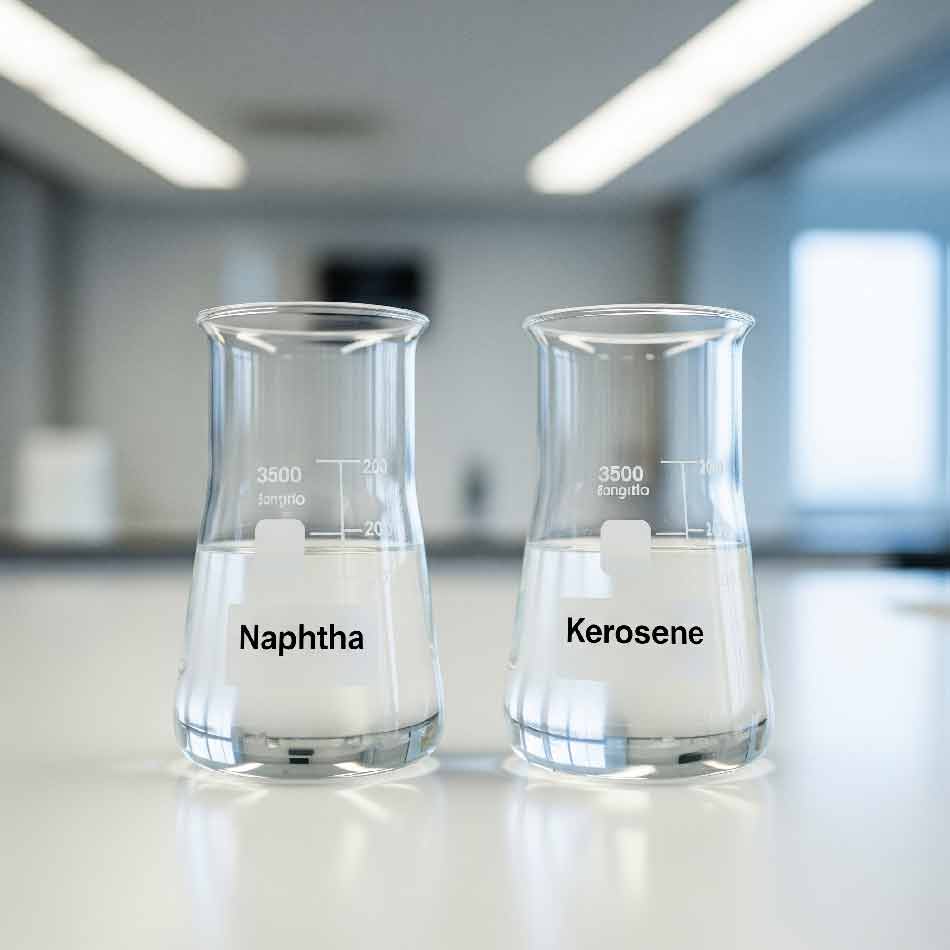
In the vast world of petroleum derivatives, naphtha and kerosene are two names that frequently come up. Both are hydrocarbons and play vital roles in various industries, but there are fundamental differences in their composition, properties, and applications. Understanding these distinctions is crucial. This article delves into a comprehensive comparison of the two.
What is Naphtha?
Naphtha is a light petroleum cut obtained from the distillation of crude oil. It’s a complex mixture of various hydrocarbons with carbon numbers ranging from 5 to 12, possessing a low boiling point (approximately 30 to 200 degrees Celsius). Due to its high solvency and flammability, naphtha has extensive applications in the petrochemical industry and other sectors.
Key Properties of Naphtha:
- Volatile: Evaporates quickly.
- Colorless or slightly yellowish: Typically transparent.
- Pungent odor: Has a distinct smell.
- Lighter: Has a lower density compared to kerosene.
- Highly flammable: Catches fire easily.
Uses of Naphtha:
- Petrochemical Feedstock: The primary use of naphtha is in the production of olefins (like ethylene and propylene) in steam cracking units. These are crucial raw materials for manufacturing plastics, synthetic fibers, and other chemical products.
- Industrial Solvent: Used as a solvent in the paint, resin, rubber, and adhesive industries.
- Fuel Additive: In some cases, it’s used as a blending component in gasoline.
What is Kerosene?
Kerosene is also a cut from crude oil, but it’s heavier than naphtha and has a higher boiling point (approximately 150 to 300 degrees Celsius). This substance is mainly composed of hydrocarbons with carbon numbers ranging from 10 to 16. Kerosene was widely used in the past as a fuel for lighting and heating, and it continues to have specific applications today.
Key Properties of Kerosene:
- Less volatile: Evaporates slower than naphtha.
- Colorless or slightly yellowish: Often transparent.
- Distinct odor: Has a specific, familiar smell.
- Heavier: Has a higher density compared to naphtha.
- Higher flash point: Catches fire slower than naphtha, but is still flammable.
Uses of Kerosene:
- Jet Fuel: The main modern use of kerosene is as fuel for jet engines (known as jet fuel or JP).
- Lighting and Heating Fuel: In rural areas and regions with limited access to natural gas, it’s still used as fuel for oil lamps and heaters.
- Industrial Solvent: Used as a solvent for certain fats, oils, and greases.
- Pesticide: Used as a carrier in some pesticide formulations.

Naphtha vs. Kerosene: A Comparative Table
Specialized Articles on Naphtha and Kerosene
Key differences and industrial applications of naphtha and kerosene.
An in‑depth examination of two important industrial substances, their applications, and characteristics.
Understanding the key differences in these hydrocarbons and their respective applications and uses.
Comprehending the key distinctions between naphtha and gasoline and their applications.
Light Naphtha vs. Heavy Naphtha
Key differences and industrial applications of light and heavy naphtha.
A comparison of kerosene and jet fuel, highlighting their key characteristics and typical uses.
Conclusion
As we’ve seen, while both naphtha and kerosene originate from the same source (crude oil), their structural and physical differences lead to entirely distinct applications. Naphtha plays a vital role as a crucial raw material in the petrochemical industry and the production of modern chemicals, whereas kerosene is primarily used as jet fuel and in heating and lighting applications. Understanding these differences is essential for a better grasp of industrial processes and the optimal utilization of these valuable resources.
Global Petroleum Trade Solutions | Universal Trades
As a reputable international petroleum trading enterprise, Universal Trades specializes in the reliable procurement, export, and supply chain management of high-grade petroleum commodities, refined fuels, and industrial feedstocks designed to meet rigorous global standards.










What physical property distinguishes Naphtha and Kerosene during the distillation process, and what is Kerosene’s most important modern application?
The distinguishing physical property is the boiling range: Naphtha is a lighter cut with a lower boiling point ($\text{30-200}^\circ\text{C}$), while Kerosene is heavier with a higher boiling point ($\text{150-300}^\circ\text{C}$). Kerosene’s most important modern application is its use as Jet Fuel in the aviation industry.