
Propane–Butane Mix (Commercial LPG): Uses, Composition and Advantages
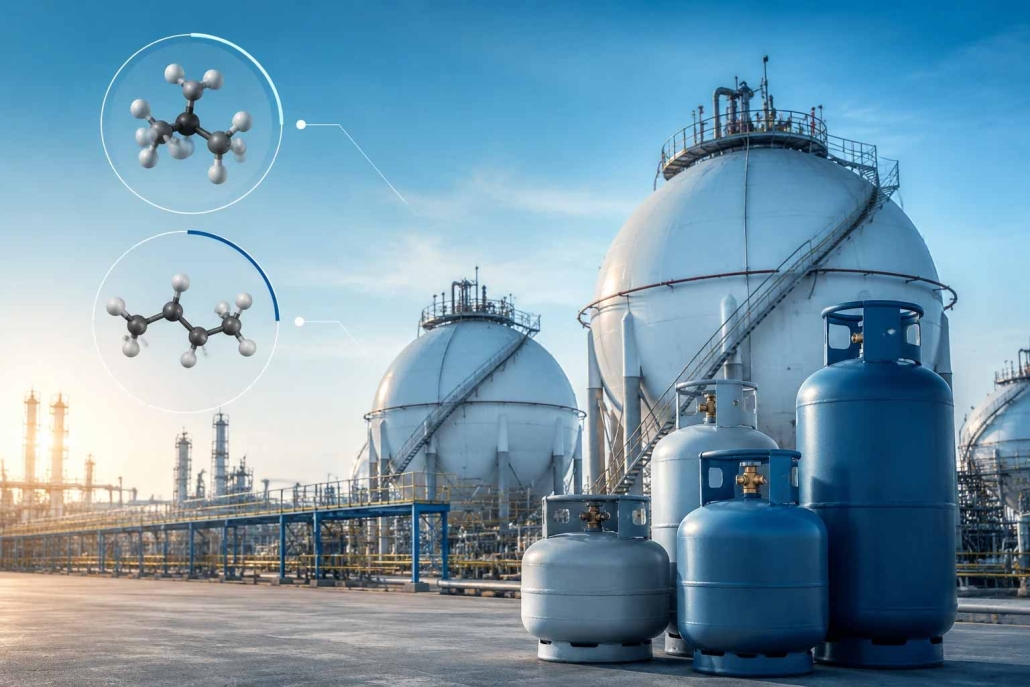
The global energy market is increasingly relying on the Propane–Butane Mix (Commercial LPG) as a clean, efficient, and versatile fuel. Its balanced hydrocarbon profile allows it to perform reliably across domestic, industrial, and commercial applications—making it one of the most widely traded petroleum products in global markets, especially within the Top 10 LPG Producing Countries. Unlike many simplified LPG articles, this guide delivers an engineer-friendly yet approachable explanation designed for serious buyers, technical professionals, and anyone evaluating LPG for heating, fuel, or processing needs.
What Is Propane–Butane Mix (Commercial LPG)?
Commercial LPG is a blended mixture of propane (C₃H₈) and butane (C₄H₁₀), designed to optimize vapor pressure, combustion performance, and storage efficiency.
Compared with LPG Propane Grade and LPG Butane Grade, the mixed form offers a middle‑ground solution suitable for countries with seasonal temperature changes, diverse industrial sectors, and broad consumer usage. For readers new to LPG fundamentals, referencing What Is LPG and What Are Its Uses? provides helpful background.
Chemical Composition and Main Characteristics
Commercial LPG generally contains:
- 30–60% propane
- 40–70% butane
- Minor amounts of olefins and trace sulfur derivatives depending on refinery quality
Key performance characteristics:
- Medium vapor pressure, giving stable output across most climates
- Moderate boiling point, supporting reliable vaporization
- High combustion efficiency with low CO₂ and particulate emissions
- Clean flame profile, making it suitable for heat-sensitive industrial processes
These chemical and thermal properties make it a flexible alternative to fuels like diesel, heavy fuel oil, and furnace oils.
Advantages of Commercial LPG
Commercial LPG is popular across industries because it:
- Provides wide applicability for cooking, heating, autogas, manufacturing, and power generation
- Offers better cold-climate performance than pure butane
- Delivers cost savings, often priced between propane and butane
- Ensures easy storage and transport due to moderate pressure
- Supports cleaner combustion, ideal for ceramic production, metalworks, and bitumen heating operations
Its predictable burn characteristics are especially valued in plants producing or processing sulfur‑based derivatives.
Main Industrial and Domestic Applications
Industrial Applications
- Metal cutting, forging, and heat treatment
- Boiler fuel and steam generation
- Ceramic and glass production
- Asphalt melting and bitumen heating
- Oilfield and refinery operations within broader petroleum products sectors
Domestic and Commercial Applications
- Residential stove and oven fuel
- Hot water systems
- Space heaters
- Small generator sets
- Catering and hospitality heating equipment
Because its vapor pressure adapts well to seasonal temperature shifts, the Propane–Butane Mix is ideal for distributors and importers operating in mixed or temperate climates.
Commercial LPG vs Propane Grade vs Butane Grade
- Propane Grade LPG: Best vaporization at low temperatures; ideal for cold-weather regions, cylinder banks, and high-demand industrial applications.
- Butane Grade LPG: Preferred in warm climates; cheaper; suitable for indoor systems with controlled temperatures.
- Commercial LPG (Propane–Butane Mix): Optimized blend offering reliable year-round performance across industrial, domestic, and autogas markets.
For a broader comparison of gas fuels beyond LPG, see Difference Between LPG and LNG.
Comparison Table
| Property | Commercial LPG (Propane–Butane Mix) | Propane Grade | Butane Grade |
|---|---|---|---|
| Hydrocarbon Composition | Propane + Butane | ~95% Propane | ~95% Butane |
| Boiling Point | Moderate | Lowest | Highest |
| Vapor Pressure | Medium | High | Low |
| Cold-Climate Performance | Good | Excellent | Weak |
| Typical Industries | Heating, autogas, industry | Cold-region industry | Indoor systems |
| Fuel Efficiency | High | Medium–High | High |
| Storage Requirements | Standard LPG tanks | High-pressure tanks | Lower-pressure storage |
| Transportation Suitability | Very good | Excellent | Good |
| Relative Cost | Moderate | Higher | Lower |
| Common Markets | Global | Cold countries | Warm climates |
Storage, Transportation, and Safety Notes
- Store in approved LPG tanks equipped with pressure‑relief valves.
- Keep cylinders away from open flames, heat sources, or electrical sparks.
- Maintain adequate ventilation during indoor use.
- Follow local and international LPG transport codes.
- Inspect valves, regulators, and hoses regularly to minimize leakage risk.
Frequently Asked Questions (FAQ)
Is Commercial LPG suitable for cold climates?
Yes. Its propane content supports proper vaporization at lower temperatures.
Is Commercial LPG more cost-effective than pure propane?
In most markets, yes—because butane is less costly to produce and blend.
Can the Propane–Butane Mix be used as autogas?
Absolutely. Many global autogas markets rely on mixed LPG formulations.
How does LPG differ from LNG?
LPG is a heavier hydrocarbon mixture stored under pressure; LNG is methane stored at cryogenic temperatures. See Difference Between LPG and LNG for more details.
Conclusion
The Propane–Butane Mix (Commercial LPG) stands as one of the most versatile, efficient, and cost-effective fuels in the global energy sector. Its balanced composition delivers dependable performance across industrial heating, manufacturing, transport, and domestic applications. Whether evaluated against LPG Propane Grade or LPG Butane Grade, the blended form remains a smart, adaptable choice for suppliers, engineers, and buyers operating across diverse climates and markets.
Global Petroleum Trade Solutions | Universal Trades
As a reputable international petroleum trading enterprise, Universal Trades specializes in the reliable procurement, export, and supply chain management of high-grade petroleum commodities, refined fuels, and industrial feedstocks designed to meet rigorous global standards.




Leave a Reply
Want to join the discussion?Feel free to contribute!