
Top 10 LPG Producing Countries in the World
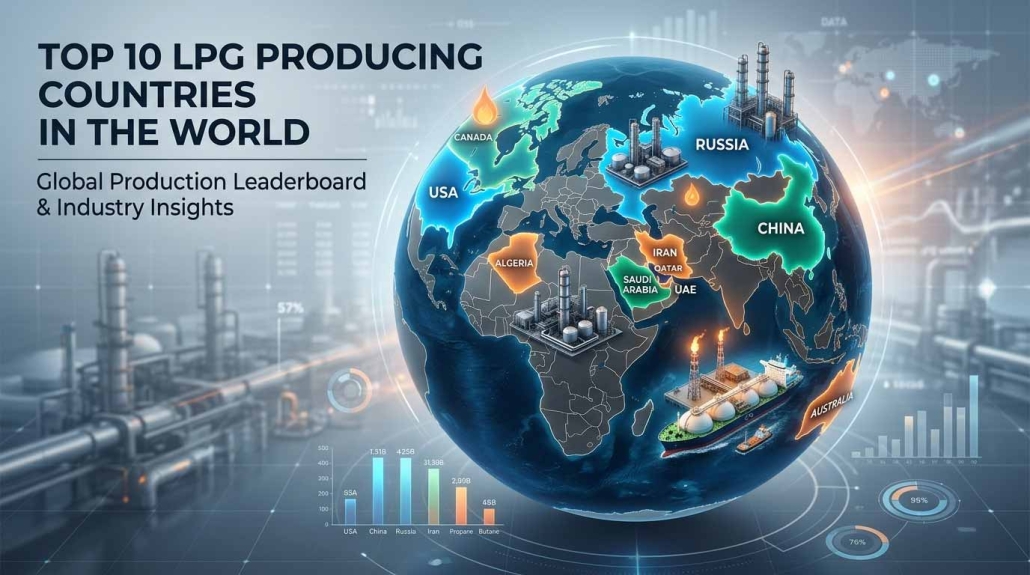
Liquefied Petroleum Gas (LPG)—primarily consisting of propane and butane—is a versatile and vital component of the global energy market. Extracted through natural gas processing and crude oil refining, LPG is utilized worldwide as a clean-burning fuel for residential heating and cooking, an automotive fuel (Autogas), and a crucial petrochemical feedstock.
As global demand for cleaner alternative fuels and petrochemical products surges, understanding the geopolitical and economic landscape of LPG production is essential for investors and industry professionals alike. Let’s explore the leading nations driving the global LPG supply chain.
Global LPG Production Summary
Below is a summary of the world’s top LPG producers, based on recent annual production estimates.
| Rank | Country | Annual Production
(Million Metric Tons) |
Global Market
Share (%) |
| 1 | United States | ~95.0 | ~28% |
| 2 | China | ~48.5 | ~14% |
| 3 | Saudi Arabia | ~27.0 | ~8% |
| 4 | Russia | ~17.5 | 10.0% |
| 5 | Canada | ~14.0 | ~4% |
| 6 | United Arab Emirates | ~12.5 | ~3.5% |
| 7 | India | ~12.0 | ~3.5% |
| 8 | Qatar | ~11.0 | ~3% |
| 9 | Iran | ~9.5 | ~2.8% |
| 10 | Algeria | ~8.0 | ~2.5% |
| Total | World Production | ~357 | 100% |
(Note: Production amounts are estimated based on recent industry aggregate trends and can fluctuate based on crude oil refining outputs and OPEC+ quotas).
1. United States
The United States is the undisputed leader in global LPG production, a position largely solidified by the shale gas revolution. The massive extraction of shale gas and tight oil has resulted in abundant yields of Natural Gas Liquids (NGLs), from which propane and butane are fractionated.
Major production is concentrated in the Permian Basin (Texas and New Mexico) and the Appalachian Basin (Marcellus and Utica shales). Key infrastructure hubs like Mont Belvieu, Texas, serve as the heart of US fractionation and export. Leading companies include Enterprise Products Partners, Targa Resources, and ExxonMobil. The US is not only the top producer but also the top LPG exporter, heavily influencing global pricing dynamics.
2. China
China’s massive LPG production is driven by its expansive crude oil refining sector rather than direct natural gas extraction. As the “factory of the world,” China has heavily invested in mega-refineries and petrochemical complexes to feed its domestic demand for plastics and chemicals.
State-owned giants like Sinopec and PetroChina, alongside private mega-refiners like Rongsheng Petrochemical, dominate the landscape. The production is heavily concentrated in coastal provinces such as Shandong, Zhejiang, and Guangdong. Despite its high production, China’s domestic demand outpaces supply, making it a major importer as well.
3. Saudi Arabia
Saudi Arabia’s LPG production is deeply tied to its status as a crude oil superpower. LPG is captured as an associated gas during oil extraction and refined in the Kingdom’s massive processing facilities. Saudi Aramco has a complete monopoly on the country’s production. Facilities like the Yanbu NGL fractionation plant and the Ju’aymah NGL fractionation center are critical hubs. A significant portion of Saudi LPG is exported to Asian markets, making the “Saudi Contract Price (CP)” a benchmark for LPG pricing in the East.
4. Russia
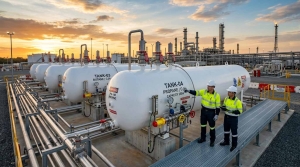
Russia leverages its vast natural gas reserves to maintain its position as a top-tier LPG producer. Natural gas processing plants in Siberia and the Urals are the primary sources of Russian LPG.
Companies like Gazprom, Sibur, and Rosneft are the major players. The Tobolsk petrochemical complex in Western Siberia is one of the world’s largest centers for NGL processing. Due to recent geopolitical shifts, Russia has been redirecting its LPG exports from European markets toward Asia and domestic petrochemical consumption.
5. Canada
Canada’s LPG production benefits from its rich natural gas fields in the Western Canadian Sedimentary Basin (WCSB), particularly in Alberta and British Columbia.
Major operators include Pembina Pipeline Corporation, AltaGas, and Canadian Natural Resources. The development of the Ridley Island Propane Export Terminal (RIPET) in British Columbia has recently allowed Canada to bypass the US and export LPG directly to Asian markets, boosting its global market presence.
6. United Arab Emirates (UAE)
The UAE is a powerhouse in the Middle Eastern gas sector. Similar to Saudi Arabia, its LPG is derived from both associated gas from oil fields and massive natural gas processing initiatives.
ADNOC (Abu Dhabi National Oil Company) is the primary producer, with major processing facilities located in Ruwais and Das Island. The UAE is investing heavily in expanding its gas processing capabilities to achieve gas self-sufficiency and increase its export volumes to Asian economies.
7. India
India has aggressively expanded its refining capacity over the past two decades, leading to a substantial increase in domestic LPG production. The government’s push to replace solid biomass fuels with clean-burning LPG for domestic cooking has driven this growth.
State-owned Indian Oil Corporation (IOCL), Bharat Petroleum (BPCL), and Reliance Industries (which operates the massive Jamnagar Refinery) are the key producers. While production is high, India’s consumption is so massive that it remains one of the world’s largest LPG importers.
8. Qatar
Qatar is world-renowned for its Liquefied Natural Gas (LNG), but the massive processing of gas from the North Field also yields substantial quantities of LPG as a byproduct.
QatarEnergy controls the country’s output. The industrial cities of Ras Laffan and Mesaieed are the primary centers for fractionation and export. Qatar’s LPG strategy is heavily export-oriented, leveraging its established LNG shipping routes to deliver propane and butane globally.
9. Iran
Iran holds some of the world’s largest natural gas reserves, particularly in the South Pars gas field. Extraction and processing from this field are the primary drivers of Iranian LPG production.
The National Iranian Oil Company (NIOC) and the National Iranian Gas Company (NIGC) manage production. The Asaluyeh industrial hub is the center of Iran’s gas processing. Despite international sanctions, Iran continues to produce and export significant volumes of LPG, primarily to markets in Asia.
10. Algeria
Algeria is Africa’s largest natural gas producer and a key supplier to Europe. The country’s LPG production is derived from natural gas processing at massive fields like Hassi R’Mel.
Sonatrach, the state-owned oil and gas company, manages all production. The Arzew industrial zone on the Mediterranean coast features large fractionation plants and export terminals. Algeria’s proximity to Europe makes it a vital, strategic energy partner for the continent.
Conclusion: The Future of Global LPG
The global LPG market is currently characterized by a steady increase in supply, led predominantly by the United States and the Middle East. While Western nations are utilizing LPG increasingly as a petrochemical feedstock, developing nations in Asia and Africa are driving demand for residential cooking and heating. As the energy transition progresses, the role of LPG—often considered a “bridge fuel” due to its lower carbon emissions compared to coal and oil—will remain vital. Continued investments in natural gas processing infrastructure and expanding export terminals indicate a robust and dynamic future for global LPG production.
Frequently Asked Questions (FAQ)
What is the difference between LPG and LNG?
LPG (Liquefied Petroleum Gas) consists mainly of propane and butane (C3H8 and C4H{10}) and becomes liquid under moderate pressure. LNG (Liquefied Natural Gas) is primarily methane (CH4) and must be cooled to extremely low temperatures (-162°C) to become liquid.
Which country exports the most LPG?
The United States is currently the largest exporter of LPG in the world. Driven by massive shale gas production, the US exports millions of tons of propane and butane annually, primarily to Asia and Europe.
How is LPG produced?
LPG is a co-product of two distinct processes: natural gas processing (where NGLs are extracted from the gas stream) and crude oil refining (where LPG is produced as a byproduct of breaking down crude oil into gasoline and diesel).
Why is LPG considered a clean fuel?
LPG burns more cleanly than traditional solid fuels (like wood or coal) and most liquid fuels. It produces significantly fewer particulate matter emissions, less carbon monoxide, and lower greenhouse gases per unit of energy generated.
Global Petroleum Trade Solutions | Universal Trades
As a reputable international petroleum trading enterprise, Universal Trades specializes in the reliable procurement, export, and supply chain management of high-grade petroleum commodities, refined fuels, and industrial feedstocks designed to meet rigorous global standards.




Leave a Reply
Want to join the discussion?Feel free to contribute!