
What is LPG (Liquefied Petroleum Gas)? Meaning, Uses, Composition

LPG, or Liquefied Petroleum Gas, is a flammable hydrocarbon fuel mainly made of propane and butane. It is produced during crude oil refining and natural gas processing. LPG is widely used for cooking, heating, hot water systems, vehicle fuel, and industrial applications.
Liquefied Petroleum Gas (LPG) is a versatile and widely used fuel, found everywhere from household kitchens to large industrial factories. This vital fuel is a mixture of propane and butane gases that can be easily converted to a liquid state under relatively low pressure. This liquefaction capability makes its transportation and storage significantly easier than natural gas, hence the name “liquefied gas.”
In this article, we’ll delve deep into LPG, covering its production, key properties, types, extensive applications, and its position in global markets. Understanding this valuable fuel is essential, especially for energy sector professionals, to maximize its potential.
LPG Meaning and Full Form
LPG stands for Liquefied Petroleum Gas. It refers to a group of hydrocarbon gases that can be stored as a liquid under moderate pressure. The most common LPG components are propane and butane, either used separately or as a mixture.
What is LPG Made Of?
LPG is mainly made of propane (C3H8) and butane (C4H10). The exact ratio of propane to butane can vary depending on climate, season, and local standards. In colder regions, LPG often contains more propane because propane vaporizes better at low temperatures. In warmer climates, butane may be used in higher proportions.
How is LPG Produced?
LPG is a byproduct of crucial processes in the oil and gas industry and is primarily derived from two main sources:
- Oil Refineries: During the refining of crude oil and the separation of various products like gasoline and diesel, LPG is also produced.
- Gas Fields: Alongside natural gas, LPG is present and is separated and collected through specific processes.
The production process involves compressing and cooling the gas until it liquefies. When produced from natural gas, impurities like sulfur and water are also removed to ensure the final quality of the liquefied gas. LPG production is directly linked to the amount of crude oil and natural gas extracted; the more raw materials produced, the more LPG can be recovered.
Key Properties of LPG: Why Are They Important?
Understanding LPG’s properties helps us better grasp its applications and safety considerations:
- Colorless and Odorless (originally): For quick leak detection and enhanced safety, an odorizing agent (mercaptan) is added, which has a distinct, recognizable smell.
- Denser than Air: If it leaks, it will accumulate in enclosed spaces near the ground, a crucial safety point.
- Highly Flammable: This property makes it an excellent and powerful fuel.
- High Calorific Value: Burning a specific amount of LPG produces more energy than natural gas (approximately 46.1 megajoules per kilogram), indicating its high efficiency.
- Low Boiling Point: It easily converts from liquid to gas and can be used even at temperatures close to zero.
- Easy Liquefaction: This characteristic allows for transportation and storage under relatively low pressure.
- Low Toxicity (at low concentrations): High inhalation can cause oxygen depletion and suffocation, so proper ventilation of the environment is highly important.
These physical and chemical properties play a key role in determining where and how LPG is used, as well as the safety precautions that must be observed.
To learn more about the differences between LPG and LNG, please read the article “What are the differences between LPG and LNG?”
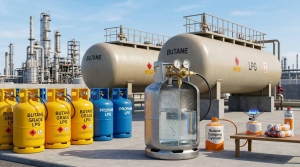
Types of LPG (Liquefied Petroleum Gas) and Their Applications
LPG is produced and supplied in various grades, differing in their ratio of propane to butane. These compositional differences affect properties such as vapor pressure, boiling point, and, as a result, their applications. The main LPG grades include:
This grade contains a high percentage of propane and very low impurities. HD-5 is one of the most common grades for household use, heating, and certain engine applications, especially in colder regions.
Primarily composed of butane, this LPG grade is better suited for warmer climates because it has less evaporation at low temperatures. Butane grade is mainly used for light-duty purposes, lighting, heating, and several industrial applications.
The mixed grade combines both propane and butane, offering balanced properties for a wide range of general and industrial uses. This grade is more adaptable to different weather and usage conditions.
Automotive Grade (Autogas):
Designed specifically for automotive engines, this grade requires higher purity to ensure safe and efficient engine performance.
Commercial and Industrial Grade:
Used in industrial settings, such as furnace fuel, burners, and manufacturing processes. The composition may vary depending on the application.
Technical and Refined Grade:
This grade features the highest level of purity and is used in sensitive laboratory processes, specialized production, or high-performance engines.
In summary: Choosing the right LPG grade depends on factors like type of use, environmental temperature, required purity level, and technical requirements.
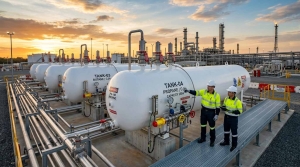
Widespread Applications and Uses of LPG:
Due to its versatility, LPG is used in many different sectors:
- Household Use: Cooking, home heating (heaters, fireplaces), water heaters in areas without access to urban gas networks.
- Industries: Fuel for furnaces and burners, feedstock in petrochemical industries (for producing plastics, rubber, etc.), cooking in restaurants and industrial kitchens, metal cutting, and heating in factories.
- Transportation: As vehicle fuel (autogas), fuel for forklifts in warehouses.
- Agriculture: Heating greenhouses and livestock farms, drying crops, and powering irrigation pumps.
- Other Applications: Propellant in aerosols and fuel for hot air balloons.
What Factors Affect LPG Quality?
LPG quality is important throughout the supply chain and is influenced by the following:
- Source of Production: Whether it comes from an oil refinery or a natural gas field can slightly alter its composition.
- Production and Purification Process: Separation and purification stages must be carried out correctly to remove impurities.
- Storage and Transportation Conditions: LPG must be stored and transported in specialized tanks under appropriate pressure. Temperature and adherence to standards are vital for maintaining quality and safety.
- Additives: The addition of substances like odorants (for safety) or anti-freeze (in cold regions) affects its functional quality.
LPG Trading in the Global Market
LPG trade is a large and active international market. Some countries are producers and exporters, while others are importers:
- Major Exporters: The United States, Saudi Arabia, China, Canada, Russia, Iran, UAE, and Qatar are among the world’s largest LPG exporters. Statistics indicate that global exports, especially from the U.S. and the Middle East, are growing. Iran is also an important LPG supplier in the region, particularly for countries like Pakistan and Afghanistan.
- Major Importers: China is the largest consumer and importer of LPG. India, Japan, and South Korea are also major importers in Asia. European countries also have significant imports for various uses, especially after recent developments. Increasing demand in Asia (due to petrochemical and household uses) is a primary driver of global import growth.
To learn more about the main LPG suppliers in global markets, you can read the article “Top 10 LPG Producing Countries.”
Oil trading companies play a vital role in facilitating this global trade; they connect producers and consumers and manage complex transportation and transaction processes.
Conclusion
Liquefied Petroleum Gas (LPG) will remain a crucial component in the global energy mix due to its versatility, high efficiency, and lower pollutant emissions compared to some other fossil fuels. Growing demand in Asia, its potential for increased use as a clean fuel in transportation (autogas), and its role in supplying energy to areas without gas networks paint a bright future for this fuel.
Given this potential, companies active in petroleum product trading will have significant commercial opportunities in this sector. Are you also looking to learn more about investment opportunities in the LPG market?
FAQ
What does LPG stand for?
LPG stands for Liquefied Petroleum Gas.
What is LPG used for?
LPG is used for cooking, heating, hot water systems, vehicle fuel, industrial heating, welding, and agricultural applications.
What is LPG made of?
LPG mainly consists of propane and butane, although small amounts of other hydrocarbons may also be present.
Is LPG the same as propane?
Not always. Propane is one type of LPG, but LPG can also contain butane or a mixture of propane and butane.
Is LPG a gas or a liquid?
LPG is a gas at normal temperature and pressure, but it is stored and transported as a liquid under pressure.
What is the difference between LPG and LNG?
LPG mainly consists of propane and butane and is stored under pressure, while LNG mainly consists of methane and is stored at extremely low temperatures.
Is LPG safe?
LPG is safe when used correctly. However, leaks can create fire or explosion risks because LPG is highly flammable and heavier than air.
Global Petroleum Trade Solutions | Universal Trades
As a reputable international petroleum trading enterprise, Universal Trades specializes in the reliable procurement, export, and supply chain management of high-grade petroleum commodities, refined fuels, and industrial feedstocks designed to meet rigorous global standards.





What is the main factor that determines whether a tank should be filled with Propane or Butane for general household use? Does the ratio matter a lot for an appliance like a simple stove or water heater?
The main factor is ambient temperature. Propane has a much lower boiling point ($-42^\circ \text{C}$) than Butane ($0^\circ \text{C}$). This means Propane can easily vaporize and provide gas pressure in colder climates, whereas Butane will remain liquid. For simple appliances, the ratio determines fuel efficiency and usability in cold weather.
What is the practical difference between the HD-5 grade and the Autogas (Automotive) grade mentioned in the article? Can HD-5 be used as car fuel?
HD-5 is the most common grade and can be used as car fuel, but Autogas typically has higher purity standards and a more precise Propane/Butane mix to optimize engine performance. The main difference lies in the Propane content and purity, allowing modern engines to run cleaner and more efficiently. Using an inappropriate grade can lead to reduced vehicle component lifespan.