
Diesel Fuel Additives: Enhancing Diesel Performance for Personal and Industrial Use
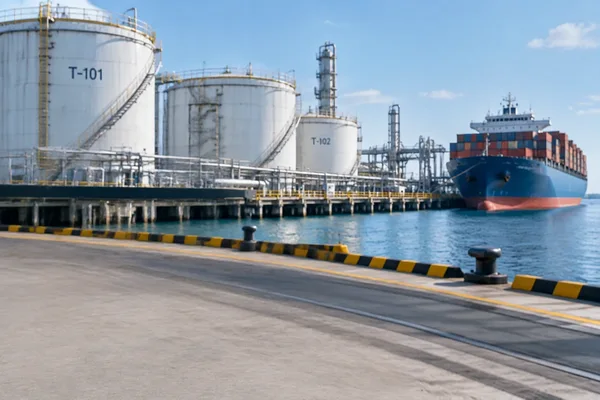
Diesel fuel is not a finished product when it leaves the refinery; it is a specification that must still hold when it is burned. Between the blend header and the injector, five things happen: the cetane number drifts with the crude slate and blend components, oxidation creates gums and filter-blocking sediment, water and microbial growth corrode tanks and injectors, cold weather turns wax into a solid, and the process of removing sulfur has stripped out the natural lubricity that older pumps relied on. Fuel additives are the technology that manages all five — and for exporters, they are often the difference between a cargo that passes an EN 590 certificate of analysis at the destination port and one that is rejected or sold at a discount.
This guide covers the three areas the market most often asks about — raising the cetane number, cutting corrosion, and controlling deposits — with the actual chemistry, treat rates and test methods behind each. It then separates advice for private vehicle and generator owners from advice for refiners, traders and terminal operators, because the same additive molecule is used differently at the pump and at the port.
Why Diesel Quality Degrades Between Refinery and End User
Most additive problems start as logistics problems. A refinery blend that met specification on the day of production can fail a re-test three months later, because diesel is chemically active throughout its life.
Oxidation and sediment. Diesel hydrocarbons react with oxygen, especially in warm storage and in half-empty tanks with a large vapor space. The products are soluble gums that later polymerize into insoluble particles — the dark, sticky layer that coats filters and injector nozzles. Oxidation is accelerated by copper and other catalytic metals, by heat above roughly 40 °C, and by long residence time in terminal or vessel tanks.
Water and microbial growth. Water enters through condensation, pipeline transport and cargo transfer. At the fuel–water interface, bacteria and fungi (the industry’s “diesel bug”) grow into biomass that plugs prefilters, produces acidic by-products and forms pitting corrosion inside carbon steel tanks. Free water also causes rust in storage and can reach the high-pressure pump.
Sulfur removal and lubricity. The shift to ultra-low-sulfur diesel (10 mg/kg sulfur under Euro 5, from 2009 onwards) removed the sulfur compounds that had provided natural boundary lubrication. Without a lubricity additive, the fuel can no longer protect the precision surfaces of the injection pump, which is one reason lubricity improvers became standard in ULSD.
Blend components with poor ignition quality. Light cycle oil, cracked streams and increasing volumes of fatty acid methyl ester (FAME) biodiesel lower or destabilize ignition quality and alter storage behavior — FAME is more hygroscopic and oxidizes faster than hydrocarbon diesel, and it can attack older elastomer seals.
Cold flow. At low temperature, paraffin wax crystallizes and forms a filter cake. This is a physical phenomenon, not a contamination issue, and it needs a specific additive class to manage it.
How Additives Raise the Cetane Number
The cetane number measures a diesel fuel’s ignition quality under compression. Diesel self-ignites when compression heat reaches its autoignition temperature, about 220 °C at atmospheric pressure; a fuel with a higher cetane number ignites sooner, so ignition delay shortens and combustion pressure builds more smoothly. EN 590 requires a minimum cetane number of 51 and a minimum cetane index of 46 — note that a fuel can pass the cetane index (a calculated value) while failing the measured cetane number, which is why export certificates must state the test method.
2-Ethylhexyl nitrate (2-EHN, CAS 27247-96-7) is the workhorse cetane number improver, produced by reacting 2-ethylhexanol with nitric acid. It decomposes at around 130 °C — well below diesel’s autoignition point — and this exothermic decomposition triggers the radical chain reactions that start combustion earlier. It is used by refiners, distributors and end users in all diesel types, and typical treat rates are 0.025 % to 0.40 % by volume according to manufacturer Innospec’s technical data. Practical gains are generally in the range of a few cetane numbers at these doses; response is not linear and depends on the base fuel, the crude source and the refining history.
Nitrogen-free alternatives. Because 2-EHN adds nitrogen to the fuel, some markets and some applications prefer a nitrogen-free improver. Innospec’s CI-0808 is a blend of di-tert-butyl peroxide in solvent, typically dosed at 0.05 % to 0.50 % by volume, which raises cetane without increasing fuel nitrogen content — relevant where NOx formation or nitrogen reporting is a concern.
The commercial value for a refiner is flexibility: instead of re-formulating the blend to hit ignition quality, a cetane improver lets low-cost, low-cetane components such as light cycle oil stay in the pool while the finished fuel still meets specification. Cetane number is measured by ASTM D613 (ISO 5165) on a CFR engine, or by faster instruments: ASTM D6890 (Ignition Quality Tester), D7170 (Fuel Ignition Tester) and D7668 (Cetane Ignition Delay). For export documentation, D613 and D6890 results should not be treated as interchangeable without checking the destination’s acceptance rules.
Controlling Deposits, Corrosion, and Fuel Stability in Export Diesel
Three additive families protect the fuel itself and the metal it touches: detergents, corrosion inhibitors and stabilizers. They matter most where fuel is stored longest — exactly the export scenario.
Deposit control: detergents and dispersants. Injector deposits (on nozzles and, in modern common-rail systems, on internal needle surfaces) change the spray pattern, raise fuel consumption and emissions, and can cost several percent in fuel economy. Polyisobutylene succinimide (PIBSI) and polyetheramine-type detergents keep deposits from forming and can clean existing ones; dispersants hold oxidation by-products in suspension so filters can catch them. These are the additives behind “premium diesel” branding, and they are dose-rate driven: an insufficient dose cleans nothing.
Corrosion inhibitors. Rust enters the fuel system from condensation in tanks and pipelines. Film-forming corrosion inhibitors (typically amine succinimides or imidazolines) adsorb onto metal surfaces and create a barrier layer, protecting carbon steel tank interiors, pipeline welds and injection components. Refinery and pipeline additive lines such as Innospec’s list corrosion inhibitors as a standard category alongside biocides, antioxidants and metal deactivators — a useful checklist of what a fuel-handling system actually consumes. For traders, corrosion protection is not cosmetic: tank bottom rust and particulate picked up in transit are among the most common causes of specification disputes at discharge ports.
Stability: antioxidants and metal deactivators. Antioxidants (phenolic and aminic types) interrupt the oxidation chain that produces gums and sediment, extending storage life — critical for cargoes waiting at a terminal or sailing for weeks. Metal deactivators chelate catalytic metal ions (especially copper from fittings) that would otherwise accelerate oxidation by orders of magnitude.
Biocides and water management. Where microbial growth is established, only a biocide solves it; no detergent will. Biocides are dosed to the fuel phase (some to both phases), and dead biomass still has to be filtered out. Demulsifiers help water separate so it can be drained from tank bottoms; conversely, some retail additives are emulsifiers that carry small water quantities through combustion — a choice that depends on whether the system has a water separator. A practical prevention routine for any stored diesel: keep tanks full to limit condensation, drain water bottoms regularly, and test for microbial contamination if filters blacken quickly.

Cold Flow, Lubricity, and Smoke Additives
Cold flow improvers. Winter diesel is managed two ways: refinery kerosene blending (expensive, lowers cetane) or wax crystal modifiers (polyethylene-vinyl acetate copolymers and similar) that change wax crystal shape so particles stay small and flowable. Cold filter plugging point (CFPP, ASTM EN 116) is the field metric; pour point matters for storage. Additive-only treatment can shift CFPP meaningfully in paraffinic fuels, but it cannot rescue a fuel whose wax content is simply too high for the climate — hence the seasonal grade change at terminals.
Lubricity improvers. Ultra-low-sulfur diesel is naturally less lubricating, and injection pumps rely on the fuel as their lubricant. Ester-based lubricity improvers (typically fatty acid esters) restore wear protection at very low doses — often around 100–300 ppm — and are verified by the High-Frequency Reciprocating Rig (HFRR) test (ISO 12156 / ASTM D6079), which sets a maximum scar diameter in EN 590. This is one of the cheapest, most universally justified additives in the entire portfolio.
Combustion and smoke additives. Cetane improvers themselves reduce white smoke at warm-up and hard starting, because shorter ignition delay means less unburned fuel accumulation. Combustion catalysts (cerium and iron-based, mainly in the marine and power markets) reduce soot and deposits in large engines. Ash-forming additives must never be used in road diesel, where ash limits are strict. Dyes and markers, used at the refinery, distinguish taxed from exempt fuel — a regulatory function rather than a performance one.
Antifoam and de-icers. Antifoam agents (silicones) speed up filling; icing inhibitors prevent ice crystals from free water in very cold climates. Both are standard in multi-functional retail formulations.
Choosing the Right Additive: Home Tank, Fleet, or Refinery Cargo
The correct additive depends on where the fuel’s problems start, not on marketing categories.
Private vehicles and small generators. If the vehicle is modern, driven regularly and filled with compliant ULSD, the realistic gains are modest: deposit cleaning and occasional cold-weather protection. A multi-functional package combining injector cleaner, cetane booster, lubricity improver and water dispersant is the pragmatic choice — dosed per tank according to the label. If the vehicle sits for months, prioritize a fuel stabilizer with biocide capability and fill the tank to reduce condensation. Do not expect cetane improvers to fix a mechanical fault, and do not use ash-forming products in a vehicle with a diesel particulate filter.
Fleets, agriculture and stationary engines. Additive economics work at volume: a dose costing a few cents per liter that restores 2–3 % fuel economy and prevents an injector overhaul pays for itself. For seasonal equipment, cold flow protection matched to the local winter grade is the first purchase; for high-mileage engines, detergent concentration matters more than marketing name.
Terminals, refiners and traders. Selection is specification-driven: choose the additive package that closes the gap between the blend’s measured properties and the destination specification (EN 590, ASTM D975 or the buyer’s own sheet), then verify with the certificate of analysis. Key checks before purchase: active concentration and treat-rate tables from the supplier, compatibility with FAME-blended fuel, cold-weather handling of the additive itself (2-EHN and peroxide products have storage temperature limits), dosing equipment calibration, and additive supplier documentation (REACH registration, safety data sheets, ISO 9001). Keep a chain-of-custody record of which additives were dosed into which cargo — destination laboratories increasingly test for additive markers, and documentation shortens any quality dispute.
Additives in the Diesel Export Supply Chain
For refineries and trading companies, additives are a blending-economics instrument, not an afterthought.
Upgrading low-cost blend components. Cetane improvers allow light cycle oil and other low-cetane streams into the diesel pool while the finished cargo still meets EN 590’s minimum cetane number of 51 — Innospec explicitly markets this as producing premium fuels from lower-cost base stocks. The arbitrage is straightforward: the cost of 0.05–0.1 % 2-EHN per ton is routinely smaller than the price difference between off-spec and on-spec diesel, or between standard and premium grades.
Blending point matters. Cetane improvers should be injected into a moving, mixed stream (in-line blending at the load rack or during tanker loading), not splashed into a static tank, because uniform distribution is essential for representative certification samples. Additive response also varies with base fuel, so a laboratory blend study on the actual cargo components should precede commercial commitments.
Transit protection. Export cargoes spend weeks in terminal tanks, vessels and pipelines across humid climates. Antioxidants, corrosion inhibitors and biocides preserve the fuel between certification at load port and re-test at discharge — and protect the steel of the tanks carrying it. For a trader, the cheapest additive program is still cheaper than a demurrage day, a quality claim, or a price discount negotiated over a marginal cetane or sediment result.
Commercial documentation. Additive dosing should appear in the cargo file: product identity, dose rate, dosing date and location, plus the load-port certificate of analysis with test methods (ASTM D613/D6890 for cetane, ISO 12156 for lubricity, EN 116 for CFPP). Buyers’ laboratories may check additive-marker presence to confirm treatment; consistent records convert a spec dispute into a paperwork exercise.
Frequently Asked Questions
Do diesel fuel additives really work?
The additive classes with well-documented chemistry and measurable test methods do: cetane improvers (2-EHN) raise ignition quality at 0.025–0.40 % volume, lubricity improvers restore HFRR performance in ULSD, and detergents measurably remove injector deposits. Claims without a stated active ingredient, treat rate or test method should be treated as marketing.
How much cetane improvement can I expect?
Typically a few cetane numbers at commercial treat rates, depending on the base fuel. The response is not linear — doubling the dose does not double the gain — and cracked blend components respond differently than straight-run ones.
What is the difference between cetane number and cetane index?
Cetane number is measured in an engine or ignition tester (ASTM D613, D6890); cetane index is calculated from density and distillation. A fuel can meet the index minimum (46 in EN 590) while failing the measured number (51), which is why export certificates must show the actual test.
Can additives fix old or contaminated diesel?
No. Biocides kill microbes but dead biomass must be filtered out; detergents clean injectors, not tank bottoms. Severely oxidized or water-contaminated fuel needs polishing or disposal, then preventive treatment of the replacement fuel.
Are additives safe for diesel particulate filters and catalytic converters?
Ashless, specification-compliant packages are. Avoid ash-forming combustion catalysts (metal-based) in road vehicles with DPFs, and never use unknown two-stroke oil or ATF “home recipes” — they can add metals, ash and deposits.
What should an exporter check before dosing a cargo?
Laboratory blend response on the actual components, correct in-line dosing for homogeneous mixing, additive storage-temperature limits, destination specification acceptance of the additive, and complete documentation in the cargo file.
Related Reading on Universal Trades
These internal links point to verified English-language articles on universaltrades.co (checked against the site’s published URL list, avoiding the broken variant URLs sometimes indexed in Search Console):
Diesel fundamentals and specifications
- Cetane Number — a full guide to ignition quality and its measurement
- EN 590 Diesel — the European diesel specification in detail
- Euro 5 Diesel: Meaning, Sulfur Content, Specifications
- D2 Diesel / Diesel No. 2 · Diesel No. 1 (D1)
- Ultra-Low-Sulfur Diesel Explained
- Diesel Sulfur Content · Diesel Color
Diesel supply, storage and trade
- Top 10 Diesel Supplying Countries· Top 10 Diesel Exporting Countries
- Diesel Storage — directly relevant to oxidation, water and microbial control
- Winter Diesel Fuel · Diesel Production Process
- FOB vs CIF in Petroleum Trading
Adjacent fuel and product guides
Global Petroleum Trade Solutions | Universal Trades
As a reputable international petroleum trading enterprise, Universal Trades specializes in the reliable procurement, export, and supply chain management of high-grade petroleum commodities, refined fuels, and industrial feedstocks designed to meet rigorous global standards.






Leave a Reply
Want to join the discussion?Feel free to contribute!