
Fuel Oil Specifications Explained: Density, Viscosity, Flash Point
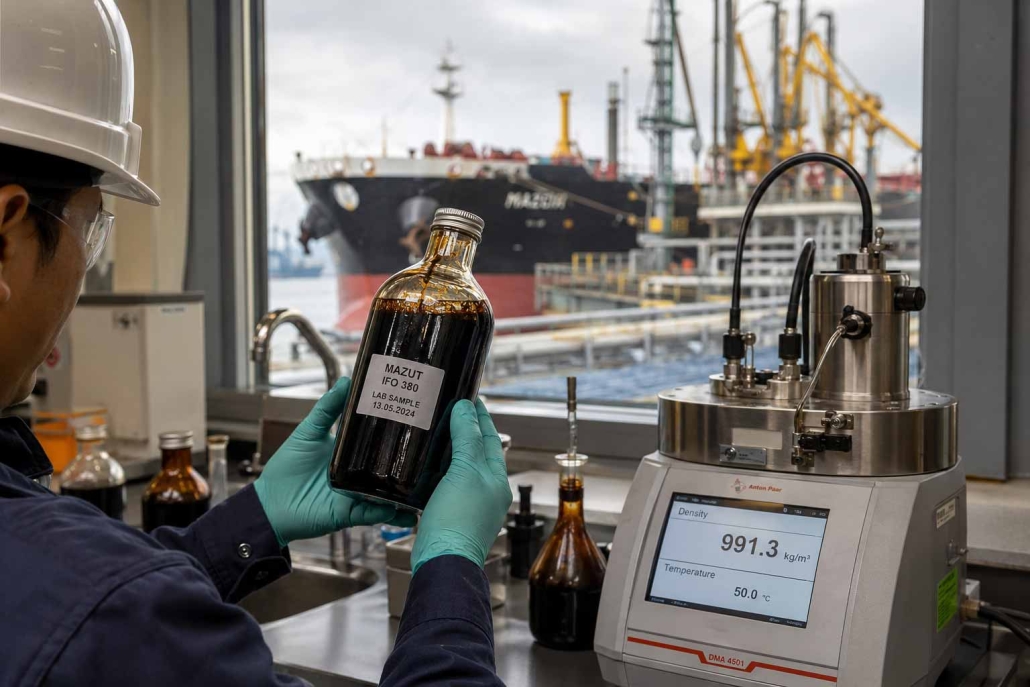
In fuel oil trading and industrial consumption, fuel oil specifications determine far more than technical classification. They directly influence price, regulatory compliance, equipment compatibility, and operational efficiency.
Two shipments labeled as the same grade of fuel oil can perform very differently if their density, viscosity, flash point, or sulfur content vary outside acceptable limits. These parameters affect how the fuel flows, burns, stores, and complies with environmental regulations.
For traders, misunderstanding specifications can lead to cargo rejection, pricing disputes, or contractual penalties. For operators, off‑spec fuel can result in combustion inefficiency, equipment damage, or safety risks.
Understanding the technical meaning behind specifications is therefore essential for both buyers and sellers. If you are new to heavy fuel classifications, it helps to first review the Introduction to Fuel Oil Types, which explains how heavy fuel oils are categorized across industrial and marine applications.
Density: The Energy Value Indicator
Technical Definition
Fuel oil density refers to the mass of fuel per unit volume, typically measured at 15°C and expressed in kg/m³. Density is closely related to the fuel’s composition and residual content.
Measurement Standards
Density is commonly measured using:
- ASTM D4052 – Digital Density Meter
- ASTM D1298 – Hydrometer Method
Commercial Impact
In international fuel oil trading, density plays a major role because most contracts are settled per metric ton, while storage and delivery are often handled by volume. Density therefore affects:
- Actual energy delivered per shipment
- Bunker quantity calculations
- Price negotiations in fuel contracts
Higher density generally indicates heavier fuel components. However, excessively dense fuel may create difficulties in onboard fuel purification systems.
Operational Consequences
If density exceeds operational limits:
- Fuel separators may become overloaded
- Sludge formation increases
- Combustion stability may decline
If density is unexpectedly low, it may signal blending inconsistencies or lower residual content. Buyers comparing grades such as 380 CST fuel oil often evaluate density together with viscosity to determine operational suitability.
Viscosity: The Core Grading Parameter
Technical Definition
Fuel oil viscosity measures resistance to flow and determines how easily fuel can be pumped, atomized, and burned.
It is typically expressed in centistokes (cSt) at 50°C, which is why marine fuels are commonly described by CST grades such as 180 CST fuel oil and 380 CST fuel oil.
Measurement Standards
Viscosity is tested using:
- ASTM D445
- ISO 3104
Commercial Impact
Viscosity is one of the most important parameters in fuel oil specifications because it determines:
- Fuel grade classification
- Storage and heating requirements
- Pumping system compatibility
- Market pricing
For example:
- 180 CST fuel oil requires less heating and is easier to handle in industrial systems.
- 380 CST fuel oil is thicker and requires higher heating temperatures before injection into marine engines.
A detailed explanation of operational considerations can be found in the technical guide on Fuel Oil 180 CST, which discusses how viscosity affects industrial combustion systems.
Practical Trade Example
A bunker supplier once delivered fuel that exceeded the contracted viscosity specification. The vessel’s heating system could not reduce the viscosity sufficiently before injection. As a result:
- The ship refused the cargo
- Laboratory verification was requested
- The supplier faced demurrage and dispute costs
Such incidents illustrate why viscosity compliance is essential in fuel contracts.

Flash Point: The Critical Safety Parameter
Technical Definition
The flash point of fuel oil is the lowest temperature at which vapors from the fuel can ignite when exposed to an ignition source.
Measurement Standard
- ASTM D93 – Pensky‑Martens Closed Cup Test
Regulatory Importance
For marine fuels, international maritime safety regulations generally require a minimum flash point of 60°C.
Safety Scenario
If the flash point falls below regulatory thresholds:
- Storage tanks may become hazardous environments
- Insurance coverage may be affected
- Port authorities may prohibit bunkering operations
Because flash point directly relates to fire risk, it is one of the most strictly enforced parameters in marine fuel specifications.
Sulfur Content: The Regulatory Connector
While density, viscosity, and flash point affect operational performance, sulfur content connects fuel oil specifications to environmental regulations.
Sulfur content determines:
- Compliance with IMO marine fuel rules
- Emissions of sulfur oxides (SOx)
- Corrosion potential in combustion systems
A deeper analysis of regulatory limits and environmental impacts can be found in Fuel Oil Sulfur Content and Its Impact on Quality.
Fuel Oil Grade Technical Comparison
| Parameter | 180 CST | 380 CST | LSFO | HSFO |
|---|---|---|---|---|
| Density @15°C (kg/m³) | ≤ 991 | ≤ 991 | ≤ 991 | ≤ 991 |
| Viscosity @50°C (cSt) | Max 180 | Max 380 | 180–380 typical | 180–380 typical |
| Flash Point (°C) | ≥ 60 | ≥ 60 | ≥ 60 | ≥ 60 |
| Sulfur % | Varies | Varies | ≤ 0.50% | Up to 3.50% |
| Typical Application | Industrial boilers | Marine bunkering | IMO‑compliant vessels | Ships with scrubbers |
What Happens When Specifications Fall Outside Acceptable Limits?
Fuel oil specifications are not simply reference numbers. Deviations can cause significant operational and commercial consequences.
Density
Too High
- Separator overload
- Sludge accumulation in fuel treatment systems
- Reduced combustion efficiency
Too Low
- Possible blending inconsistencies
- Lower energy value per shipment
- Disputes over fuel quality
Viscosity
Too High
- Pumping difficulties
- Higher heating requirements
- Incomplete atomization in burners
Too Low
- Reduced lubrication of injection pumps
- Potential leakage in fuel systems
These issues highlight why buyers often review operational requirements using a Fuel Oil Selection Guide before finalizing purchases.
Flash Point
Too Low
- Fire and explosion risk
- Legal non‑compliance
- Potential cargo rejection
Too High
- Usually not operationally harmful
- May indicate unusual blending composition
Sulfur Content
Too High
- Environmental regulation violations
- Vessel detention or penalties
- Increased engine corrosion
Too Low (unexpected)
- Possible blending irregularities
- Pricing discrepancies in fuel contracts
In practice, traders sometimes use preliminary inspection methods before laboratory analysis. Some techniques are discussed in Methods for Evaluating Fuel Oil Quality Without a Laboratory.

Diesel Sulfur Content by Grade
| Diesel Grade | Max Sulfur (ppm) | Standard | Application |
|---|---|---|---|
| ULSD (Ultra‑Low Sulfur Diesel) | 15 ppm | EPA | Road vehicles |
| Euro 5 Diesel | 10 ppm | EN 590 | Passenger vehicles |
| Euro 6 Diesel | 10 ppm | EN 590 | Advanced emission systems |
| Marine Gas Oil (MGO) | 1000 ppm (0.10%) | IMO | Ships in emission control areas |
| Conventional Diesel (Older spec) | 500 ppm | Legacy standards | Industrial and off‑road use |
Why Sulfur Reduction Matters
Sulfur reduction has become one of the most important regulatory trends in the petroleum industry.
Environmental impact
Lower sulfur fuels reduce sulfur oxide emissions, which contribute to acid rain and air pollution.
Regulatory pressure
The IMO 2020 regulation introduced a global sulfur limit of 0.50% for marine fuels, while stricter 0.10% limits apply in emission control areas (ECAs).
Cost implications
Producing low‑sulfur fuels requires additional refining processes such as hydrotreating, which increases production cost.
Engine maintenance
Lower sulfur fuels:
- Reduce corrosion inside combustion chambers
- Protect emission control systems
- Extend equipment lifespan
Marine Fuel vs Diesel: Key Regulatory Difference
Marine fuels like heavy fuel oil are classified primarily by viscosity grades (such as 180 CST or 380 CST), while automotive diesel is classified mainly by sulfur content and cetane performance.
This difference explains why marine fuel regulations focus heavily on sulfur caps, while diesel regulations emphasize emission control compatibility.
Buyer Checklist for Fuel Oil Procurement
Before purchasing fuel oil, buyers typically verify several key parameters:
- Confirm density at 15°C
- Verify viscosity grade compatibility with equipment
- Ensure flash point ≥ 60°C for marine fuels
- Confirm sulfur content meets destination regulations
- Specify ASTM or ISO test methods in contracts
- Define dispute resolution procedures for off‑spec cargo
Following these checks helps reduce operational risks and avoid costly contractual disputes.
Conclusion
Understanding fuel oil specifications — including fuel oil density, fuel oil viscosity, flash point of fuel oil, and diesel sulfur content — is fundamental to successful fuel trading and safe industrial operation.
Specifications determine how fuel behaves during storage, transport, combustion, and regulatory inspection. For traders they define contract integrity; for operators they determine reliability and efficiency.
In global fuel markets where margins are tight and regulations are strict, technical knowledge of specifications is not optional — it is a core competitive advantage.
Global Petroleum Trade Solutions | Universal Trades
As a reputable international petroleum trading enterprise, Universal Trades specializes in the reliable procurement, export, and supply chain management of high-grade petroleum commodities, refined fuels, and industrial feedstocks designed to meet rigorous global standards.

Global Petroleum Trade Solutions | Universal Trades
As a reputable international petroleum trading enterprise, Universal Trades specializes in the reliable procurement, export, and supply chain management of high-grade petroleum commodities, refined fuels, and industrial feedstocks designed to meet rigorous global standards.









Leave a Reply
Want to join the discussion?Feel free to contribute!