
Fuel Oil Sulphur Content: Types, Limits, and Guide for Buyers
Fuel Oil, Petroleum Products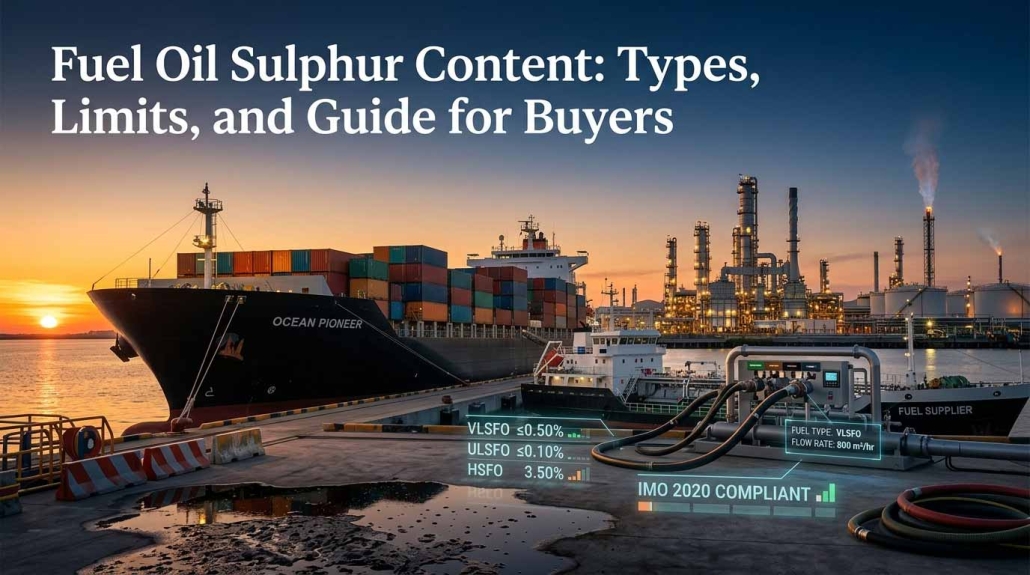
In global fuel trading, fuel oil sulphur content is one of the most important specifications buyers evaluate. Sulphur levels affect engine performance, emissions compliance, fuel pricing, and equipment maintenance.
For marine operators, power plants, and industrial boilers, choosing the correct sulphur level is critical. Environmental regulations such as IMO maritime standards limit sulphur emissions, while higher‑sulphur fuels can increase corrosion, deposits, and exhaust treatment costs.
Understanding the sulphur limits of different fuel oil grades helps buyers select the most appropriate product for their equipment and regulatory environment.
For broader industry insights, readers can explore More Articles About Petroleum Products or technical resources in More Articles About Fuel Oil.
What Is Sulphur Content in Fuel Oil?
Sulphur content refers to the percentage of sulphur present in fuel oil, typically measured as % m/m (mass by mass).
Sulphur is naturally present in crude oil and remains in many heavy refinery products such as fuel oil and bunker fuel. When fuel is burned, sulphur forms sulphur oxides (SOx), which contribute to air pollution and acid rain.
Because of these impacts, fuel oil is commonly categorized based on its sulphur level:
- Very Low Sulphur Fuel Oil (VLSFO) – typically ≤0.50%
- Low Sulphur Fuel Oil (LSFO) – typically ≤1.00%
- High Sulphur Fuel Oil (HSFO) – often up to 3.50% or higher
Understanding these classifications is essential when selecting fuels for marine engines, industrial boilers, or power generation systems.
Classification of Fuel Oils by Sulphur Level
Fuel oils are commonly grouped into categories based on viscosity and sulphur content.
Low‑sulphur fuels are widely used in marine shipping due to global emissions rules.
High‑sulphur fuels remain common in industrial boilers and power plants where emissions controls or scrubber systems are installed.
Buyers evaluating marine bunker fuels or heavy fuel oils often compare specifications such as viscosity grades (180 CST, 380 CST) alongside sulphur limits. Detailed guides such as Guide to Choosing the Right Fuel Oil and Low‑Sulfur vs High‑Sulfur Fuel Oil Comparison provide additional context when selecting between grades.
Fuel Oil Sulphur Content Comparison Table
Below is a simplified comparison of common fuel oil types used in marine and industrial markets.
| Fuel Oil Type | Maximum Sulphur Content (% m/m) | Typical Applications | Alternative Names |
|---|---|---|---|
| VLSFO | ≤0.50% | Marine bunker fuel compliant with IMO 2020 | (Very Low Sulphur Fuel Oil, IMO 2020 fuel) |
| LSFO | ≤1.00% | Marine engines, power plants | (Low Sulphur Fuel Oil, Marine LSFO) |
| HSFO | Up to ~3.50% | Ships with scrubbers, industrial boilers | (High Sulphur Fuel Oil, Bunker C) |
| HFO | Typically 1–3.5% | Power generation, large marine engines | (Heavy Fuel Oil, Residual Fuel Oil) |
| LFO | Usually ≤1.0% | Industrial burners, heating systems | (Light Fuel Oil, Industrial Fuel Oil) |
| IFO 180 | Up to ~3.50% | Marine engines, shipping fuel | (Intermediate Fuel Oil 180, Bunker 180) |
| IFO 380 | Up to ~3.50% | Large vessels, marine bunkering | (Intermediate Fuel Oil 380, Bunker 380) |
| CST 180 | Similar to IFO 180 specs | Marine and power plant fuel | (180 Centistoke Fuel Oil) |
| CST 380 | Similar to IFO 380 specs | Marine bunkers for slow‑speed engines | (380 Centistoke Fuel Oil) |
Impact of Sulphur on Engine Performance and Emissions
Sulphur levels influence both operational performance and environmental compliance.
Engine deposits and corrosion
High sulphur fuels can form acidic compounds during combustion. Without proper lubrication or treatment, this can increase corrosion in engines and exhaust systems.
Emission regulations
Sulphur in fuel produces sulphur oxides (SOx). International maritime regulations limit SOx emissions, driving the widespread adoption of VLSFO with 0.50% sulphur.
Fuel treatment requirements
High sulphur fuels may require exhaust gas scrubbers or additional emission control technologies.
To verify sulphur levels and other properties, many buyers rely on laboratory analysis and certification through Fuel Oil Quality Testing.
Regulations and Industry Trends
The most important regulatory driver for marine fuels is the IMO 2020 global sulphur cap, which limits marine fuel sulphur content to 0.50% outside emission control areas.
This regulation significantly changed bunker markets by increasing demand for:
- VLSFO blends
- Low sulphur marine gasoil
- Alternative fuels and emissions technologies
However, HSFO still remains widely traded because ships equipped with exhaust scrubbers can continue using higher sulphur fuels.
How Buyers Should Evaluate Fuel Oil Sulphur Content
When purchasing fuel oil, buyers should consider several practical factors:
1. Regulatory requirements
Ensure the sulphur level complies with applicable maritime or environmental regulations.
2. Engine compatibility
Different engines and burners tolerate different sulphur levels.
3. Fuel viscosity and grade
Sulphur content is only one specification. Viscosity grades such as 180 CST and 380 CST also influence fuel handling and combustion.
4. Quality certification
Request laboratory certificates confirming sulphur content and other key parameters.
Fuel oil buyers often compare specifications alongside other petroleum products such as Gasoline, Kerosene, Bitumen, and Base Oil when evaluating refinery supply chains.
Conclusion
Understanding fuel oil sulphur content is essential for marine operators, industrial buyers, and energy traders. Sulphur levels influence regulatory compliance, environmental impact, equipment durability, and fuel pricing.
Low‑sulphur fuels such as VLSFO dominate modern shipping due to emission regulations, while HSFO and other heavy fuels remain important in power generation and industrial markets.
For fuel buyers, the best approach is to evaluate sulphur content alongside viscosity grade, application requirements, and verified quality testing to ensure reliable and compliant fuel supply.
Global Petroleum Trade Solutions | Universal Trades
As a reputable international petroleum trading enterprise, Universal Trades specializes in the reliable procurement, export, and supply chain management of high-grade petroleum commodities, refined fuels, and industrial feedstocks designed to meet rigorous global standards.








Leave a Reply
Want to join the discussion?Feel free to contribute!