
SN 300 Base Oil: Specifications and Uses

SN 300 base oil is a medium‑viscosity solvent‑neutral mineral base oil, typically classified as a Group I base oil. It is widely used in lubricant blending for automotive oils, industrial lubricants, hydraulic fluids, and grease due to its balanced viscosity, additive compatibility, and global availability.
Base oils are the primary component of lubricants, typically making up 70–95% of a finished oil formulation. They provide the fundamental lubrication properties that reduce friction, protect machinery, and extend equipment life. Among the many base oil grades used in lubricant blending, SN 300 base oil is one of the most widely traded and versatile.
SN 300 belongs to the family of solvent‑refined mineral base oils and is commonly used in automotive and industrial lubricants due to its balanced viscosity and broad compatibility with additive packages. Within the broader classification of base oils, it is generally associated with Group 1 base oils, which remain widely used in global lubricant production alongside newer categories such as Group 2 Base Oil, Group 3 Base Oil, Group 4 Base Oil, and Group 5 Base Oil.
Understanding SN 300 requires looking at both its technical properties and its role in lubricant formulation.
What Does “SN” Mean in Base Oils?
The abbreviation SN stands for Solvent Neutral, a traditional naming convention used for mineral base oils produced through solvent refining processes. This terminology emerged during the early development of modern base oil refining, when crude oil fractions were processed using solvents to remove impurities such as aromatics, sulfur compounds, and wax.
In this system:
- “Solvent Neutral” describes the refining method and neutral chemical character of the oil.
- The number (e.g., 70, 150, 300, 500) refers roughly to the viscosity range of the oil.
For example:
- SN 70 represents a light neutral oil used in lighter lubricant formulations.
- SN 150 Base Oil is a medium‑light grade commonly used in engine oils.
- SN 300 provides a thicker viscosity profile suitable for heavier lubricant blends.
These grades are derived from refined crude fractions known as lube cuts, which are further processed through solvent extraction, dewaxing, and finishing stages. The difference between these intermediate feedstocks and finished base oils is often discussed when comparing Lube Cut vs. Base Oil Comparison and understanding the full Base Oil Production Process.
What Is SN 300 Base Oil?
SN 300 base oil is a medium‑viscosity mineral base oil widely used in lubricant blending. It typically belongs to Group 1 mineral base oils, which are produced through solvent refining and contain a moderate level of aromatic compounds compared to more highly refined oils.
Key characteristics include:
- Medium viscosity suitable for multi‑purpose lubricants
- Good solvency for additives
- Stable performance in moderate operating temperatures
- Wide availability in global base oil markets
SN 300 is commonly produced in refineries that manufacture other Group I grades such as SN 150, SN 500, and Bright Stock Base Oil. These oils collectively form the backbone of many traditional lubricant formulations.
For a broader understanding of how these grades fit together, many formulators study the different Types of Base Oil used in the industry.
Typical Specifications of SN 300
While exact values vary between refineries, SN 300 generally falls within the following specification ranges:
- Kinematic Viscosity @40°C: 55–70 cSt
- Viscosity Index: 90–105
- Flash Point: 220–240°C
- Pour Point: −6 to −9°C
- Density @15°C: ~0.88–0.89 g/cm³
- Color (ASTM): 2.0 – 3.5
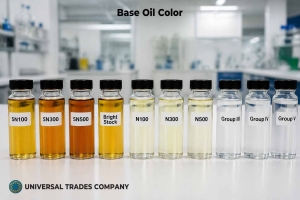
Color can vary depending on refining severity, which is why understanding Base Oil Color is often part of evaluating product quality. Many buyers also conduct a more detailed Base Oil Quality Assessment before selecting a supplier.
Applications of SN 300 Base Oil
Due to its balanced viscosity and compatibility with additive systems, SN 300 is widely used in several lubricant segments.
Automotive Lubricants
SN 300 serves as a base stock in engine oils, gear oils, and transmission fluids, particularly in formulations that combine multiple base oil grades.
Industrial Oils
Many industrial lubricants rely on SN 300 because it provides adequate film strength and good additive solubility.
Hydraulic Fluids
Medium‑viscosity hydraulic oils frequently incorporate SN 300 to achieve the desired performance characteristics.
Marine Lubricants
Marine engine oils often require heavier base oil components, making SN 300 a common blending stock.
Grease Production
In grease manufacturing, SN 300 contributes to proper base oil viscosity and stability when combined with thickeners.
Metalworking Fluids
The solvency characteristics of Group I oils help dissolve additives and lubricity agents used in metalworking formulations.
Advantages of SN 300 Base Oil
Several characteristics explain why SN 300 remains widely used in lubricant production.
Balanced viscosity: Suitable for a wide range of lubricant formulations.
Excellent additive compatibility: Solvent‑refined oils provide good solvency for additive packages.
Wide availability: Produced by many refineries worldwide.
Cost efficiency: Typically more affordable than highly refined synthetic oils.
Blending flexibility: Easily combined with lighter or heavier base oils.
These benefits often lead manufacturers to compare SN 300 with synthetic alternatives in analyses such as Comparison of Mineral vs. Synthetic Base Oil.
SN 300 vs Other Base Oil Grades
Understanding SN 300 is easier when comparing it with other base oil grades.
SN 70:
A light viscosity base oil used for lighter lubricant formulations and as a blending component.
SN 150:
A medium‑light base oil commonly used in passenger car engine oils.
SN 300:
Offers higher viscosity than SN 150, making it suitable for heavier lubricants and industrial oils.
Heavier Grades (e.g., SN 500 or Bright Stock):
Used when higher film strength and viscosity are required.
In some cases, refiners also produce Re‑refined Base Oil, which is derived from recycled lubricants but processed to meet comparable specifications.
Market & Industry Insight
Global demand for Group I base oils such as SN 300 remains strong, particularly in developing markets where cost‑effective lubricant formulations are essential.
Major exporting regions include:
- Middle East
- Southeast Asia
- Russia and CIS countries
- Europe
Industry analysts tracking the Top 10 Base Oil Producing Countries note that supply availability, crude oil costs, and refinery capacity expansions all influence market dynamics. These factors also shape global pricing trends, which are often evaluated through periodic Base Oil Price Forecast reports.
Despite the growth of highly refined base oils, SN 300 continues to hold a critical role in many lubricant applications worldwide.
Conclusion
SN 300 base oil is a versatile medium‑viscosity solvent‑neutral base oil widely used in lubricant blending. Its balanced viscosity, good solvency, and strong global availability make it a key component in automotive oils, industrial lubricants, hydraulic fluids, and grease formulations.
Although newer base oil technologies have emerged, SN 300 remains a practical and cost‑effective option for many applications, ensuring its continued relevance in the global lubricant industry.
Readers interested in deeper technical insights can explore More Articles About Base Oil to better understand refining processes, market trends, and lubricant formulation strategies.
FAQ
What does SN mean in base oil?
SN stands for Solvent Neutral, indicating a mineral base oil produced through solvent refining processes and categorized by viscosity grades such as SN150, SN300, and SN500.
What is SN 300 base oil used for?
SN 300 is commonly used in automotive lubricants, industrial oils, hydraulic fluids, marine lubricants, grease production, and metalworking fluids.
Is SN 300 a Group 1 base oil?
Yes. SN 300 is typically classified as a Group I mineral base oil produced through solvent refining.
What is the viscosity of SN 300?
SN 300 typically has a kinematic viscosity around 55–70 cSt at 40°C, depending on the refinery and specification.
Global Petroleum Trade Solutions | Universal Trades
As a reputable international petroleum trading enterprise, Universal Trades specializes in the reliable procurement, export, and supply chain management of high-grade petroleum commodities, refined fuels, and industrial feedstocks designed to meet rigorous global standards.









Dear Sirs,
Greetings!
We are trade representatives and commission agents engaged in the business of petrochemical products, refined petroleum products and pharmaceutical chemicals/fertilizers for our clients based in India as well as Europe.
Currently we have end users/clients based in the southern part of India – CHENNAI – who want to deal wiith potential manufacturers-exporters of BASE OIL SN500, SN 300, AND SN 180 for import into CHENNAI – India. Quantity is around 10000MT per shipment. Would like to receive detailed specifications for all the three grades of base oil Thanks and Regards Ganesh subramaniyan
Dear Ganesh Subramaniyan,
Thank you for your inquiry. For price inquiries, technical specifications, and trade terms, please message us directly on WhatsApp at +989917580625.
Best regards.