
Most Commonly Used Bitumen Grades in the World
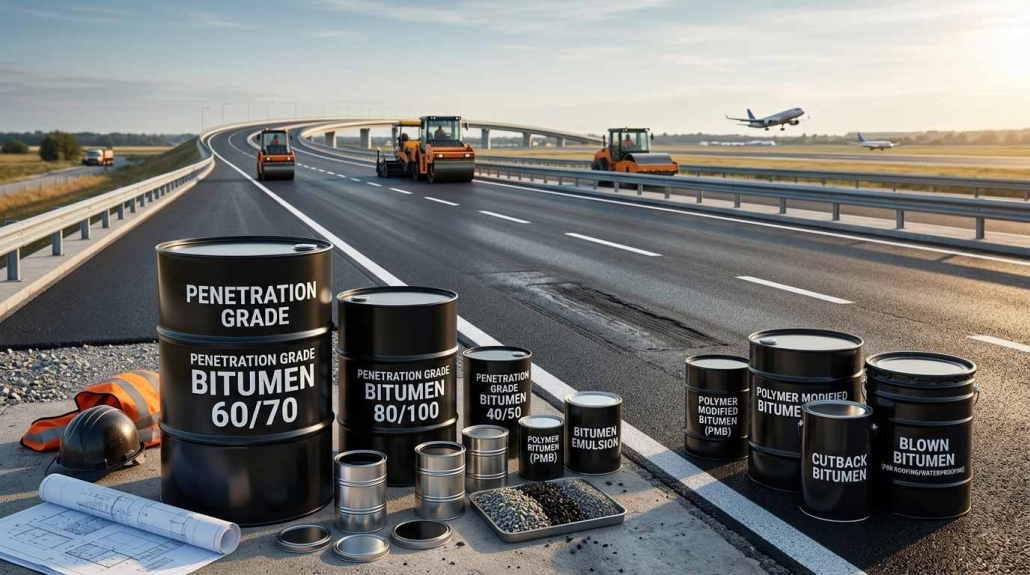
Bitumen is produced in several grades and forms, each designed to perform under specific traffic loads, temperatures, and construction conditions. Among them, penetration grade bitumen 60/70 is the most widely used in the world, especially for asphalt pavement. It offers a balanced combination of durability, flexibility, and resistance to traffic stress, making it suitable for many climates. The second most common grade is bitumen 80/100, which is softer and performs better in colder regions where asphalt needs greater flexibility to prevent cracking. Other widely used forms include 40/50 for heavy‑traffic roads, polymer modified bitumen (PMB) for high‑performance pavements, and specialized products such as bitumen emulsions, cutback bitumen, and blown bitumen used in construction, waterproofing, and maintenance applications.
Understanding which grades dominate the market helps engineers, contractors, and bitumen buyers select the right material for their projects while ensuring durability and cost efficiency.
Global Most Commonly Used Bitumen Grades
The following table summarizes the most widely used bitumen grades globally, their approximate market share, and the reasons behind their popularity.
| Bitumen Grade / Type | Typical Applications | Estimated Share of Global Consumption | Key Reason for High Usage |
|---|---|---|---|
| 60/70 | Road paving, highways, asphalt mixtures | ~40–45% | Balanced hardness and flexibility; suitable for many climates and traffic loads |
| 80/100 | Road construction in colder regions | ~20–25% | Softer grade with higher penetration, reducing cracking in cold weather |
| 40/50 | Heavy‑traffic roads, airports | ~8–10% | Harder grade with higher resistance to deformation under heavy loads |
| 85/100 | Flexible pavements, moderate climates | ~5–7% | Good flexibility and workability for general road construction |
| Polymer Modified Bitumen (PMB) | Highways, bridges, high‑stress pavements | ~7–10% | Improved elasticity, durability, and resistance to rutting and fatigue |
| Oxidized / Blown Bitumen | Roofing, waterproofing, insulation | ~5–6% | Higher softening point and better thermal resistance |
| Bitumen Emulsion | Road maintenance, cold asphalt, surface treatment | ~3–4% | Can be applied at lower temperatures, safer and environmentally friendly |
| Cutback Bitumen | Cold weather paving, maintenance works | ~2–3% | Lower viscosity allows easier application without heating |
These figures represent general industry estimates and may vary depending on infrastructure development, climate, and regional construction practices.
Why Bitumen 60/70 Is the Most Widely Used Grade
Among all penetration grades, bitumen 60/70 dominates global consumption because it provides an optimal balance between hardness and flexibility. Roads require a binder that can resist deformation during hot weather while remaining flexible enough to avoid cracking under traffic loads.
Key reasons for its widespread use include:
- Versatility across different climates and road conditions
- Reliable performance in standard asphalt mixtures
- Compatibility with common aggregates used in pavement construction
- Cost‑effective availability in most refining regions
Many of the world’s largest producers discussed in analyses of Top Bitumen Producing Countries supply 60/70 as their primary export grade due to its broad demand in international infrastructure projects.
Before using any grade, contractors also rely on Bitumen Quality Tests such as penetration, softening point, and viscosity measurements to ensure the material meets project specifications.
Bitumen Usage by Climate and Road Conditions
Climate is one of the most important factors influencing the selection of bitumen grade.
Hot climates:
Harder grades like 40/50 or modified binders perform better because they resist rutting and deformation at high temperatures.
Moderate climates:
Grades such as 60/70 provide balanced performance and remain the most common choice for highways and urban roads.
Cold climates:
Softer grades like 80/100 help prevent cracking because they maintain flexibility at lower temperatures.
In certain situations, engineers also consider alternatives such as Hot Bitumen vs Cold Bitumentechnologies, where temperature and application method influence material choice.

Penetration Grades vs Modified Bitumen
Traditional penetration grades such as 60/70 and 80/100 dominate the market because they are easy to produce through the standard Bitumen Production Process in petroleum refineries.
However, modern infrastructure increasingly requires high‑performance binders, which has increased the demand for Polymer Modified Bitumen (PMB). These binders contain polymer additives that significantly improve:
- Elasticity
- Resistance to rutting
- Fatigue life of asphalt pavements
- Durability under heavy traffic
Because of these advantages, Polymer Modified Bitumen (PMB) is becoming more common in highways, airports, and high‑stress infrastructure.
Other specialized forms include Blown Bitumen, which is widely used in waterproofing and roofing applications rather than road construction.
How Engineers Choose the Right Bitumen Grade
Selecting the right bitumen grade is a critical engineering decision. Poor material selection can lead to premature pavement failure, cracking, or rutting.
Professionals typically evaluate:
- Climate conditions (temperature range)
- Traffic load and vehicle weight
- Pavement structure design
- Construction method and equipment
- Material quality verification
Detailed resources such as the Guide to Choosing the Right Bitumen for Projects help contractors match the correct binder to each application.
Quality evaluation is equally important, since Problems with Low‑Quality Bitumen can lead to early road damage and increased maintenance costs.
Specialized Bitumen Types for Different Applications
While penetration grades dominate road construction, several specialized bitumen products play an essential role in infrastructure.
These binders disperse bitumen in water using emulsifying agents, allowing application at lower temperatures. They are widely used for surface dressing, cold asphalt, and road maintenance.
Produced by dissolving bitumen in petroleum solvents, Cutback Bitumen reduces viscosity and improves workability in cold climates or emergency repairs.
Created by blowing air through heated bitumen, this product has a higher softening point and is commonly used in roofing, insulation, and industrial waterproofing.
These products demonstrate the wide range of Bitumen Uses and Applications beyond traditional road paving.
Future Trends in Bitumen Consumption
The global bitumen market continues to evolve as infrastructure demand grows and environmental considerations become more important.
Several trends are shaping future consumption:
Growth of high‑performance binders
More countries are adopting modified bitumen technologies to extend pavement life.
Increasing infrastructure investment
Rapid urbanization and highway development in Asia, Africa, and the Middle East are driving demand for standard grades like 60/70 and 80/100.
Advancements in refining technology
Modern Bitumen Refineries are improving production efficiency and quality control.
Global trade expansion
Countries with surplus production export large volumes, which is why analyses of Top Bitumen Exporting Countries and market studies such as the Bitumen Price Forecast are increasingly important for buyers and contractors.
In some cases, alternative sources such as Natural Bitumen are also explored for specialized industrial uses.
Conclusion
Bitumen plays a central role in modern infrastructure, and understanding the most commonly used grades is essential for engineers, contractors, and procurement specialists.
Globally, bitumen 60/70 remains the dominant grade, followed by 80/100 and other penetration grades used in various climates and road conditions. Meanwhile, specialized products such as polymer modified bitumen, emulsions, cutbacks, and blown bitumen expand the material’s applications beyond road construction into waterproofing, maintenance, and industrial uses.
Choosing the right grade requires evaluating climate, traffic load, performance requirements, and material quality. With the right selection and proper testing, bitumen can deliver durable, cost‑effective, and long‑lasting infrastructure that supports transportation systems worldwide.
For deeper technical insights, engineers and buyers can explore additional Bitumen Articles covering production methods, quality testing, and global market trends.
Global Petroleum Trade Solutions | Universal Trades
As a reputable international petroleum trading enterprise, Universal Trades specializes in the reliable procurement, export, and supply chain management of high-grade petroleum commodities, refined fuels, and industrial feedstocks designed to meet rigorous global standards.








Leave a Reply
Want to join the discussion?Feel free to contribute!