
Euro 3 vs Euro 4 Diesel: Differences, Pros and Cons
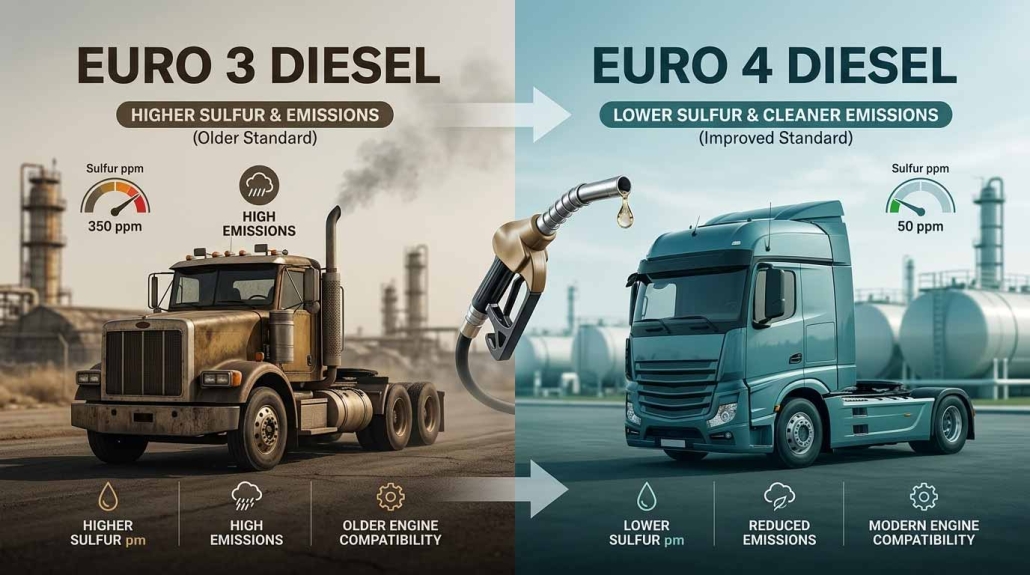
The main difference between Euro 3 diesel and Euro 4 diesel is fuel cleanliness, especially sulfur content and emissions performance. In simple terms, Euro 4 diesel is cleaner and better suited to newer diesel engines, while Euro 3 diesel is an older, higher-sulfur grade that can be less compatible with modern emission-control systems. For readers comparing diesel fuel standards, the practical takeaway is clear: Euro 4 is generally the better option for emissions, engine protection, and broader market relevance.
If you are new to fuel classifications, our guide to Introduction to Petroleum Products gives useful background before comparing specific diesel grades.
Euro 3 vs Euro 4 Diesel Comparison Table
| Feature / Specification | Euro 3 Diesel | Euro 4 Diesel |
|---|---|---|
| Sulfur content | Higher sulfur, typically up to 350 ppm | Lower sulfur, typically up to 50 ppm |
| Emissions performance | Older standard, higher pollutant output | Cleaner standard with lower emissions |
| Environmental impact | Greater contribution to sulfur-related emissions | Lower sulfur helps reduce harmful exhaust emissions |
| Fuel cleanliness | Less refined in emissions terms | Cleaner-burning than Euro 3 |
| Engine compatibility | Better suited to older diesel engines | Better suited to newer diesel engines designed for cleaner fuel |
| Compatibility with emission systems | Can be less suitable for advanced after-treatment systems | More compatible with more modern diesel technology |
| Market position | Older diesel fuel standard | Transitional cleaner standard between older diesel and newer ultra-low sulfur grades |
| Typical use context | Older fleets or markets with less strict fuel quality requirements | Markets moving toward cleaner diesel fuel standards |
| Main benefit | Often usable in older engines built around higher-sulfur fuels | Better emissions profile and improved suitability for cleaner diesel systems |
| Main drawback | Higher sulfur content and weaker emissions performance | Still not as clean as newer low-sulfur grades in some markets |
For more detail on sulfur-restricted fuels, see our articles on ULSD Diesel and EN590 Diesel.
What Is Euro 3 Diesel?
Euro 3 diesel is an older diesel fuel grade associated with earlier diesel emissions standards in Europe. Its most recognized feature is its relatively higher sulfur content compared with newer grades. Because of that, it is usually considered less clean and less compatible with modern diesel systems designed around lower-emission fuels.
In practical use, Euro 3 diesel may still appear in discussions about legacy fleets, older fuel supply systems, or developing fuel markets. If you want more context on how diesel is made and upgraded, visit Diesel Production Process and Cetane Number.
What Is Euro 4 Diesel?
Euro 4 diesel is a cleaner diesel standard than Euro 3, mainly because its sulfur level is significantly lower. That lower sulfur content helps reduce emissions and makes the fuel more appropriate for newer diesel engines and cleaner combustion systems.
For many users asking about the difference between Euro 3 and Euro 4 diesel, this is the key point: Euro 4 diesel sulfur content is lower, so it is cleaner-burning and generally better for newer vehicles. It also sits closer to modern fuel quality expectations, although in many European markets even stricter standards have become dominant. You may also want to compare it with newer grades in our Euro 4 vs Euro 5 Diesel Comparison and Euro 5 vs Euro 6 Diesel Comparison.
Pros and Cons of Euro 3 Diesel
Advantages of Euro 3 diesel
- Can be suitable for some older diesel engines that were designed before cleaner low-sulfur fuels became standard.
- May still be relevant in markets where older diesel fuel standards remain in circulation.
- Often understood as part of the historical evolution of diesel fuel standards.
Disadvantages of Euro 3 diesel
- Higher sulfur content means dirtier combustion compared with Euro 4.
- Less suitable for modern engines and advanced emissions-control systems.
- Weaker environmental performance.
- Lower commercial relevance in markets that prioritize cleaner fuels.
If fuel quality is a concern, also read Signs of Low-Quality Diesel, Diesel Color, and Winter Diesel.
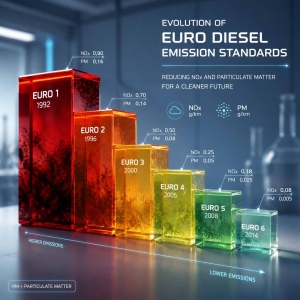
Amount of pollutants produced by different diesel standards
Pros and Cons of Euro 4 Diesel
Advantages of Euro 4 diesel
- Lower sulfur than Euro 3 diesel.
- Cleaner emissions profile.
- Better compatibility with newer diesel engines.
- More aligned with cleaner fuel expectations in regulated markets.
Disadvantages of Euro 4 diesel
- Still not the cleanest diesel option compared with newer ultra-low sulfur grades.
- May not represent the most current on-road diesel standard in some regions.
- In highly regulated markets, newer specifications may be preferred over Euro 4.
Readers comparing diesel options may also find value in Biodiesel, D1 Diesel, and Difference Between Diesel and Gasoline.
Other Names or Related Naming Conventions
Euro 3 diesel and Euro 4 diesel are usually referred to by their Euro emissions or fuel standard level, but in commercial discussions they may also be described more generally by sulfur category or by their relation to regional diesel specifications. In some markets, Euro 4 diesel may overlap conceptually with cleaner low-sulfur automotive diesel, while Euro 3 is usually recognized as an older, higher-sulfur grade.
These names can vary by market, supply chain language, and local regulation, so it is always best to confirm the actual sulfur specification and standard rather than rely on the label alone.
Is Euro 4 Diesel Legal in Europe?
This question needs a careful answer. Euro 4 diesel is not broadly “illegal” simply as a historical fuel classification, but whether it is permitted for sale or regular road use depends on the specific country, current fuel regulations, and the applicable market standard. In practice, many European markets have moved beyond Euro 4-era fuel quality toward stricter low-sulfur diesel standards such as EN590-compliant grades.
So, if the question is “Is Euro 4 diesel legal in Europe?”, the practical answer is: Europe has largely moved to newer and stricter diesel fuel specifications, so Euro 4 is no longer the benchmark standard in most markets, even if regulatory treatment can vary by use case and jurisdiction.
For users tracking market trends, see Diesel Price Forecast and Top 10 Diesel-Producing Countries. You can also explore More Articles About Petroleum Products for broader fuel market insights.
Conclusion
In the Euro 3 vs Euro 4 diesel comparison, Euro 4 is generally the cleaner and more practical choice. Its lower sulfur content gives it a clear advantage in emissions performance, fuel cleanliness, and compatibility with newer diesel systems. Euro 3 diesel, by contrast, is mainly relevant as an older standard tied to legacy engines and less demanding fuel environments.
For most readers, the simplest takeaway is this: Euro 4 diesel is better than Euro 3 diesel, but newer low-sulfur diesel standards have already become the preferred option in much of Europe.
FAQ
Which is better, Euro 3 or Euro 4 diesel?
Euro 4 diesel is generally better because it has lower sulfur content and produces cleaner emissions.
What is the main difference between Euro 3 and Euro 4 diesel?
The biggest difference is sulfur content. Euro 4 diesel contains much less sulfur than Euro 3 diesel.
Is Euro 4 diesel the same as EN590 diesel?
Not exactly. EN590 is a broader European diesel fuel specification, and current market diesel sold in Europe typically follows stricter standards than older Euro 4-era fuel classifications.
Global Petroleum Trade Solutions | Universal Trades
As a reputable international petroleum trading enterprise, Universal Trades specializes in the reliable procurement, export, and supply chain management of high-grade petroleum commodities, refined fuels, and industrial feedstocks designed to meet rigorous global standards.








Leave a Reply
Want to join the discussion?Feel free to contribute!