
Gasoline Shelf Life Guide | How Long Does Gasoline Last?
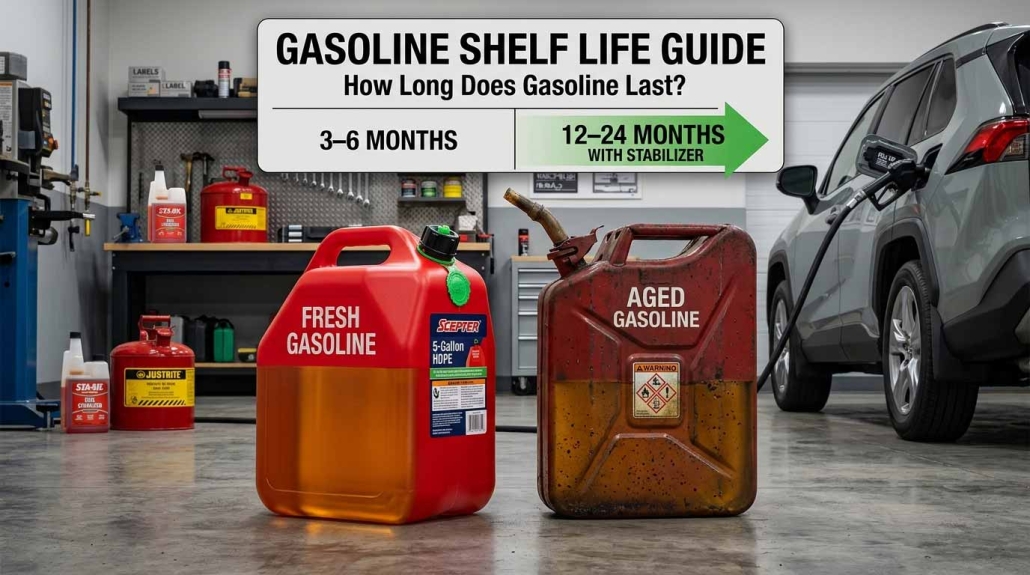
Quick Answer: Gasoline Shelf Life Summary
Gasoline typically lasts between 3 and 6 months before noticeable degradation begins. Ethanol-free gasoline can remain stable for up to 12 months under ideal conditions, while E10 and E85 fuels degrade faster because ethanol absorbs moisture from the air. Heat, oxygen exposure, container quality, and fuel stabilizers all affect gasoline shelf life.
Old gasoline can cause hard starts, rough idling, injector deposits, and octane loss. Proper storage in sealed approved containers can significantly extend fuel usability.
Why Gasoline Goes Bad (Fuel Chemistry Explained)
Gasoline is a volatile mixture of hydrocarbons produced during the [Process of Gasoline Production]. Over time, its chemical composition changes due to several degradation mechanisms.
Oxidation
When gasoline reacts with oxygen, unstable compounds form gums and varnish deposits. These residues can clog injectors and fuel passages, often leading to the issues discussed in Problems of Bad Gasoline.
Evaporation of Light Hydrocarbons
The lightest fuel components evaporate first, reducing volatility and making engines harder to start.
Ethanol Moisture Absorption
Ethanol-blended fuels like E85 Gasoline absorb moisture from the atmosphere. Excess water contamination can trigger phase separation, where water and ethanol separate from gasoline.
Octane Loss
As fuel degrades, octane quality declines. Lower octane increases the risk of engine knocking, especially in high-compression engines designed for higher Octane Number ratings.
Gasoline Shelf Life Table (By Storage Conditions)
| Gasoline Type | Ethanol Content | Storage Conditions | Stabi-lizer | Estimated Shelf Life | What Happens Afterward | Engine Risks |
|---|---|---|---|---|---|---|
| Regular Gasoline (E10) | 10% | Sealed container below 20°C | No | 3–6 months | Oxidation and moisture absorption | Hard starts, injector deposits |
| Ethanol-Free Gasoline | 0% | Cool airtight metal container | No | 6–12 months | Slow oxidation | Minor octane reduction |
| Premium Gasoline | 0–10% | Vehicle fuel tank | No | 3–6 months | Volatility loss | Reduced performance |
| E85 Fuel | 51–85% | Humid environment | No | 1–3 months | Phase separation | Corrosion and fuel system damage |
| Stabilized Gasoline | Varies | Cool sealed storage | Yes | 12–24 months | Slower oxidation | Lower degradation risk |
| Gasoline in Car Tank | Usually E10 | Partial tank exposed to heat | No | 2–4 months | Vapor loss and oxidation | Rough idle and fuel degradation |
The stability differences between fuels largely depend on ethanol concentration, volatility, and storage conditions. Articles covering Gasoline Grades and Their Applications explain why fuel formulations behave differently during storage.
Does Gasoline Expire Inside a Car Fuel Tank?
Yes. Gasoline stored in a vehicle eventually degrades, although modern sealed fuel systems slow oxidation and evaporation compared to open containers.
A partially filled tank degrades faster because more oxygen is present above the fuel. High temperatures accelerate breakdown even further. Most gasoline inside a parked vehicle remains usable for roughly 3–6 months.
Keeping the tank relatively full can help reduce evaporation.
How Fuel Stabilizers Extend Gasoline Shelf Life
Fuel stabilizers slow oxidation and chemical breakdown by protecting unstable hydrocarbons. In many cases, stabilizers can extend gasoline shelf life from 6 months to 12–24 months depending on storage quality.
They are especially useful for:
- generators
- seasonal equipment
- emergency fuel reserves
- boats and motorcycles
For more details, see our guide to Best Gasoline Additives.
Best Way to Store Gasoline Long Term
For long-term gasoline storage:
- Keep fuel in a cool, dark place
- Minimize temperature fluctuations
- Use airtight approved containers
- Reduce air space inside the container
- Rotate stored fuel every few months
- Avoid direct sunlight
Commercial fuel traders in the Top 10 Gasoline Producing Countries often use controlled storage systems to preserve fuel quality during transport and distribution.
What Containers Are Safe for Gasoline Storage?
The best gasoline containers are:
- approved steel safety cans
- certified HDPE fuel containers
- properly sealed metal drums
Is Storing Gasoline in Plastic Safe?
Yes, but only if the plastic is fuel-compatible. HDPE (high-density polyethylene) containers specifically rated for fuel storage are generally safe.
Unsafe plastics may soften, leak, or chemically degrade when exposed to gasoline. This contamination can damage fuel quality and increase safety risks.
Some specialty fuels like What Is White Gasoline require even stricter storage practices because of their higher volatility.
Signs Gasoline Has Gone Bad
Common signs of degraded gasoline include:
- sour or varnish-like odor
- darker fuel color
- engine hesitation
- rough idling
- difficult starting
Changes in fuel appearance are discussed further in The Color of Gasoline.
Gasoline Types and Their Stability
Different fuels have different storage characteristics.
Unleaded Gasoline is generally more stable than high-ethanol blends. Ethanol fuels absorb moisture faster, reducing shelf life.
E85 Gasoline degrades especially quickly in humid environments due to high ethanol content.
Fuel formulation, additives, and refining methods all influence storage stability and are closely tied to Gasoline Grades and Their Applications.
You can explore more fuel topics in our complete Gasoline Articles section.
Gasoline vs Diesel Shelf Life
Diesel typically lasts longer than gasoline because it evaporates more slowly. However, diesel faces its own storage challenges such as microbial contamination and sludge formation.
Learn more in our guides about Diesel Shelf Life and other Diesel Articles.
Conclusion
Most gasoline remains usable for about 3–6 months, while ethanol-free and stabilized fuels can last much longer under proper storage conditions. Ethanol blends degrade faster because they absorb moisture and are more prone to phase separation.
Using approved containers, limiting oxygen exposure, and adding stabilizers can significantly improve gasoline shelf life while reducing engine risks and fuel waste.
For additional fuel market insights, visit our latest Gasoline Price Prediction analysis.
Global Petroleum Trade Solutions | Universal Trades
As a reputable international petroleum trading enterprise, Universal Trades specializes in the reliable procurement, export, and supply chain management of high-grade petroleum commodities, refined fuels, and industrial feedstocks designed to meet rigorous global standards.







Leave a Reply
Want to join the discussion?Feel free to contribute!