
Bitumen 60/70: Specifications, Performance, and Procurement

In global transportation infrastructure, pavement engineering, and industrial waterproofing, bitumen serves as the primary binder holding modern commerce together. Among the various penetration grades refined from crude oil, Bitumen 60/70 is the most widely specified, manufactured, and traded grade globally.
This guide provides an exhaustive analysis of Bitumen 60/70. It covers its core rheology, comparative specifications, geographic engineering application criteria, global logistics, and B2B procurement risk mitigation strategies.
Core Science & Rheology of Bitumen 60/70
Bitumen is not a simple homogenous chemical compound. It is a complex, viscoelastic colloidal system composed of thousands of distinct hydrocarbon species. To understand the utility of Bitumen 60/70 in engineering applications, we must first analyze its physical classification, molecular microstructure, and response to mechanical and thermal stresses.
The Penetration Grade System: Deciphering “60/70”
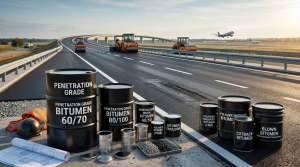
The classification “60/70” designates the penetration range of the binder at a standard temperature. The standard test method—governed by ASTM D5 and EN 1426—measures the depth to which a standard needle weighing 100 grams, loaded for exactly 5 seconds, penetrates a conditioned bitumen sample maintained at 25°C.
Penetration Depth=Value in decimillimeters (dmm)
For Bitumen 60/70, the needle penetrates between 6.0 mm and 7.0 mm (which corresponds to 60 dmm to 70 dmm).
This range places Bitumen 60/70 in the medium-hardness category:
- Harder than Bitumen 80/100 (which is softer, allowing 80 to 100 dmm of penetration under identical test conditions).
- Softer than Bitumen 40/50 (which is harder and more brittle, allowing only 40 to 50 dmm of penetration).
Viscoelastic Behavior and Shear Susceptibility
Bitumen behaves as a viscoelastic material. Its mechanical response is highly dependent on both loading time and ambient temperature:
- At low temperatures and high loading frequencies (fast traffic traffic loads): It behaves primarily as an elastic solid, recovering its shape after deformation.
- At high temperatures and low loading frequencies (slow-moving or stationary traffic): It behaves as a viscous liquid, permanently deforming under stress.
Its viscoelastic response can be represented using the complex shear modulus and phase angle (δ\delta), measured using a Dynamic Shear Rheometer (DSR). The complex shear modulus represents the total resistance of the binder to deformation when subjected to shear loading, while the phase angle (ranging from 0∘0^\circ for a purely elastic material to 90∘ for a purely viscous material) indicates the relative delay between the applied stress and the resulting strain.
Loss Shear Modulus (G′′)=G∗⋅sin(δ)
Storage Shear Modulus (G′)=G∗⋅cos(δ)
For Bitumen 60/70, the balance between and at typical pavement operating temperatures (between 20°C and 60°C) allows the binder to absorb heavy traffic loading without exhibiting premature fatigue cracking (from excessive stiffness) or permanent deformation (from excessive fluid flow).
The Colloidal Structure: Asphaltene-to-Maltene Ratio
Chemically, bitumen is divided into two primary fractions:
- Asphaltenes: Highly polar, complex aromatic hydrocarbons with high molecular weights, insoluble in n-heptane. They act as the primary structural phase, giving bitumen its body, stiffness, and viscosity.
- Maltenes: The soluble fraction, further subdivided into:
- Saturates: Non-polar, aliphatic hydrocarbons providing flexibility.
- Aromatics: Liquid-state cyclic hydrocarbons that act as the continuous phase.
- Resins: Polar molecules that act as peptizing agents, keeping the insoluble asphaltenes dispersed in the maltene phase.
If the asphaltene ratio is too low, the bitumen lacks cohesion and is prone to rutting under traffic loads. If the asphaltene ratio is too high, the binder behaves as a unstable gel structure rather than a stable sol-type fluid. This makes it highly susceptible to phase separation, rapid oxidation, and brittle failure.
Short-Term Aging Dynamics During Asphalt Production
When Bitumen 60/70 is pumped from storage and mixed with hot aggregate at temperatures ranging from 150°C to 165°C in an asphalt batching plant, it undergoes short-term aging. This aging is primarily driven by:
- Volatilization: The loss of low-molecular-weight maltene fractions through evaporation.
- Oxidation: The chemical reaction of atmospheric oxygen with reactive sites on the maltene molecules, converting them into polar resins, which in turn group together into asphaltenes.
This process artificially shifts the colloid structure toward a higher asphaltene concentration. It increases the viscosity of the binder and decreases its penetration value.
In asphalt mix design, this aging is simulated in the laboratory using the Rolling Thin Film Oven Test (RTFOT) under ASTM D1754/EN 12607-1. For a standard Bitumen 60/70, the mass loss after RTFOT must remain below 0.8%, and the remaining penetration must be at least 54% of the original value. This ensures that the binder does not become excessively brittle during construction.
Why Bitumen 60/70 is the Engineering “Sweet Spot”
Engineers often refer to Bitumen 60/70 as the “sweet spot” of paving binders due to its balanced rheological profile:
- Stiffness vs. Workability: Harder binders like Bitumen 40/50 require high mixing and compaction temperatures, which increases fuel consumption at the plant and risks overheating the binder. Softer binders like Bitumen 80/100 are easy to work with but offer poor initial stability, making the fresh asphalt pavement vulnerable to deformation under early traffic. Bitumen 60/70 balances these two extremes.
- Fatigue Resistance vs. Rutting Resistance: It provides sufficient stiffness at high summer temperatures to prevent rutting, while retaining enough flexibility at lower winter temperatures to resist thermal and fatigue cracking.
- Universal Application Compatibility: It is compatible with a wide range of aggregate types and works well with standard chemical and polymer additives if modification is required.
Definitive Comparative Specification Matrix
To ensure structural integrity and compliance with international standards, quality control laboratories run tests to determine physical, thermal, and chemical attributes.
Table 1: Physicochemical Specifications Comparison
The table below contrasts Bitumen 60/70 against its main neighboring grades, 80/100 and 40/50, compiled from international standards (ASTM and EN).
| Technical Parameter | Test Method | Bitumen 40/50 | Bitumen 60/70 | Bitumen 80/100 |
|---|---|---|---|---|
| Penetration at 25°C (100g, 5s) | ASTM D5 / EN 1426 | 40 – 50 dmm | 60 – 70 dmm | 80 – 100 dmm |
| Softening Point (Ring & Ball) | ASTM D36 / EN 1427 | 52 – 60 °C | 49 – 56 °C | 45 – 52 °C |
| Ductility at 25°C (Min) | ASTM D113 | 100 cm | 100 cm | 100 cm |
| Flash Point (Cleveland Open Cup, Min) | ASTM D92 / EN ISO 2592 | 250 °C | 250 °C | 250 °C |
| Specific Gravity at 25°C | ASTM D70 / EN 15326 | 1.01 – 1.06 g/cm³ | 1.01 – 1.06 g/cm³ | 1.01 – 1.05 g/cm³ |
| Loss on Heating (Max) | ASTM D1754 / EN 12607-1 | 0.2 % | 0.2 % | 0.5 % |
| Retained Penetration after TFOT (Min) | ASTM D5 / EN 12607-1 | 55 % | 54 % | 50 % |
| Ductility after TFOT at 25°C (Min) | ASTM D113 / D1754 | 50 cm | 50 cm | 75 cm |
| Kinematic Viscosity at 135°C | ASTM D2170 / EN 12595 | 400 + cSt | 300 – 400 cSt | 200 – 300 cSt |
| Absolute Viscosity at 60°C | ASTM D4402 / EN 12596 | 4000 + Poise | 2000 ± 400 Poise | 1000 ± 200 Poise |
| Solubility in Trichloroethylene (Min) | ASTM D2042 / EN 12592 | 99.0 % | 99.0 % | 99.0 % |
Table 2: Standard Harmonization & Equivalency Mapping
Historically, the industry classified binders using penetration grading. However, modern pavement designs often utilize Viscosity Grading (VG) (standardized in India under IS 73 and parts of the US) or Superpave Performance Grading (PG) (developed in the US to match climatic extremes).
The table below maps Bitumen 60/70 to its equivalent grades in these alternative systems.
| Penetration Grade | Viscosity Grade (VG) Equivalent | Performance Grade (PG) Equivalent | Primary Mechanical Matching Factors |
|---|---|---|---|
| Bitumen 60/70 | VG-30 | PG 64-22 | Absolute viscosity at 60°C is approximately 2400 to 3000 Poise, matching the VG-30 threshold. High-temperature stiffness supports pavements up to 64°C, while low-temperature flexibility resists cracking down to -22°C. |
| Bitumen 80/100 | VG-10 | PG 58-22 or PG 58-28 | Lower viscosity (approx. 1000 Poise at 60°C) matches VG-10. Performs better in colder climates but offers lower resistance to rutting at temperatures above 58°C. |
| Bitumen 40/50 | VG-40 | PG 70-10 or PG 70-16 | High viscosity (above 4000 Poise at 60°C) aligns with VG-40. Suitable for high-temperature zones and heavy structural loading, though prone to cracking in cold weather. |
Geographic & Climatic Engineering Decisions
Road pavements are exposed to direct sunlight, high temperatures, rain, and snow. Choosing the wrong binder grade can lead to premature pavement failure, requiring costly maintenance.
Climate Application Boundaries for Bitumen 60/70
Bitumen 60/70 performs best in regions with moderate, sub-tropical, and semi-arid climates where:
- The average ambient air temperature during the hottest summer months ranges between 25°C and 45°C.
- Peak pavement surface temperatures under direct solar radiation reach up to 60°C to 65°C.
Under these conditions, a Bitumen 60/70 asphalt mix maintains its modulus. It resists the shearing forces exerted by heavy traffic without softening. In the winter months, when temperatures drop near or slightly below freezing (0°C to -10°C), the binder retains sufficient ductility to prevent cracking under thermal stress.
Typical geographic regions specifying Bitumen 60/70 include:
- The Mediterranean basin and Southern Europe.
- North Africa and the Levant.
- Parts of Western and Southern Asia (e.g., India, Pakistan, Iran).
- Central and South America.
- Sub-tropical regions of East Asia.
The Consequences of Soft Grade Selection in Hot Zones
Using a softer binder, such as Bitumen 80/100, in hot regions with temperatures exceeding 40°C typically leads to two primary structural defects:
- Rutting (Plastic Deformation): Under heavy traffic loading, the soft binder cannot resist shear stress. The aggregate matrix shifts, leading to longitudinal depressions along the wheel paths. This represents structural pavement failure and increases the risk of hydroplaning during rain.
- Bleeding (Flushing): As the temperature rises, the excess binder expands and migrates upward to the pavement surface. This creates a smooth, glass-like film of pure bitumen on the road. This film reduces skid resistance, posing a safety hazard, and compromises the bonding of the underlying layers.
The Consequences of Hard Grade Selection in Cold Zones
Using a harder binder, such as Bitumen 40/50, in climates with freezing winters (below -10°C) can cause significant pavement distress:
- Thermal Cracking: At cold temperatures, the binder loses its relaxation capabilities. As the pavement structure contracts under cold weather, the internal tensile stresses exceed the tensile strength of the binder. This leads to transverse cracks across the road surface.
- Fatigue/Reflective Cracking: Because the binder is stiff and brittle, it cannot bend under traffic loads. Over time, cyclic traffic loading leads to fatigue cracking, often called “alligator cracking.”
- Moisture Intrusion: Once surface cracks develop, surface water penetrates the underlying sub-base. During freeze-thaw cycles, this water expands, accelerating structural damage and creating pot-holes. For more information, see our guide on the causes of asphalt cracking.
Global Procurement, Logistics & Packaging Optimization
For B2B buyers, purchasing Bitumen 60/70 involves more than just verifying technical specifications. It requires managing logistics costs, handling raw materials safely, and minimizing product loss during transport.
Comparative Analysis of Packaging Systems
Bitumen is transported globally using four main packaging and logistics methods. Each option balance capital expenditure, freight efficiency, and on-site heating requirements differently.
Detailed Breakdown of Options:
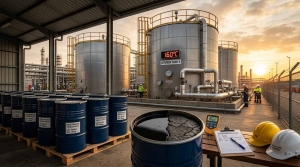
- New Steel Drums:This remains the most common option for remote locations lacking bulk infrastructure. Buyers typically choose between the 150 kg drum (allowing approximately 110 drums per 20-foot FCL, yielding 16.5 MT) and the 180 kg/185 kg drum (allowing approximately 110 drums, yielding 20 MT). Drums must be constructed from cold-rolled steel to prevent deformation under the hydrostatic pressure of hot-filled bitumen (typically filled at 135°C–145°C). For detailed layout options, see our bitumen packaging guide.
- Jumbo Bags (Bitubags):These bags consist of a structural polypropylene outer bag and a meltable polyethylene inner liner that blends directly into the asphalt during heating. This option eliminates drum disposal costs and reduces empty packaging weight. However, they require dedicated cold-melting units at the destination to liquify the product.
- ISO Tank Containers (Bitutainers):These containers are suitable for regular trade routes between ports with proper handling facilities. They feature integrated heating pipes (diesel burners or steam lines). This allows the binder to be reheated on-site and pumped directly into the asphalt plant’s storage tanks, eliminating packaging waste.
- Bulk Vessels:This option is reserved for large-scale national infrastructure projects with access to dedicated coastal bitumen terminals. These terminals must have insulated, heated pipelines and storage tanks to keep the product liquid at 140°C.
Logistics Risk Mitigation: Leakage and Environmental Controls
Preventing material loss and environmental contamination during transit requires addressing several key factors:
- Drum Expansion and Headspace: Bitumen expands when heated. When filling drums at the refinery, operators must leave a 3% to 5% headspace. If filled to the brim, the thermal expansion during transit through hot tropical regions can cause the seams to burst, leading to leaks. For more details on avoiding these issues, read about the causes of leakage in export bitumen drums.
- Moisture Protection: If water enters a drum or jumbo bag through micro-punctures, it will sink to the bottom (since water is denser than bitumen at high temperatures). When the bitumen is reheated above 100°C for decanting, this trapped water flashes into steam. This expansion can cause hot bitumen to boil over, creating a safety hazard for operators and risking equipment damage.
- On-Site Decanting and Energy Efficiency: Decanting bitumen from drums requires heating them in a decanting chamber. Standard chambers use heat from thermal oil or direct combustion. Using modern, well-insulated decanting units with automatic drum ejection reduces fuel consumption and minimizes emissions compared to older, open-flame systems.
Commercial Procurement & Incoterms Strategy
Bitumen is a heavy refining byproduct. Because its pricing is closely linked to global energy markets and ocean freight rates, buyers must manage significant price volatility.
The Pricing Equation: Crude oil, Refining Margins, and regional benchmarks
The cost of Bitumen 60/70 at any export hub—such as FOB Bandar Abbas, FOB Singapore, or FOB Rotterdam—is determined by three main variables:
Bitumen Price (FOB)=f(Global Crude Benchmark)+Refining Crack Spread+Local Supply-Demand Balance
- Crude Oil Benchmarks:Base bitumen pricing tracks global crude benchmarks, primarily Brent and WTI. When global crude prices rise, the cost of the vacuum residue feedstock used to refine bitumen increases as well.
- The Vacuum Residue Crack Spread:Refineries look to maximize their margins. If the demand for fuel oil or coking products is high, refineries may process vacuum residue into lighter products using coker units, rather than producing bitumen. This reduction in bitumen supply can drive up prices even if crude prices remain stable.
- Regional Supply-Demand Dynamics:Local construction cycles affect pricing. For example, demand in India increases during the dry season (October to May) and drops during the monsoon season (June to September). This seasonal shift directly impacts regional pricing, such as global bitumen price forecasts.
Incoterms Optimization: FOB vs. CFR/CIF
Choosing the appropriate Incoterm depends on your logistics capabilities and control over shipping assets:
Free On Board (FOB)
- Best for: Large, established trading firms and buyers with contract freight agreements with major shipping lines.
- Key advantage: The buyer controls the shipping schedule, manages ocean freight rates, and coordinates discharge operations directly.
- Risk: The buyer assumes all risk of damage or loss once the container passes the vessel’s rail at the loading port.
Cost and Freight (CFR) / Cost, Insurance, and Freight (CIF)
- Best for: Small to mid-sized construction firms, government buyers, or companies operating in regions without established shipping lines.
- Key advantage: The exporter manages the shipping logistics, including customs export clearance, ocean transit, and marine insurance.
- Risk: The buyer has less control over arrival dates, container free-time at the destination port, and potential transshipment delays.
Financial Risk Mitigation and Payment Structuring
Given the capital-intensive nature of B2B bitumen procurement, structuring your payment terms carefully is essential to protect against commercial defaults:
- Documentary Letters of Credit (L/C):For international transactions, buyers should use an Irrevocable, Confirmed Letter of Credit at Sight. The L/C should require the presentation of clean onboard bills of lading, independent inspection certificates (e.g., SGS), and verified certificates of origin before payment is released. This protects the buyer’s capital until the seller demonstrates compliance with shipping and quality requirements.
- Bank Guarantees and Performance Bonds:For large government or municipal supply contracts, require the seller to post a Performance Bond (typically 10% of the contract value). This bond provides financial recourse if the seller fails to deliver the contracted volume on schedule.
- Hedging Options:Large buyers can hedge their exposure to price volatility using fuel oil derivatives or swap contracts linked to Sing 180 CST or HSFO benchmarks. These financial instruments help lock in feedstock costs during long-term road construction projects.

FAQ
What does the “60/70” penetration value mean in asphalt engineering?
The 60/70 penetration value indicates the hardness of the bitumen binder. Measured using a standard needle under a 100g load at 25°C for 5 seconds (ASTM D5), the needle penetrates between 6.0 and 7.0 mm (60 to 70 decimillimeters). In asphalt pavement design, this range represents a medium-hard binder. It provides a balanced combination of stiffness to resist rutting in summer and flexibility to prevent cracking in winter.
How does Bitumen 60/70 compare to VG-30 and PG 64-22?
These designations represent different grading systems:
- Bitumen 60/70 is classified under the Penetration Grading system, which is based on empirical hardness tests at a single reference temperature (25°C).
- VG-30 is classified under the Viscosity Grading system (IS 73). It measures absolute viscosity at 60°C (minimum 2400 Poise) and kinematic viscosity at 135°C, which relates more closely to pavement performance at peak summer temperatures and mixing temperatures.
- PG 64-22 is classified under the Performance Grading (Superpave) system. This system evaluates the binder’s rheological performance across a range of temperatures, indicating suitability for climates with peak pavement temperatures of 64°C and winter lows of -22°C. Bitumen 60/70 typically meets the requirements of both VG-30 and PG 64-22.
What is the shelf life of Bitumen 60/70 in steel drums, and how should it be stored?
When stored in new, sealed steel drums, Bitumen 60/70 has a shelf life of more than two years without significant degradation. To maintain quality during storage:
- Store drums vertically on a level, compacted surface or concrete pad.
- Keep drums in a well-drained area to prevent water pooling around the bottom seams, which can cause corrosion.
- Protect drums from prolonged exposure to direct sunlight in hot climates to minimize internal pressure build-up and the risk of leakage.
Can Bitumen 60/70 be modified with polymers, and what are the benefits?
Yes, Bitumen 60/70 is widely used as a base binder for modification with polymers, such as Styrene-Butadiene-Styrene (SBS), Crumb Rubber Modifier (CRM), or Plastomers (EVA). This modification produces polymer-modified bitumen (PMB), which offers several performance benefits:
- Increases the binder’s elastic recovery.
- Lowers susceptibility to temperature changes, reducing rutting at high temperatures and cracking at low temperatures.
- Improves adhesion to aggregate particles, extending the service life of high-traffic pavements.
What are the primary causes of leakage in export bitumen drums, and how can they be prevented?
The primary causes of drum leakage during transit include:
- Overfilling: Filling drums beyond 95% capacity leaves insufficient headspace for thermal expansion as the shipment travels through warm tropical zones.
- Thin Gauge Steel: Using drums constructed from steel sheets thinner than 0.6 mm makes them vulnerable to deformation and seam splits under pressure.
- Improper Stacking: Stacking drums too high in shipping containers without adequate dunnage or strapping can cause them to shift and puncture during transit.
Prevention requires using drums that meet international standards (minimum 0.6 mm to 0.8 mm steel thickness), leaving a 5% headspace during filling, and securing loads properly within the container.
How does high wax content affect the performance of Bitumen 60/70?
High wax content (exceeding 2.0% by weight) can adversely affect binder performance:
- Reduces Adhesion: Wax can migrate to the surface of the binder film, weakening the bond between the bitumen and the aggregate. This increases the risk of moisture damage and raveling.
- Increases Temperature Susceptibility: Waxy bitumen softens more quickly at high temperatures and becomes brittle at lower temperatures, making the pavement more vulnerable to both rutting and cracking.
- Accelerates Physical Hardening: The crystallization of wax compounds over time can cause the binder to harden and lose its ductility.
What is the typical temperature range for mixing and compacting Bitumen 60/70 asphalt mixes?
For a standard HMA (Hot Mix Asphalt) using Bitumen 60/70, the recommended temperature ranges are:
- Binder Heating Temperature: 150°C to 160°C (do not exceed 175°C to avoid thermal degradation).
- Aggregate Heating Temperature: 160°C to 170°C.
- Mixing Temperature (at the plant): 150°C to 165°C.
- Laydown and Compaction Temperature (on-site): 135°C to 150°C. Compaction should be completed before the mix temperature drops below 110°C, as the binder’s viscosity increases rapidly below this point, making compaction difficult.
How does the choice of Incoterms affect risk management in B2B bitumen trading?
The choice of Incoterm determines when the responsibility and risk for the cargo transfer from the seller to the buyer:
- Under FOB (Free On Board), the buyer assumes responsibility for ocean transit and marine insurance once the cargo is loaded at the port of origin. This allows buyers with established shipping contracts to manage logistics costs directly.
- Under CFR/CIF, the seller manages and pays for ocean transport to the destination port. This is often preferred by buyers who want to simplify their logistics chain, though it may result in less control over shipping schedules and terminal fees.
Why is solubility in trichloroethylene a critical quality parameter for Bitumen 60/70?
The solubility test (ASTM D2042) measures the purity of the bitumen binder. Active bitumen hydrocarbons dissolve completely in trichloroethylene, while inorganic impurities, ash, mineral matter, and free carbon do not. A minimum solubility of 99.0% ensures that the product is free of excessive contaminants that could compromise its binding efficiency and mechanical performance.
How do currency fluctuations impact FOB prices at major bitumen export hubs?
Most global bitumen trade is priced in US Dollars (USD). At regional export hubs, such as Bandar Abbas (pricing in Iranian Rial – IRR) or Singapore (pricing in Singapore Dollar – SGD), fluctuations in the exchange rate against the USD can affect local pricing:
- If the local currency devalues against the USD, the exporter’s local production and refining costs decrease in USD terms, which can make their FOB prices more competitive.
- Conversely, a strengthening local currency increases production costs in USD terms, which can drive up FOB export prices even if global crude oil benchmarks remain stable.
Conclusion
Choosing and procuring Bitumen 60/70 requires balancing technical specifications with commercial logistics. Understanding its physical properties, chemical composition, and performance under different climatic conditions helps engineers design durable pavements.
At the same time, managing logistics risks, using appropriate packaging, and implementing QA checklists helps procurement teams control costs and ensure quality. By applying secure material quality and optimize supply chain costs. For additional information on related products and refining processes, consult our guide to petroleum products and bitumen refinery and explore our resources on the bitumen production process.
Global Petroleum Trade Solutions | Universal Trades
As a reputable international petroleum trading enterprise, Universal Trades specializes in the reliable procurement, export, and supply chain management of high-grade petroleum commodities, refined fuels, and industrial feedstocks designed to meet rigorous global standards.








Leave a Reply
Want to join the discussion?Feel free to contribute!