
Light Naphtha vs. Heavy Naphtha: Key Differences and Industrial Applications
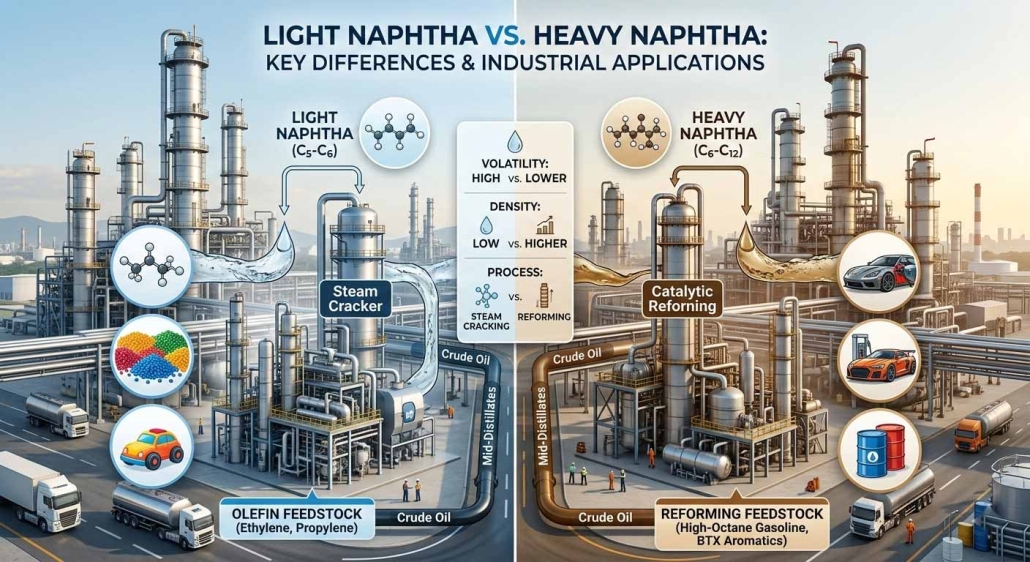
Naphtha is often referred to as the “building block” of the petrochemical industry. It is a flammable liquid hydrocarbon mixture produced during the distillation of crude oil. While all naphtha serves as a vital intermediary, not all fractions are created equal. Understanding the distinction between Light Naphtha and Heavy Naphtha is essential for optimizing refinery outputs and chemical production.
What is Naphtha and What are Its Uses?
Naphtha is a refined petroleum product that falls between the light gases (like LPG) and heavier distillates (like kerosene) in the distillation column. It isn’t typically used as a final consumer product but acts as a critical feedstock for:
-
Petrochemicals: Producing plastics, synthetic rubber, and fibers.
-
Fuel Production: Blending into gasoline to improve combustion properties.
-
Industrial Solvents: Used in paints, varnishes, and cleaning agents.
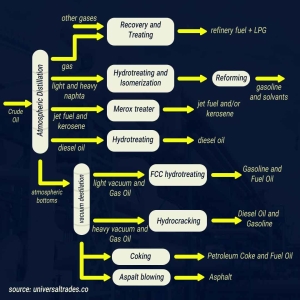
Light Naphtha: The Olefin Powerhouse
Light Naphtha, often called Light Straight-Run (LSR) naphtha, is the highly volatile, lower-density fraction of the distillation process.
-
Composition: Primarily paraffinic, containing carbon chains of C5 to C6.
-
Boiling Range: Typically boils between 30°C and 90°C.
-
Primary Use: It is the preferred feedstock for steam crackers. Because it is rich in paraffins, it is exceptionally efficient at producing olefins like ethylene and propylene, which are the foundations of the global plastics industry.
Heavy Naphtha: The Foundation of High-Octane Fuel
Heavy Naphtha is denser and possesses a different chemical makeup than its lighter counterpart, making it unsuitable for direct steam cracking but perfect for refining.
-
Composition: Rich in naphthenes and aromatics, containing C6 to C12 carbon chains.
-
Boiling Range: Typically boils between 90°C and 200°C.
-
Primary Use: It serves as the primary feedstock for catalytic reforming units. In these units, heavy naphtha is converted into high-octane “reformate,” a key component in premium gasoline. It is also the source of aromatics such as benzene, toluene, and xylene (BTX).
In the broader refining landscape, heavy naphtha sits adjacent to other middle distillates like diesel and specialized products such as base oil.
Comparison at a Glance
The following table summarizes the technical differences between the two fractions:
| Feature | Light Naphtha | Heavy Naphtha |
| Carbon Chain | C5 – C6 | C6 – C12 |
| Boiling Point | 30°C to 90°C | 90°C to 200°C |
| Density | Low (Lighter) | High (Heavier) |
| Main Component | Paraffins | Naphthenes & Aromatics |
| Primary Process | Steam Cracking | Catalytic Reforming |
| End Product | Ethylene / Propylene | High-Octane Gasoline / BTX |
Impact of Impurities
Regardless of the type, naphtha must often undergo hydrotreating to remove sulfur and other impurities. High sulfur content can poison the expensive catalysts used in reforming and cracking processes, leading to significant industrial downtime.
For more technical insights, explore More articles about naphtha.
FAQ: Common Questions About Naphtha
1. Can Heavy Naphtha be used in steam crackers?
While possible, it is not ideal. Heavy naphtha produces more heavy liquid by-products and less ethylene compared to light naphtha. It is far more valuable when sent to a reformer to produce aromatics.
2. Which version is more volatile?
Light Naphtha is significantly more volatile due to its lower boiling point and shorter carbon chains. It evaporates quickly at room temperature.
3. Is Naphtha the same as Gasoline?
No. Naphtha is a feedstock. While heavy naphtha is a major component used to make gasoline, it requires chemical processing (reforming) to achieve the necessary octane rating for modern engines.
4. Why is the paraffin content important in Light Naphtha?
Paraffins are easier to “crack” into simple molecules like ethylene. If light naphtha had high aromatic content, the steam cracking yield would be much lower.
Global Petroleum Trade Solutions | Universal Trades
As a reputable international petroleum trading enterprise, Universal Trades specializes in the reliable procurement, export, and supply chain management of high-grade petroleum commodities, refined fuels, and industrial feedstocks designed to meet rigorous global standards.







Leave a Reply
Want to join the discussion?Feel free to contribute!