
Base Oil Packaging Guide: Sourcing, Quality Control, and International Logistics
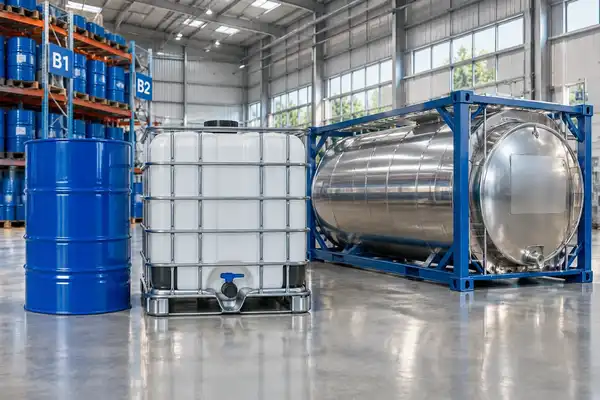
Master the complexities of base oil packaging (Flexitanks, ISO Tanks, and Steel Drums), bulk procurement procedures, and international shipping logistics for Group I, II, and III base oils.
In international petroleum trading, the quality of a lubricant is only as good as its delivery and packaging integrity. Whether you are sourcing heavy neutral Group I stocks like Base Oil SN 500 or high-purity Group II/III cuts such as N150 Base Oil, selecting the correct packaging method dictates whether your shipment arrives pristine or contaminated.
At Universal Trades, we supply and export bulk petroleum products under strict Incoterms 2020 rules (FOB, CFR, EXW). This comprehensive guide covers everything procurement managers, lubricant blenders, and industrial buyers need to know about base oil packaging, logistics, and quality assurance.
1. Why Base Oil Packaging Matters in Global Trade
Base oils (ranging from light neutral grades like N100 Base Oil to heavy grades like N600 Base Oil and Bright Stock Base Oil) are sensitive to moisture, particulate contamination, and oxidation. Poor packaging choices lead to cloudiness, altered viscosity index (VI), and off-spec laboratory results upon port arrival.
Unlike finished lubricants, base stocks serve as the foundational raw material for automotive and industrial oils. Understanding the nuances of base oil specifications and pairing them with proper containment is vital to protect your supply chain.
2. Comparative Analysis of Base Oil Packaging Methods
When concluding international purchase contracts, buyers generally choose one of four primary packaging methods depending on volume, destination port infrastructure, and blending requirements:
|
Packaging Type
|
Typical Capacity / Volume
|
Best Suited For
|
Key Logistics Advantage
|
|---|---|---|---|
| Flexitank (20ft Container) | 18,000 to 24,000 Liters (approx. 18–21 MT) | Medium to large-scale blenders | Cost-effective bulk transport without drum handling overhead. |
| ISO Tank | 20,000 to 26,000 Liters (Intermodal) | High-volume intermodal transport (Sea/Rail) | Maximum safety, reusable, zero risk of leakage or contamination. |
| IBC Tote (1000L Cube) | 1,000 Liters (20 units per 20ft container) | Mid-sized industrial consumers & plant handling | Easy discharge valve, stackable, and palletized storage. |
| New Steel Drum (200L) | 80 drums in 20ft container (approx. 14.4–16 MT) | Smaller blending plants, regional distribution | Easy warehousing and handling without bulk pump systems. |
In-Depth Packaging Options Review
- Flexitanks: Constructed from multilayer food/industrial-grade polyethylene enclosed in a heavy-duty polypropylene outer layer. Ideal for Group II base oils and Group III base oils where pristine cleanliness is critical.
- IBC Totes (1000L): Plastic composite containers caged in galvanized steel frames; an ideal mid-volume solution for plants requiring more than drums but lacking bulk tanker infrastructure.
- Steel Drums: Must be new, UN-certified, and internally coated with phenolic resin to prevent rust or metal flaking in heavier cuts like N220 base oil or N500 base oil.
- ISO Tanks: Pressure-vessel stainless steel tanks equipped with steam heating coils; essential for maintaining flowability when discharging viscous oils in cold ports.
3. Quality Control & Inspection Protocols (SGS / Saybolt)
Purchasing base oils internationally requires strict verification. Before the cargo is sealed in drums, flexitanks, or vessel tanks at loading terminals (such as Bandar Abbas), independent inspection agencies like SGS or Saybolt must issue a batch-specific Certificate of Analysis (CoA).
Key parameters tested during packaging inspection include:
- Kinematic Viscosity @ 40°C & 100°C: Confirms correct grade classification (e.g., SN150 vs SN500).
- Viscosity Index (VI): Evaluates thermal stability (crucial for Group IV PAO and Group III stocks).
- Flash Point: Ensures safety and absence of lighter volatile fractions.
- Color & Appearance: Visual checks as outlined in our study on base oil color evaluation.
To understand the fundamental differences between virgin production and reclaimed stocks, review our comparative analysis on recycled base oil vs virgin base oil.
4. Global Market Outlook & Sourcing Strategy
As highlighted in our base oil price forecast and the report on top base oil exporting countries, procurement strategies must account for freight rate volatility, port congestion, and regional refinery capacities.
When formulating lubricants, engineers often weigh mineral stocks against synthetics; consult our guide on mineral base oil vs synthetic to optimize cost-to-performance ratios.
5. Frequently Asked Questions (FAQ)
Q1: What is the minimum order quantity (MOQ) for bulk base oil export at Universal Trades?
A: Our standard MOQ for containerized shipments (drums or flexitanks) is 1 x 20′ FCL (approx. 14 to 21 Metric Tons depending on packaging). For vessel bulk charters or ISO tanks, MOQ starts at 500 to 1,000 Metric Tons per contract under FOB or CFR terms.
Q2: How do you prevent contamination during flexitank loading?
A: We exclusively use single-use, food-grade/industrial-grade polyethylene flexitanks housed in high-tensile woven polypropylene. Every container undergoes rigorous cleanliness checks, and lines are flushed with inert gas or product prior to loading.
Q3: Can Universal Trades supply custom base oil blends (e.g., SN150 mixed with SN500)?
A: Yes. We offer custom viscosity blending directly at refinery terminals backed by certified SGS laboratory reports verifying exact KV40/KV100 and VI specifications.
Q4: What Incoterms are available for international base oil orders?
A: We routinely execute contracts under FOB (Free on Board) at regional ports, CFR / CIF (Cost and Freight / Insurance) to major global ports (Jebel Ali, Mumbai, Mersin, etc.), and EXW for bonded refinery terminal deliveries.
Request a Quote & Direct Sourcing
Looking for competitive spot or contract pricing for Group I and Group II base oils packaged in drums, flexitanks, or ISO tanks? Our trade desk is ready to assist you with batch CoAs and competitive freight quotes.






Leave a Reply
Want to join the discussion?Feel free to contribute!