
Euro 4 Diesel: Sulfur Content & Emission Standards
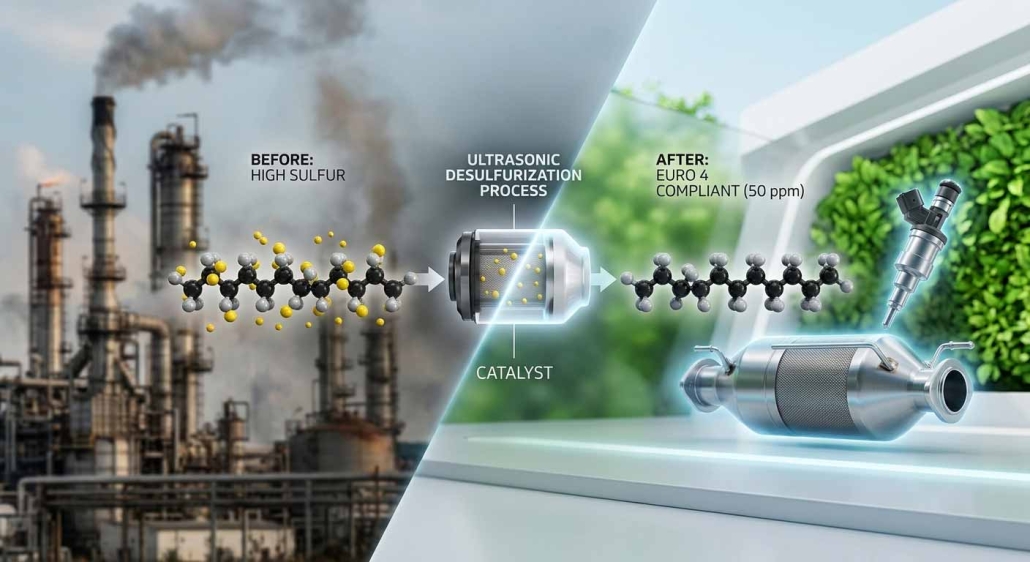
Diesel fuel quality and vehicle emission standards have evolved significantly over the past decades to reduce air pollution and improve engine efficiency. Among these milestones, Euro 4 diesel represents a critical transition point where sulfur content was dramatically reduced to enable cleaner combustion and support modern emission-control technologies.
Euro 4 diesel is commonly discussed together with Euro emission standards, but there is often confusion between fuel quality specifications and vehicle emission regulations. Understanding Euro 4 diesel therefore requires looking at both the fuel sulfur limits and the engine emission standards introduced during the Euro 4 regulatory stage.
For petroleum buyers, refinery professionals, fleet operators, and energy market analysts, Euro 4 diesel remains relevant because many international markets still trade or use fuels with sulfur limits around 50 ppm, especially in regions transitioning toward Ultra Low Sulfur Diesel (ULSD).
Quick Answer
Euro 4 diesel refers to diesel fuel with a maximum sulfur content of 50 parts per million (ppm), introduced alongside the Euro 4 vehicle emission standards around 2005 in Europe.
Reducing sulfur to this level significantly lowered particulate emissions and enabled the use of early diesel emission‑control technologies such as improved exhaust gas recirculation (EGR) and the first widespread diesel particulate filters (DPF).
While modern markets have largely moved to 10 ppm sulfur diesel (Euro 5 / ULSD), Euro 4 diesel remains relevant in several global fuel markets and in discussions about the historical evolution of diesel emission standards.
What Is Euro 4 Diesel?
Euro 4 diesel is a low‑sulfur diesel fuel grade with a sulfur limit of 50 ppm, developed to support the Euro 4 vehicle emission standard introduced in 2005.
The Euro standards were created by the European Union to limit pollutants from vehicles, including:
- carbon monoxide (CO)
- nitrogen oxides (NOx)
- hydrocarbons (HC)
- particulate matter (PM)
Although these standards regulate vehicle emissions, achieving the limits required improved fuel quality, especially through reducing sulfur content in diesel fuel.
In practical fuel markets, Euro 4 diesel is often associated with EN590 diesel containing 50 ppm sulfur, although later versions of EN590 specify 10 ppm sulfur.
For broader context on diesel grades, see topics such as types of diesel fuel and their applications and petroleum products used across transport and industry.
Euro 4 Diesel Sulfur Content
The defining characteristic of Euro 4 diesel is its maximum sulfur content of 50 ppm (parts per million).
Sulfur reduction across diesel standards evolved gradually:
| Euro Standard | Maximum Sulfur Content |
|---|---|
| Euro 2 | 500 ppm |
| Euro 3 | 350 ppm |
| Euro 4 | 50 ppm |
| Euro 5 | 10 ppm |
| Euro 6 | 10 ppm |
Reducing sulfur in diesel fuel requires refinery processes such as hydrodesulfurization, where sulfur compounds react with hydrogen and are removed as hydrogen sulfide.
Chemical reaction example:
R−S+H2→R−H+H2S
Lower sulfur improves fuel cleanliness and allows the use of advanced emission‑control systems that would otherwise be damaged by sulfur.
A deeper understanding of sulfur in fuel is important for both environmental and engine performance considerations related to diesel sulfur content.
Why Sulfur Content Matters in Diesel Fuel
Sulfur affects both engine emissions and after‑treatment systems.
When diesel containing sulfur burns, it forms sulfur oxides (SOx) and sulfate particulates, which contribute to air pollution and acid rain.
Lower sulfur levels improve several aspects of diesel performance:
Reduced particulate emissions
Sulfur contributes to particulate formation in diesel exhaust.
Compatibility with emission systems
High sulfur fuels damage or reduce the efficiency of modern emission systems such as:
- Diesel Particulate Filters (DPF)
- Selective Catalytic Reduction (SCR)
- Exhaust Gas Recirculation (EGR)
Improved catalyst life
Sulfur can poison catalytic converters, reducing their ability to convert pollutants.
Lower environmental impact
Reducing sulfur significantly lowers particulate matter and toxic emissions.
Modern fuels such as Ultra Low Sulfur Diesel (ULSD) push sulfur limits even further down to 10 ppm or less.
Euro 4 Emission Standards Explained
The Euro 4 standard was introduced in 2005 for passenger cars in the European Union. The regulation targeted reductions in several major pollutants.
Table B: Passenger Car Diesel Emission Limits
| Standard | Year | CO | NOx | HC+NOx | PM | DPF Required | Comment |
|---|---|---|---|---|---|---|---|
| Euro 3 | 2000 | 0.64 | 0.50 | 0.56 | 0.05 | No | First major diesel emission tightening |
| Euro 4 | 2005 | 0.50 | 0.25 | 0.30 | 0.025 | Optional | Significant NOx reduction |
| Euro 5 | 2009 | 0.50 | 0.18 | – | 0.005 | Yes | DPF effectively mandatory |
Key pollutants include:
CO (Carbon Monoxide)
A toxic gas formed by incomplete combustion.
NOx (Nitrogen Oxides)
Major contributors to smog and respiratory problems.
HC (Hydrocarbons)
Unburned fuel molecules.
PM (Particulate Matter)
Microscopic soot particles emitted from diesel engines.
Euro 3 vs Euro 4 vs Euro 5 Diesel
Table A: General Comparison
| Feature | Euro 3 Diesel | Euro 4 Diesel | Euro 5 Diesel |
|---|---|---|---|
| Sulfur Content | 350 ppm | 50 ppm | 10 ppm |
| Fuel Cleanliness | Moderate | High | Very High |
| Emissions Profile | Higher PM and NOx | Reduced PM and NOx | Lowest emissions |
| Engine Compatibility | Older diesel engines | Mid‑generation engines | Modern engines |
| DPF Compatibility | Poor | Partial | Full compatibility |
| SCR Compatibility | Limited | Moderate | Full |
| Environmental Impact | Higher | Moderate | Low |
| Market Use | Developing markets | Transition markets | Global standard |
Euro 4 therefore represents a transition stage between older high‑sulfur diesel and modern ULSD fuels.
Technical Specifications of Euro 4 Diesel
Although sulfur content defines the main difference between Euro grades, other fuel characteristics are also important.
Table C: Technical Fuel Analysis Comparison
| Property | Euro 3 | Euro 4 | Euro 5 |
|---|---|---|---|
| Sulfur | 350 ppm | 50 ppm | 10 ppm |
| Cetane Number | ≥49 | ≥51 | ≥51 |
| Density | 820–845 kg/m³ | 820–845 kg/m³ | 820–845 kg/m³ |
| Kinematic Viscosity | 2.0–4.5 mm²/s | 2.0–4.5 mm²/s | 2.0–4.5 mm²/s |
| Flash Point | >55°C | >55°C | >55°C |
| Lubricity | Moderate | Controlled | Controlled |
| Distillation Range | Similar | Similar | Similar |
| Contamination Sensitivity | Medium | Higher | Highest |
| Engine Suitability | Older engines | Mid‑generation | Modern engines |
Other important properties include cetane number, which influences ignition quality and combustion efficiency.
Euro 4 Diesel and Engine / After‑Treatment Compatibility
Euro 4 diesel improved compatibility with emission technologies used in modern engines.
EGR (Exhaust Gas Recirculation)
Reduces NOx emissions by recirculating part of the exhaust gas into the intake.
DPF (Diesel Particulate Filter)
Captures soot particles from exhaust gases.
SCR (Selective Catalytic Reduction)
Reduces NOx emissions using AdBlue (urea solution).
Euro 4 vehicles may include EGR and sometimes DPF systems, while widespread SCR adoption occurred later with Euro 5 and Euro 6.
Euro 4 Diesel vs EN590 Diesel
EN590 is the European standard specification for automotive diesel fuel.
Important nuance:
- Early EN590 allowed 50 ppm sulfur
- Modern EN590 requires 10 ppm sulfur
Therefore:
- Some Euro 4 diesel fuels comply with older EN590 specifications
- Current European diesel markets use 10 ppm ULSD EN590 fuel
Real‑World Use, Market Relevance, and Legal Status
Today, most developed fuel markets have moved beyond Euro 4 diesel.
However, Euro 4‑type fuels still appear in:
- developing fuel markets
- transitional regulatory systems
- export diesel trading markets
- regions upgrading refinery capability
These markets often import diesel from major diesel‑exporting countries while gradually transitioning toward ULSD fuels.
Fuel buyers also need to consider storage stability and contamination risks, making diesel storage practices important for maintaining fuel quality.
Van Class I / II / III Diesel NOx Comparison
Table D: Diesel NOx Limits for Vans
| Standard | Class I NOx | Class II NOx | Class III NOx | Interpretation |
|---|---|---|---|---|
| Euro 3 | 0.78 | 1.00 | 1.18 | Higher NOx levels |
| Euro 4 | 0.39 | 0.63 | 0.74 | Major reduction |
| Euro 5 | 0.28 | 0.39 | 0.46 | Further tightening |
Euro 4 effectively cut NOx limits by roughly half compared to Euro 3.
Common Questions About Euro 4 Diesel
What is Euro 4 diesel?
Euro 4 diesel is diesel fuel containing no more than 50 ppm sulfur, introduced to support the Euro 4 vehicle emission standards.
What is the sulfur content of Euro 4 diesel?
The maximum sulfur limit is 50 parts per million (ppm).
Is Euro 4 diesel low sulfur or ultra‑low sulfur?
Euro 4 diesel is low sulfur diesel. ULSD typically refers to 10 ppm sulfur fuel used in Euro 5 and later.
Is Euro 4 diesel the same as EN590?
Some earlier EN590 diesel grades matched the 50 ppm sulfur level, but modern EN590 requires 10 ppm sulfur.
Is Euro 4 diesel still used in Europe?
Europe now mainly uses 10 ppm ULSD, but Euro 4 vehicles can still operate using modern fuel.
Is Euro 4 better than Euro 3?
Yes. Euro 4 reduced sulfur content from 350 ppm to 50 ppm, enabling lower emissions and cleaner engines.
What is the difference between Euro 4 and Euro 5 diesel?
The key difference is sulfur reduction from 50 ppm to 10 ppm, enabling more advanced emission systems.
Does Euro 4 diesel require AdBlue?
Not necessarily. SCR systems using AdBlue became more common with Euro 5 and Euro 6.
Does Euro 4 diesel require a DPF?
Some vehicles use DPF systems, but it was not mandatory until Euro 5.
Can Euro 4 vehicles enter ULEZ zones?
Many modern low‑emission zones restrict vehicles below Euro 6, meaning Euro 4 vehicles may not qualify.
Can modern engines run on Euro 4 diesel?
Most modern diesel engines are designed for 10 ppm sulfur fuel, so prolonged use of higher sulfur diesel may affect emission systems.
Why is sulfur harmful for advanced diesel emission systems?
Sulfur poisons catalysts, increases particulate formation, and damages filters used in modern emission control systems.
Conclusion
Euro 4 diesel marked a major step in the evolution of diesel fuel quality by reducing sulfur content to 50 ppm and enabling cleaner combustion technologies. Although newer standards such as Euro 5 and Euro 6 have further reduced sulfur levels to 10 ppm, Euro 4 remains an important transitional stage in global diesel fuel markets.
Understanding Euro 4 diesel requires distinguishing between vehicle emission regulations and fuel quality specifications. While the Euro 4 emission standard targeted pollutants like NOx and particulate matter, achieving those targets depended heavily on cleaner fuels with significantly lower sulfur content.
For fuel buyers, refiners, and transport professionals, knowledge of diesel standards—including Euro 3, Euro 4, Euro 5, and modern ULSD fuels—remains essential for navigating the evolving global diesel market.
Related Articles
Diesel Production Process
This article explains the main stages of diesel production, from crude oil refining to final fuel preparation. It offers a concise overview of the factors that influence diesel quality.
Euro 3 vs Euro 4 Diesel
Learn the key differences between Euro 3 and Euro 4 diesel in sulfur content and emissions performance. This comparison helps readers understand the transition toward cleaner diesel fuels.
Euro 4 vs Euro 5 Diesel
This article outlines the main differences between Euro 4 and Euro 5 diesel standards. It focuses on sulfur reduction and improved compatibility with modern emissions-control technologies.
Euro 5 vs Euro 6 Diesel
Find out how Euro 6 diesel standards improved upon Euro 5 in terms of emissions control. This article is useful for readers who want a quick understanding of newer diesel requirements.
Diesel vs Gasoline Comparison
This comparison highlights the main differences between diesel and gasoline in efficiency, application, and emissions. It is a useful starting point for choosing the right fuel type.
Global Petroleum Trade Solutions | Universal Trades
As a reputable international petroleum trading enterprise, Universal Trades specializes in the reliable procurement, export, and supply chain management of high-grade petroleum commodities, refined fuels, and industrial feedstocks designed to meet rigorous global standards.




Leave a Reply
Want to join the discussion?Feel free to contribute!