
Gasoline TDS: Specifications, Properties & ASTM/EN Standards

A Gasoline Technical Data Sheet (TDS) is a document that summarizes the technical specifications and measurable properties of gasoline used in engines, transportation, and fuel trading. Unlike marketing descriptions, a TDS presents laboratory‑verified fuel properties such as octane number, vapor pressure, sulfur content, and distillation characteristics.
For companies involved in fuel trading, storage, and distribution, a Gasoline TDS is essential. It ensures that the fuel meets international fuel quality standards, performs correctly in engines, and complies with environmental regulations.
It is also important to distinguish between a TDS and an SDS (Safety Data Sheet), formerly known as MSDS.
- TDS focuses on technical fuel properties and specifications.
- SDS/MSDS focuses on safety, hazards, handling, and emergency procedures.
Together, these documents help ensure that gasoline can be safely produced, transported, traded, and used.
Gasoline Technical Data Sheet: Key Fuel Specifications
Different gasoline grades have different laboratory specifications depending on their intended application and engine requirements. The table below shows typical ranges used in international fuel standards such as ASTM and EN fuel quality standards.
| Property | Regular Gasoline | Premium Gasoline | Unleaded Gasoline | E85 Gasoline | Aviation Gasoline (Avgas) |
|---|---|---|---|---|---|
| Octane Number (RON) | 87–91 | 91–98 | 91–95 | 100–105 | 100–130 |
| Density @15°C (kg/m³) | 720–760 | 720–760 | 720–760 | 770–790 | 690–720 |
| Reid Vapor Pressure (RVP) (kPa) | 45–60 | 45–60 | 45–60 | 55–70 | 38–49 |
| Flash Point | approx. −40°C | approx. −40°C | approx. −40°C | approx. −40°C | approx. −43°C |
| Sulfur Content | ≤10–50 ppm | ≤10–50 ppm | ≤10 ppm | ≤10 ppm | ≤30 ppm |
| Aromatics Content | 25–35% | 30–40% | ≤35% | ≤30% | 20–30% |
| Benzene Content | ≤1% | ≤1% | ≤1% | ≤1% | ≤0.5% |
| Distillation Range | 30–210°C | 30–210°C | 30–210°C | 35–200°C | 40–170°C |
| Oxygen Content | ≤2.7% | ≤2.7% | ≤2.7% | 30–35% (ethanol) | 0% |
| Appearance / Color | Clear to pale yellow | Clear | Clear | Pale yellow | Dyed (usually blue) |
| Standard Reference | ASTM D4814 | ASTM D4814 | EN 228 | ASTM D5798 | ASTM D910 |
These ranges represent typical gasoline specifications used in international fuel markets. The exact values can vary depending on refinery configuration, seasonal requirements, and environmental regulations.
Understanding these ranges is also important when evaluating different gasoline grades and their applications, which determine how fuel performs in various engines.
Why Gasoline Specification Ranges Matter
Each property in a Gasoline TDS has a specific purpose. If any value falls outside the acceptable range, it can cause serious technical or regulatory problems.
Octane Number
The octane number indicates a fuel’s resistance to engine knocking. If the octane rating is too low, the engine may experience knocking or pre‑ignition, which reduces performance and can damage internal components. A detailed explanation can be found in the article about Octane Number.
Density
Fuel density affects the energy content and fuel‑air mixture in engines. If gasoline density is too high or too low, it may lead to poor combustion efficiency and higher fuel consumption.
Reid Vapor Pressure (RVP)
RVP determines how easily gasoline evaporates.
- Too high → excessive evaporation and vapor lock
- Too low → poor cold‑start performance
Sulfur Content
Modern environmental regulations require very low sulfur levels. High sulfur content increases air pollution and catalytic converter damage. This is especially important in modern unleaded gasoline formulations.
Distillation Range
Distillation characteristics determine how fuel vaporizes inside the engine. Improper ranges can cause starting problems, incomplete combustion, and higher emissions.
These factors explain why strict laboratory testing is required before gasoline enters the market.
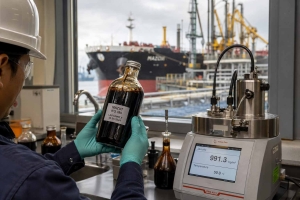
How Gasoline Quality Is Tested in Laboratories
Before gasoline is approved for sale or export, refineries and independent laboratories perform a series of standardized fuel tests. These tests follow procedures such as ASTM, EN, or ISO standards.
Common gasoline laboratory tests include:
- Octane testing (RON/MON engines)
- Gas chromatography for hydrocarbon composition
- Distillation analysis (ASTM D86)
- Sulfur analysis using X‑ray fluorescence
- Reid Vapor Pressure testing
- Density measurement
These tests confirm that the fuel meets its Technical Data Sheet specifications before shipment.
Quality testing is also critical to prevent problems caused by poor‑quality gasoline, which can damage engines and reduce efficiency.
Why Gasoline Specifications Matter in International Fuel Trade
In the global petroleum market, gasoline is often traded in large cargo shipments between refineries, distributors, and energy companies.
A Gasoline TDS serves as a technical reference during fuel transactions because it:
- Defines the exact quality of the product
- Ensures compatibility with local environmental regulations
- Helps buyers verify that the fuel matches their engine or market requirements
For example, gasoline exported to Europe must usually meet EN 228 standards, while many international markets rely on ASTM specifications.
Fuel specifications can also influence global fuel pricing and supply trends, which are analyzed in discussions about gasoline price prediction and international energy markets dominated by the top gasoline producing countries.
How Refineries Control Gasoline Specifications
Producing gasoline with the correct specifications requires a combination of refining and blending processes.
During the gasoline production process, refineries combine multiple hydrocarbon streams such as:
- Reformate
- Alkylate
- Isomerate
- Naphtha
Blending these components allows refiners to achieve the correct octane level, volatility, and emissions profile.
Special fuel types such as E85 gasoline, which contains a high percentage of ethanol, require different blending procedures and quality controls.
Refineries also monitor fuel appearance and chemical composition. For instance, the color of gasoline can sometimes indicate the presence of dyes or additives used to differentiate fuel grades.
Common Problems Caused by Poor‑Quality Gasoline
If gasoline does not meet the specifications listed in its TDS, several operational problems can occur:
- Engine knocking or reduced power
- Increased emissions
- Fuel system corrosion
- Poor fuel efficiency
- Engine deposits
In some cases, drivers or distributors may use gasoline additives to improve fuel stability or engine cleanliness, but additives cannot fully compensate for fuel that fails to meet proper specifications.
Conclusion
A Gasoline Technical Data Sheet (TDS) is an essential document that defines the chemical and physical specifications of gasoline used in transportation and energy markets. By understanding properties such as octane number, vapor pressure, sulfur content, and distillation range, engineers, traders, and fuel distributors can ensure that gasoline meets international fuel quality standards.
Unlike simple specification PDFs, a well‑structured TDS helps readers clearly understand how gasoline properties influence engine performance, environmental compliance, and global fuel trade. As the demand for cleaner fuels continues to grow, accurate gasoline specifications will remain a key factor in maintaining fuel quality and market reliability.
Readers interested in exploring related fuel topics can also browse additional gasoline articles or compare gasoline with other fuels in our diesel articles section.
Global Petroleum Trade Solutions | Universal Trades
As a reputable international petroleum trading enterprise, Universal Trades specializes in the reliable procurement, export, and supply chain management of high-grade petroleum commodities, refined fuels, and industrial feedstocks designed to meet rigorous global standards.







Leave a Reply
Want to join the discussion?Feel free to contribute!