
What is K2 Kerosene? Uses, Specifications, and Differences from K1
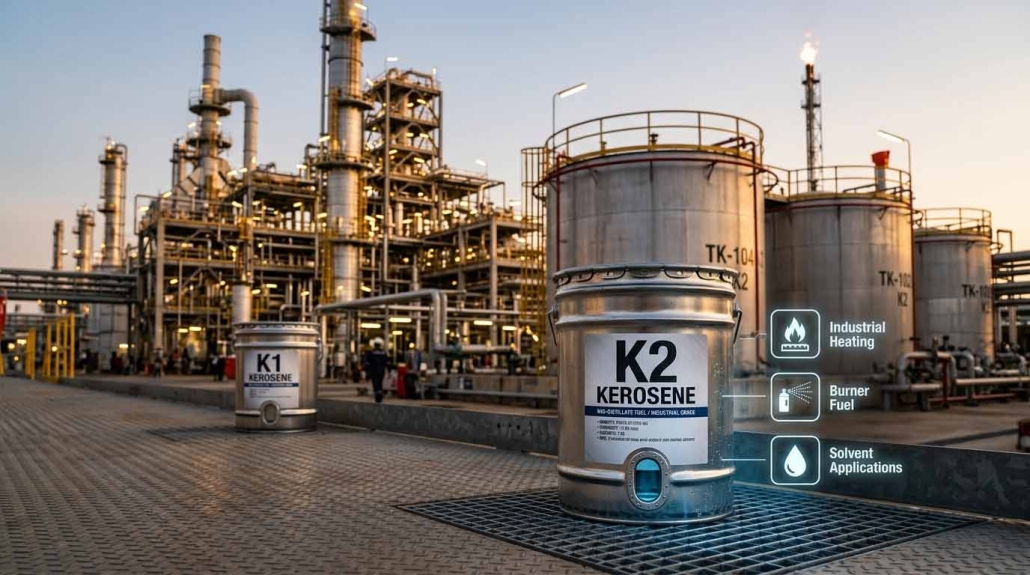
Kerosene is a widely used middle‑distillate petroleum fuel with applications in heating, aviation, and industrial processes. If you are new to this fuel category, our Introduction to Kerosene explains its origin, composition, and role in global energy markets.
Among the different kerosene grades, two common classifications are K1 kerosene and K2 kerosene. While both originate from the same refining stream, they differ in purity, sulfur content, and intended applications. K2 kerosene is typically less refined than K1, making it more suitable for industrial and outdoor uses rather than indoor heating.
Understanding these differences helps fuel buyers, traders, and equipment operators choose the right product based on cost, safety, and performance requirements.
What is K2 Kerosene?
K2 kerosene is a petroleum-derived fuel obtained during the fractional distillation of crude oil, usually within a boiling range of about 150°C to 275°C. It consists mainly of hydrocarbons in the C10–C16 range, placing it between gasoline fractions and diesel fuel in the refining process.
You can learn more about how this fraction is produced in our overview of the Kerosene Production Process, which describes how crude oil is separated into various fuel products.
Compared with K1 kerosene, K2 kerosene undergoes less intensive refining, meaning it may contain slightly higher levels of sulfur and aromatic compounds. Because of this, it is generally used where ultra‑clean combustion is not essential.
Chemical and Physical Specifications of K2 Kerosene
Although specifications vary by country and refinery, typical K2 kerosene properties include:
- Boiling range: 150–275°C
- Density: about 0.78–0.81 g/cm³
- Flash point: typically above 38°C
- Energy content: approximately 43 MJ/kg
- Sulfur content: higher than K1 kerosene in many markets
Sulfur content is particularly important because it influences combustion emissions and odor. Our article on Sulfur in Petroleum Fuels explains how sulfur levels affect environmental performance and fuel regulations.
These characteristics make K2 kerosene a reliable but less refined kerosene grade used mainly in commercial and industrial settings.
Differences Between K1 and K2 Kerosene
The most important distinction in the K1 vs K2 kerosene comparison is the level of purification during refining.
Refining Level
K1 kerosene undergoes additional hydrotreating to remove sulfur and impurities. This produces a cleaner‑burning fuel suitable for indoor use.
K2 kerosene, on the other hand, receives less processing. This makes it more economical but slightly less clean‑burning.
For a detailed explanation of the cleaner grade, see our guide to K1 Kerosene.
Sulfur Content
- K1 kerosene: ultra‑low sulfur
- K2 kerosene: higher sulfur levels
Higher sulfur content can produce stronger odor and more emissions, which is why K2 kerosene is generally used outdoors or in industrial environments.
Typical Applications
K1 kerosene is commonly used for:
- Indoor heating systems
- Portable kerosene heaters
- Lamps and lighting
K2 kerosene is commonly used for:
- Industrial heating equipment
- Outdoor heaters
- Cleaning and degreasing operations
- Fuel blending
K2 Kerosene vs Diesel Fuel
Kerosene and diesel fuel are both middle‑distillate products, but they differ in viscosity, combustion characteristics, and applications.
A deeper technical breakdown can be found in our Kerosene vs Diesel Comparison article.
Density and Viscosity
Diesel fuel is denser and more viscous than kerosene. This allows it to lubricate and operate properly in compression‑ignition engines.
K2 kerosene is lighter and more volatile, which makes it better suited for burners, heaters, and solvent uses.
Fuel Applications
Diesel is primarily used in:
- Trucks and transportation
- Heavy machinery
- Power generators
Our Diesel Articles explore these applications in more detail.
Kerosene fuels, including K2, are more commonly used in heating, aviation fuels, and industrial solvents. In global refining markets, kerosene production often occurs alongside gasoline streams, which you can explore in our Gasoline Articles.

Industrial and Commercial Uses of K2 Kerosene
Because of its relatively lower cost compared with K1, K2 kerosene plays an important role in several industries.
Industrial Heating
Large workshops, warehouses, and construction sites frequently use kerosene heaters fueled by K2 kerosene, especially in outdoor or well‑ventilated areas.
Solvent and Degreasing Applications
K2 kerosene can dissolve oils and grease, making it useful in metal cleaning and equipment maintenance.
Fuel Blending
In some markets, kerosene may be blended with other fuels to adjust viscosity and cold‑weather performance.
You can explore additional applications in our broader collection of Kerosene Articles, which cover different grades and uses of this fuel.
Safety Considerations and Handling
Although kerosene is less volatile than gasoline, it must still be handled carefully.
Important safety practices include:
- Store fuel in approved petroleum containers
- Keep it away from open flames and sparks
- Use kerosene in well‑ventilated environments
- Avoid contamination with water or dirt
Because K2 kerosene contains more impurities than K1, it may produce more smoke or odor during combustion, especially in enclosed spaces.
Storage and Shelf Life of Kerosene
Proper storage conditions help maintain fuel quality and prevent degradation.
Kerosene should be stored in:
- Sealed containers to avoid contamination
- Cool, dry locations away from sunlight
- Tanks designed specifically for petroleum fuels
Under proper conditions, kerosene can remain usable for several years, though contamination or oxidation may reduce performance.
Our Kerosene Storage Guidelines provide detailed recommendations for long‑term fuel storage and safety.
Global Production and Supply of Kerosene
Kerosene is produced in oil refineries around the world during the distillation of crude oil. Major refining regions include North America, the Middle East, Asia, and Europe.
Global supply is influenced by demand for related fuels such as jet fuel, diesel, and heating oil, since they share similar refining streams.
For a closer look at the global supply landscape, see our analysis of the Top Kerosene Producing Countries, which highlights the major refining hubs and export markets.
Frequently Asked Questions about K2 Kerosene
Is K2 kerosene suitable for indoor heaters?
In most cases, K1 kerosene is recommended for indoor heaters because it burns cleaner and produces fewer emissions.
Why is K2 kerosene cheaper than K1?
K2 kerosene requires less refining and purification, which lowers production costs.
Can K2 kerosene replace diesel fuel?
Not usually. Diesel engines require specific fuel properties such as viscosity and lubricity that kerosene does not always provide.
Conclusion
K2 kerosene is a practical and widely used petroleum fuel that serves many industrial and commercial applications. Compared with K1 kerosene, it is less refined and typically contains higher sulfur levels, making it more appropriate for industrial heating, outdoor equipment, and solvent uses rather than indoor environments.
Understanding the differences between K1 vs K2 kerosene and kerosene vs diesel helps fuel buyers and traders select the right product based on cost, safety requirements, and application needs. As refining technology advances and environmental standards evolve, kerosene grades will continue to play an important role in global energy markets.
Global Petroleum Trade Solutions | Universal Trades
As a reputable international petroleum trading enterprise, Universal Trades specializes in the reliable procurement, export, and supply chain management of high-grade petroleum commodities, refined fuels, and industrial feedstocks designed to meet rigorous global standards.









Leave a Reply
Want to join the discussion?Feel free to contribute!