
Top 10 Largest Kerosene Exporting Countries (2026 Ranking)
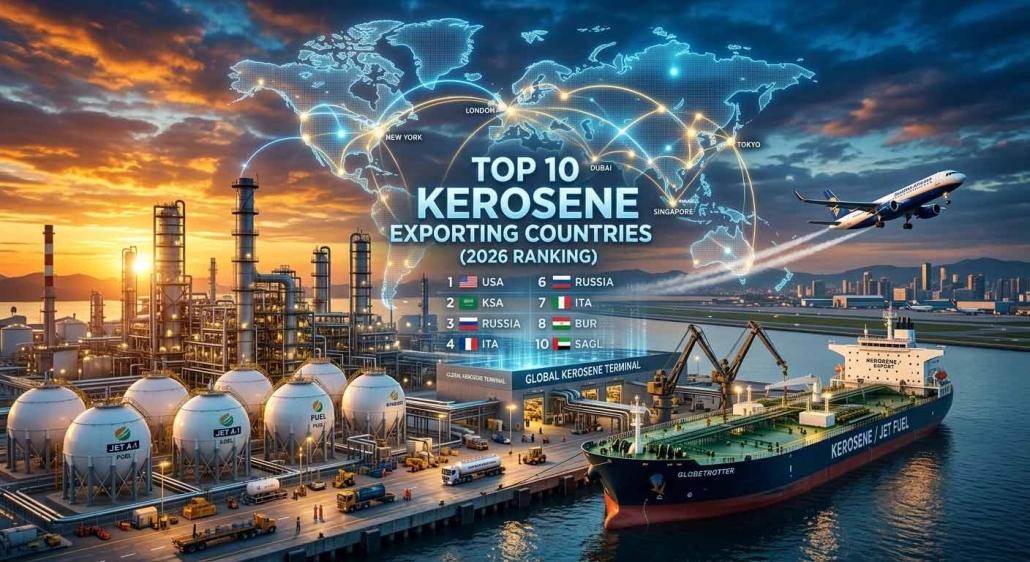
Kerosene remains a strategically important petroleum product in global energy markets. Primarily used as aviation turbine fuel (Jet A-1), it also serves residential heating, lighting, and industrial applications in many developing economies. As global air travel continues to expand and refinery configurations evolve, kerosene exports play a central role in the refined products trade.
Understanding the largest kerosene exporting countries provides insight into refinery sophistication, crude access, and regional energy demand. Similar dynamics are observed in the largest oil producers in the world and the largest oil consumers in the world, where upstream production and downstream refining capacity shape trade flows.
Global Overview of Kerosene Production and Exports
Kerosene is a middle distillate, produced during the fractional distillation of crude oil. It sits between gasoline and diesel in the refining spectrum and is closely linked to jet fuel demand.
Globally, kerosene production is concentrated in countries with:
- High refinery complexity
- Access to large crude supplies
- Strong aviation infrastructure
- Export-oriented energy policies
Many of the world’s largest exporters are also home to the largest oil refineries in the world, enabling them to process heavy and light crudes into high-value distillates.
Kerosene trade is strongly influenced by:
- International flight volumes
- Regional refinery imbalances
- Crude oil pricing trends
- OPEC production decisions
For broader context on refined fuels, see our guide on the introduction to types of petroleum products.
Top 10 Largest Kerosene Exporting Countries
Below is an estimated ranking based on refinery output, export volumes, and trade data trends.
Top 10 Largest Kerosene Exporting Countries (Estimated Data)
| Rank | Country | Export Volume (Million Barrels/Year) | Share of Global Exports (%) | Average Export Price (USD/Barrel) |
|---|---|---|---|---|
| 1 | South Korea | 430 | 10.5% | 98 |
| 2 | United States | 410 | 10.0% | 101 |
| 3 | Netherlands | 370 | 9.0% | 100 |
| 4 | Singapore | 340 | 8.3% | 102 |
| 5 | India | 310 | 7.6% | 97 |
| 6 | Saudi Arabia | 290 | 7.1% | 99 |
| 7 | United Arab Emirates | 250 | 6.1% | 100 |
| 8 | China | 230 | 5.6% | 96 |
| 9 | Kuwait | 210 | 5.1% | 99 |
| 10 | Japan | 190 | 4.6% | 101 |
| — | Other Countries | 1,060 | 26.1% | 98 |
| — | OPEC Countries | 1,020 | 25.0% | 99 |
| — | Total Global Exports | 4,090 | 100% | 99 |
These figures are analytical estimates based on global energy market data, refinery capacities, and international kerosene trade trends, and are presented as an approximate representation of global export distribution.
Key Market Insights
- The United States leads due to large-scale refining capacity and strong aviation demand.
- Asian exporters (China, India, South Korea, Singapore) dominate regional jet fuel supply chains.
- Middle Eastern producers benefit from proximity to major air transit hubs and access to low-cost crude from countries with the largest oil reserves.
- European export activity, particularly through the Netherlands, is driven by trading hubs and integrated refinery networks.
Countries that lead kerosene exports often rank highly among the top countries in petroleum products production and the top countries in kerosene production.
Regional Distribution of Kerosene Production
Kerosene Production by Region
| Region | Estimated Production (Million Barrels/Year) | Share of Global Production (%) |
|---|---|---|
| Asia | 1,650 | 34% |
| North America | 950 | 19% |
| Europe | 780 | 16% |
| Middle East | 700 | 14% |
| South America | 350 | 7% |
| Africa | 280 | 6% |
| Oceania | 170 | 4% |
Regional Analysis
Asia dominates due to expanding aviation markets and mega-refineries in China, India, and South Korea.
North America benefits from advanced refining technology and shale-driven crude supply growth.
The Middle East, while often associated with crude exports, is increasingly expanding refining capacity to capture more value downstream—similar to trends seen among the top companies in oil and gas.
Europe remains a critical export hub despite declining domestic refining margins.
Market Trends Affecting Kerosene Exports
1. Aviation Fuel Demand
Global passenger traffic recovery has significantly increased jet fuel consumption. Aviation accounts for the majority of kerosene demand, linking export performance directly to airline activity.
2. Refinery Complexity
Complex refineries with hydrocrackers and desulfurization units can optimize middle distillate yields. This also impacts diesel production, as seen in the top diesel producing countries.
3. Crude Oil Supply
Access to suitable crude grades affects kerosene yields. Countries with stable upstream output, including several OPEC members, enjoy cost advantages.
Crude price volatility—discussed in our crude oil price forecast for 2026—directly impacts refining margins.
4. Geopolitical Supply Chains
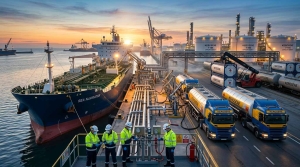
Sanctions, trade agreements, and shipping routes shape export flows. Strategic storage hubs such as Singapore and Rotterdam remain critical nodes.
Kerosene pricing dynamics are also influenced by regional fuel benchmarks and the broader prices of petroleum products in different countries.
Future Outlook for the Global Kerosene Market
The long-term outlook for kerosene exports remains moderately positive, driven by:
- Expanding aviation demand in Asia-Pacific
- Investment in refining capacity in the Middle East
- Continued modernization of refineries
However, risks include:
- Sustainable aviation fuel (SAF) adoption
- Environmental regulations
- Refinery closures in Europe
Countries with diversified product slates—including strong gasoline and diesel output (see top countries in gasoline production and top diesel producing countries)—are better positioned to adapt.
As refining margins shift, integrated downstream strategies will determine export competitiveness.
For deeper exploration, readers may also review our dedicated kerosene articles and related fuel market insights.
Conclusion
The largest kerosene exporting countries combine refining scale, crude access, and strategic trade positioning. The United States, China, India, and major Middle Eastern producers dominate global supply, while Asia leads regional production.
As aviation demand grows and refining capacity expands, kerosene exports will remain a vital component of global petroleum trade. However, technological and environmental transitions will increasingly shape future market dynamics.
Global Petroleum Trade Solutions | Universal Trades
As a reputable international petroleum trading enterprise, Universal Trades specializes in the reliable procurement, export, and supply chain management of high-grade petroleum commodities, refined fuels, and industrial feedstocks designed to meet rigorous global standards.





Leave a Reply
Want to join the discussion?Feel free to contribute!