
Industrial Kerosene Guide: Uses, Grades, And Safety
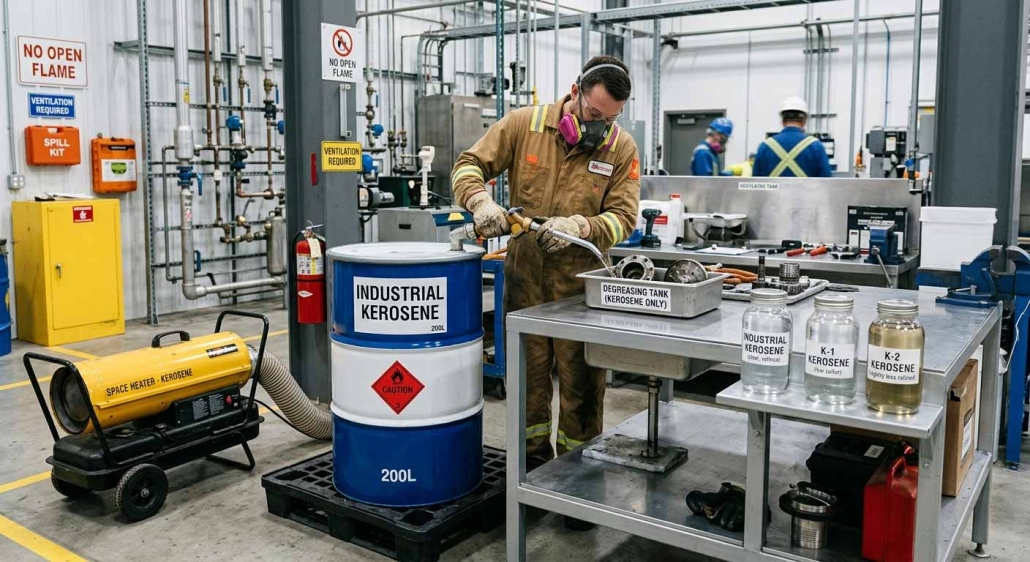
Industrial kerosene is widely used in heating, cleaning, and process applications, but many buyers still confuse it with household-grade products such as K‑1 kerosene and K‑2 kerosene. This article explains what industrial kerosene is, where it is used, how it differs from K‑1 and K‑2, and what factors matter most when choosing the right grade. If you need a practical overview that is clear, useful, and decision-focused, this guide is designed for you. For broader background, you can also explore our introduction to kerosene and other kerosene articles.
What Is Industrial Kerosene?
Industrial kerosene is a petroleum middle distillate used mainly as a fuel, solvent, or process fluid in commercial and industrial settings. It sits between lighter fuels and heavier products in terms of volatility and performance.
Basic Properties
Typical characteristics include:
- Good combustion performance
- Moderate volatility
- Lower viscosity than many heavier fuels
- Variable purity depending on grade and supplier
- Sulfur content that may differ significantly by specification
To understand why composition matters, it helps to review the kerosene production process and the role of sulfur in emissions and fuel quality.
Common Uses of Industrial Kerosene
Industrial kerosene is valued because it is versatile and practical across multiple sectors.
Main Applications
- Industrial heaters and burners
- Drying and thermal process systems
- Cleaning and degreasing metal parts
- Workshop and maintenance operations
- Remote or temporary field heating
In some industries, it is also evaluated alongside other fuels. Readers comparing alternatives may find our diesel articles, gasoline articles, comparison of kerosene and diesel, and comparison of kerosene and gasoline useful.

Advantages and Limitations
Advantages
- Reliable ignition and steady heat output
- Useful in both fuel and solvent applications
- Better cold-weather flow than some heavier fuels
- Broad availability in many markets
Limitations
- Not all grades are interchangeable
- Higher-sulfur products may create more odor and deposits
- Incorrect fuel choice can increase maintenance costs
- Requires careful storage and safe handling
Supply and grade availability can also vary depending on the top kerosene‑producing countries.
Industrial Kerosene vs. K‑1 vs. K‑2
Although these products are related, they are not identical.
Industrial Kerosene
A broad category used in industrial systems, cleaning, and process applications. Quality and sulfur level can vary depending on intended use.
K‑1 Kerosene
K‑1 kerosene is generally cleaner and more highly refined. It usually has lower sulfur content and is often preferred for cleaner-burning applications.
K‑2 Kerosene
K‑2 kerosene is typically less refined than K‑1. It may contain more sulfur and impurities, which can lead to more odor, soot, and maintenance issues in sensitive equipment.
Quick Comparison
| Type | Purity | Sulfur | Typical Use | Performance |
|---|---|---|---|---|
| Industrial kerosene | Variable | Variable | Industrial burners, cleaning, process use | Depends on specification |
| K‑1 | Higher | Lower | Cleaner-burning systems, heaters | Lower odor, cleaner burn |
| K‑2 | Lower | Higher | Less sensitive applications | More deposits, more odor |
Safety and Handling Considerations
Industrial kerosene should always be stored and used as a flammable petroleum product.
Best Practices
- Use approved, labeled containers
- Keep away from ignition sources
- Prevent contamination by water or dirt
- Ensure proper ventilation during use
- Match the fuel to equipment requirements
For more detailed recommendations, see our kerosene storage guide.
How to Choose the Right Grade
Choose the grade based on equipment design, operating environment, and emissions expectations.
- Use industrial kerosene when the application is commercial or process-based and a broader industrial specification is acceptable.
- Use K‑1 when cleaner combustion, lower sulfur, and reduced odor are priorities.
- Use K‑2 only when the equipment allows it and you understand the trade-offs in cleanliness and maintenance.
Final Thoughts
Industrial kerosene remains an important fuel and solvent because it offers flexibility, solid combustion performance, and broad industrial usefulness. However, buyers should not assume industrial kerosene, K‑1 kerosene, and K‑2 kerosene are interchangeable. Differences in purity, sulfur content, emissions, and equipment compatibility can directly affect safety, cost, and performance.
The best approach is simple: start with your application, check the technical specification, and choose the grade that matches your equipment and operating needs.
Global Petroleum Trade Solutions | Universal Trades
As a reputable international petroleum trading enterprise, Universal Trades specializes in the reliable procurement, export, and supply chain management of high-grade petroleum commodities, refined fuels, and industrial feedstocks designed to meet rigorous global standards.









Leave a Reply
Want to join the discussion?Feel free to contribute!