
Euro 4 vs Euro 5 Diesel: Key Differences, and Which One Is Better?
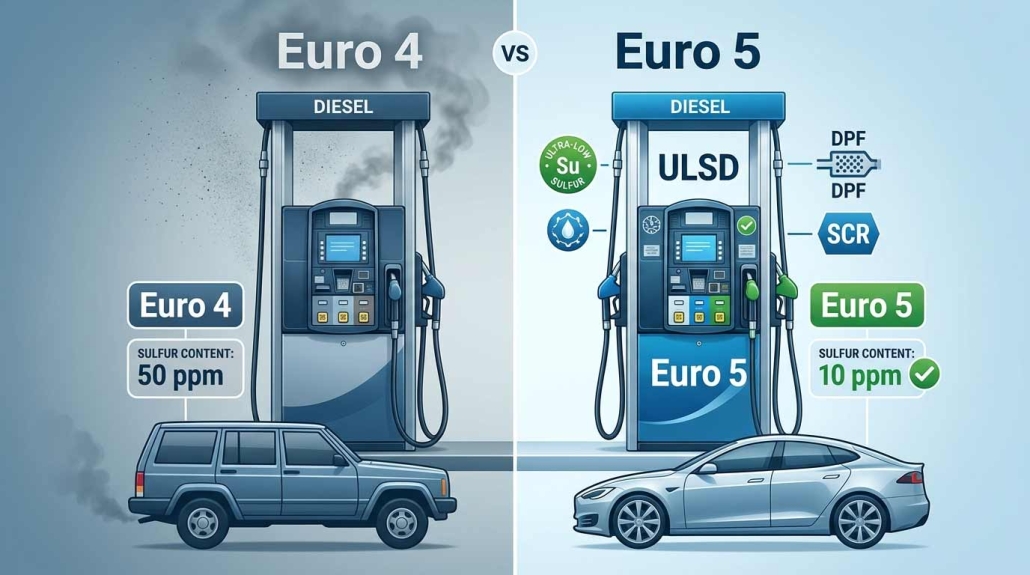
Diesel fuel standards have evolved significantly to reduce emissions and improve engine performance. One of the most important transitions in modern fuel regulations was the shift from Euro 4 to Euro 5 diesel standards.
These standards regulate fuel quality, especially sulfur content, particulate emissions, and compatibility with modern engine technologies. Understanding the difference between Euro 4 and Euro 5 diesel helps vehicle owners, fleet operators, and fuel buyers make better decisions about fuel quality and engine maintenance.
If you want to understand the broader context of fuels and their classifications, it is helpful to first explore the Introduction to Petroleum Products and how diesel fits within the global energy supply chain.
Euro 4 vs Euro 5 Diesel: Quick Comparison
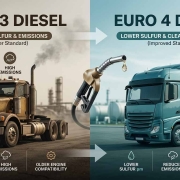
The main difference between Euro 4 and Euro 5 diesel lies in sulfur content and emission control compatibility. Lower sulfur content improves environmental performance and allows the use of advanced emission systems.
| Feature | Euro 4 Diesel | Euro 5 Diesel |
|---|---|---|
| Standard Name | EN 590 (older specification) | EN 590 (updated specification) |
| Sulfur Content | Up to 50 ppm | Up to 10 ppm |
| Cetane Number | Minimum 51 | Minimum 51 (often slightly higher in practice) |
| Environmental Impact | Higher particulate emissions | Significantly reduced particulate matter |
| Compatibility with Modern Engines | Limited compatibility with advanced emission systems | Fully compatible with DPF and SCR systems |
| Common Alternative Names | Low Sulfur Diesel (LSD) | ULSD Diesel, Ultra‑Low Sulfur Diesel |
Many European and international markets now follow the EN590 Diesel specification, which defines fuel quality requirements for modern engines.
What Is Euro 4 Diesel?
Euro 4 diesel refers to fuel designed to comply with the Euro 4 emission standards introduced in the mid‑2000s. These regulations aimed to significantly reduce harmful emissions from diesel vehicles.
Key characteristics
- Maximum sulfur level of 50 parts per million (ppm)
- Reduced emissions compared to earlier fuels
- Compatible with older diesel engines
- Limited support for advanced emission technologies
At the time, Euro 4 represented a major environmental improvement. However, as emission technologies advanced, its sulfur content became a limitation for newer vehicles.
Understanding Diesel Production Process also helps explain why reducing sulfur requires additional refining steps and increases fuel quality.
What Is Euro 5 Diesel?
Euro 5 diesel is a newer, cleaner fuel standard introduced to further reduce pollution from diesel vehicles.
The biggest improvement is the dramatic reduction in sulfur content—from 50 ppm to just 10 ppm.
Key characteristics
- Ultra‑low sulfur content (≤10 ppm)
- Lower particulate emissions
- Compatible with modern emission technologies
- Better support for Diesel Particulate Filters (DPF)
Because of its very low sulfur level, Euro 5 diesel is often called ULSD Diesel (Ultra‑Low Sulfur Diesel).
Fuel properties such as the Cetane Number also influence combustion efficiency, engine noise, and starting performance.
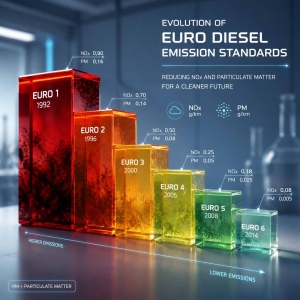
Amount of pollutants produced by different diesel standards
Why the Industry Moved from Euro 4 to Euro 5
The transition from Euro 4 to Euro 5 was driven primarily by environmental and technological factors.
1. Reduced air pollution
Lower sulfur fuel produces fewer harmful emissions, including:
- Sulfur dioxide
- Particulate matter
- Toxic exhaust compounds
2. Compatibility with modern engines
New diesel engines rely on technologies like:
- Diesel Particulate Filters (DPF)
- Selective Catalytic Reduction (SCR)
These systems require ultra‑low sulfur fuel to operate properly.
3. Improved emission regulations worldwide
Many countries adopted stricter environmental standards, which made Euro 5 diesel the new global benchmark.
The global diesel market is strongly influenced by supply and demand trends, including those discussed in Diesel Price Forecast and the Top 10 Diesel Producing Countries.
Advantages and Disadvantages
Euro 4 Diesel
Advantages
- Compatible with older diesel engines
- Widely available in developing markets
- Sometimes slightly cheaper to produce
Disadvantages
- Higher sulfur content
- More particulate emissions
- Can damage modern emission control systems
Euro 5 Diesel
Advantages
- Much cleaner combustion
- Supports advanced emission systems
- Lower environmental impact
- Required for most modern diesel vehicles
Disadvantages
- Slightly higher refining costs
- Older engines may require lubrication additives
How Fuel Quality Affects Engine Performance
Fuel quality plays a critical role in engine efficiency and durability. Poor-quality fuel can lead to issues such as:
- injector clogging
- reduced combustion efficiency
- excessive exhaust smoke
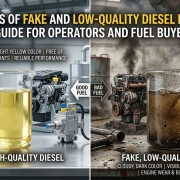
Drivers should learn the Signs of Low‑Quality Diesel and understand how Diesel Color can sometimes indicate contamination.
Seasonal conditions also influence fuel properties. In colder regions, Winter Diesel is used to prevent fuel gelling at low temperatures.
Pro Tip: Switching Between Diesel Grades
If you operate a vehicle designed for Euro 5 diesel but occasionally use lower-grade fuel, consider these maintenance tips:
- Use high-quality fuel filters
- Monitor injector performance
- Avoid prolonged use of high-sulfur diesel
- Consider approved fuel additives if recommended by the manufacturer
These steps help protect sensitive emission systems like DPF filters.
Diesel Alternatives and Future Trends
The diesel industry continues to evolve with cleaner fuels and renewable alternatives. One example is Biodiesel, which blends renewable biological sources with conventional diesel fuel.
To better understand fuel types and energy systems, it can also help to review the Difference Between Diesel and Gasoline.
The next major step beyond Euro 5 is Euro 6, which introduces even stricter emission limits. You can explore this further in the Euro 5 vs Euro 6 Diesel Comparison.
Conclusion
The key difference between Euro 4 and Euro 5 diesel is sulfur content. Euro 5 fuel reduces sulfur levels to 10 ppm, enabling cleaner combustion and compatibility with modern emission technologies.
While Euro 4 diesel may still be used in older engines or certain markets, Euro 5 has become the global standard for cleaner diesel fuel.
As emission regulations continue to evolve, diesel technology will increasingly move toward ultra‑clean fuels and renewable alternatives, shaping the future of transportation and energy.
For more industry insights and fuel-related guides, explore More Articles About Petroleum Products.




Leave a Reply
Want to join the discussion?Feel free to contribute!