
What Is Butane Grade LPG? Properties and Uses
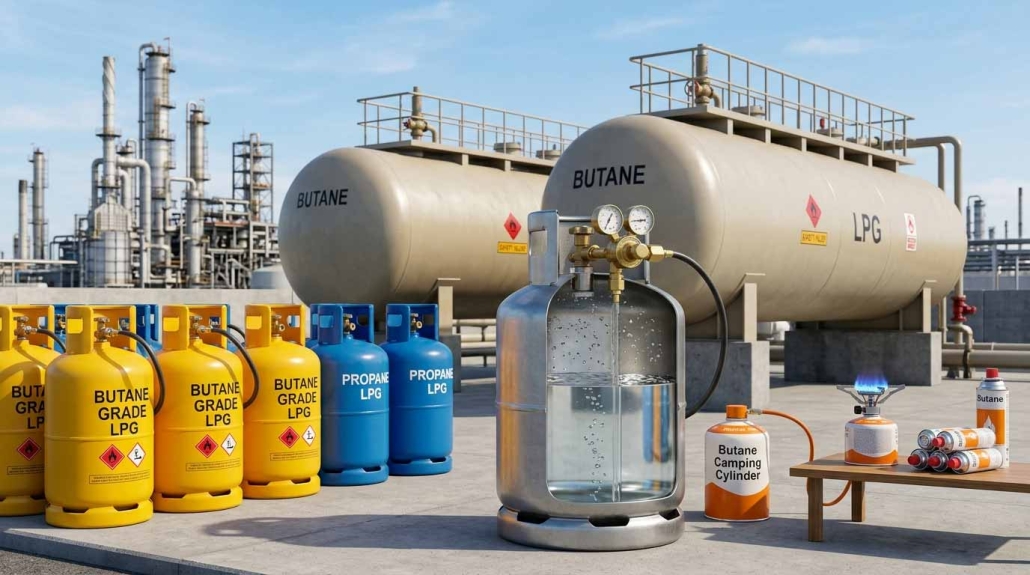
Liquefied Petroleum Gas (LPG) is a versatile fuel widely used for residential, commercial, and industrial energy needs. Derived during natural gas processing and crude oil refining, LPG mainly consists of propane, butane, or mixtures of both. If you want a broader explanation of LPG itself, see “what is LPG and what are its uses.”
Among the various petroleum products, Butane Grade LPG refers to LPG in which butane is the dominant component. This grade is commonly used in warm climates, portable fuel applications, aerosol propellants, and certain petrochemical processes due to its lower vapor pressure and high energy density.
Alternative Names
Butane Grade LPG is sometimes referred to as commercial butane, n‑butane grade LPG, or refinery butane blend, depending on refinery specifications and market terminology.
Key Characteristics of Butane Grade LPG
Butane Grade LPG has several distinct physical and chemical properties that influence how and where it is used.
- Chemical composition: Primarily n‑butane (C₄H₁₀) and isobutane with minimal propane content.
- Typical purity range: Often above 90–95% butane, depending on regional fuel standards.
- Boiling point: Approximately −0.5 °C (31 °F), significantly higher than propane.
- Vapor pressure: Lower than propane, which means it evaporates less readily at low temperatures.
- Energy content: High calorific value per unit volume, making it efficient for many heating applications.
- Climate suitability: Best suited for moderate or warm climates because vaporization becomes limited in cold temperatures.
- Storage and transport: Stored as a pressurized liquid in cylinders, tanks, and bulk containers, similar to other LPG fuels.
- Sulfur content: Quality specifications often limit sulfur compounds for cleaner combustion; learn more about this in “sulfur.”
These Butane LPG properties make it a practical fuel for both domestic and industrial uses when environmental conditions allow stable vaporization.
Main Applications of Butane Grade LPG
Because of its energy density and manageable vapor pressure, Butane Grade LPG is used in a wide range of industries and everyday products.
Residential Cooking and Heating
Butane is commonly used in portable cooking stoves, small LPG cylinders, and camping equipment. In warmer climates, it can also serve as a household heating fuel.
Portable Fuel
Small butane cartridges power camping stoves, heaters, and other portable appliances where compact fuel storage is essential.
Aerosol Propellants
Butane acts as a propellant in aerosol products, including sprays, deodorants, and household cleaners.
Petrochemical Feedstock
In petrochemical plants, butane can be used as a feedstock to produce olefins and other chemical intermediates.
Blending Component
Butane is frequently blended into gasoline to help adjust fuel volatility during refining and seasonal fuel formulation.
Lighter Fuel
One of the most recognizable uses is as fuel for refillable lighters and small ignition devices.
Industrial Heating
Industries sometimes use butane as a fuel for heating processes or boilers, particularly where LPG infrastructure already exists. In some cases, it may complement other fuels such as kerosene in heating systems.
For more insights on LPG fuels and applications, you can explore additional LPG articles.
Butane Grade LPG vs. Propane Grade LPG
Although both fuels belong to the same LPG family, their physical properties lead to different use cases. Below is a simplified Butane vs Propane comparison.
| Feature | Butane Grade LPG | Propane Grade LPG |
|---|---|---|
| Chemical Composition | Mainly n‑butane and isobutane | Primarily propane (C₃H₈) |
| Boiling Point | −0.5 °C | −42 °C |
| Vapor Pressure | Lower vapor pressure | Higher vapor pressure |
| Cold Weather Performance | Poor in cold climates | Excellent in cold climates |
| Typical Applications | Portable stoves, aerosols, lighter fuel | Heating, large cylinders, outdoor tanks |
| Storage Requirements | Lower pressure storage | Requires higher pressure cylinders |
| Energy Content | Slightly higher energy per volume | Slightly lower energy per volume |
The Three Main LPG Grades
Although LPG is often discussed as a single fuel, the industry generally recognizes three primary LPG grades.
Propane Grade
Propane‑dominant LPG is widely used in colder climates because it vaporizes easily even at very low temperatures.
Butane Grade
This grade contains mostly butane and is ideal for warmer environments and portable applications where high vapor pressure is not required.
LPG Mixtures (Propane‑Butane Blends)
Many countries distribute LPG as a blend of propane and butane, adjusting the ratio depending on climate and seasonal demand.
Understanding these LPG grades also helps clarify the difference between LPG and LNG, since LNG is primarily methane and requires cryogenic storage. Global demand for LPG is also influenced by major producing regions—see “top 10 LPG‑producing countries.”
How to Choose Between Butane and Propane
Selecting between propane and butane mainly depends on temperature conditions and application requirements.
- Cold climates: Propane performs better because it vaporizes at extremely low temperatures.
- Warm climates: Butane is efficient and often more economical for household use.
- Portable equipment: Butane cartridges are lightweight and convenient for travel and camping.
- Large heating systems: Propane is typically preferred due to its higher vapor pressure.
In practice, many fuel suppliers distribute blended LPG to balance performance and cost across different environments.
Conclusion
Butane Grade LPG is an important member of the LPG fuel family, valued for its high energy density, relatively low vapor pressure, and versatility across domestic, commercial, and industrial applications. While it shares many characteristics with propane, its higher boiling point makes it better suited for warmer climates and portable fuel uses. Understanding the differences between butane and propane—and the broader range of LPG grades—helps users choose the most efficient fuel for their specific needs.
Global Petroleum Trade Solutions | Universal Trades
As a reputable international petroleum trading enterprise, Universal Trades specializes in the reliable procurement, export, and supply chain management of high-grade petroleum commodities, refined fuels, and industrial feedstocks designed to meet rigorous global standards.




Leave a Reply
Want to join the discussion?Feel free to contribute!