
LPG vs LNG: Differences, Uses, and Which One Is Better
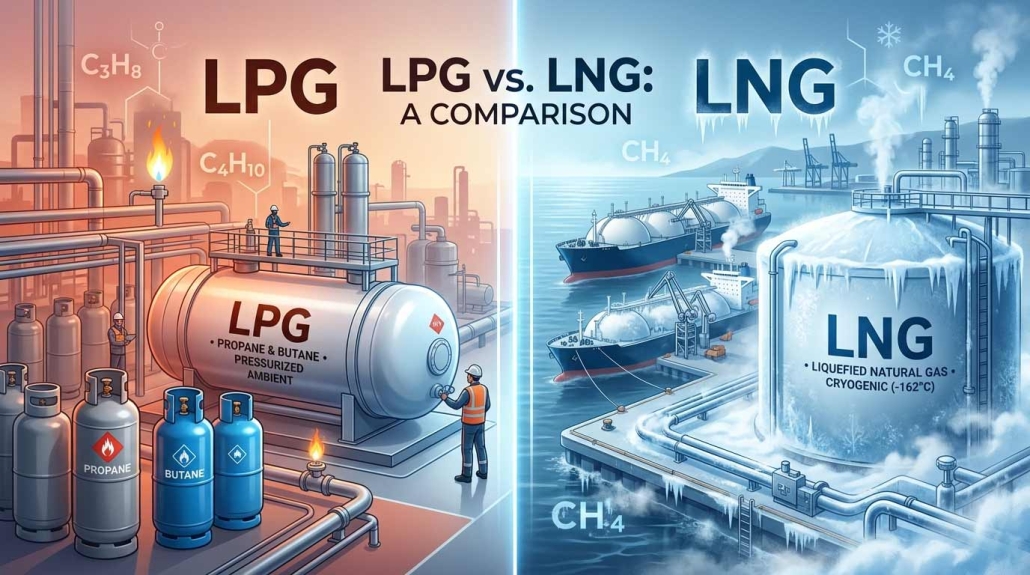
Energy markets rely on several gas‑based fuels that provide efficient, relatively clean alternatives to traditional liquid fuels. Among the most widely traded and used are Liquefied Petroleum Gas (LPG) and Liquefied Natural Gas (LNG). Although both are liquefied gases used for energy and industrial applications, they differ significantly in composition, storage requirements, infrastructure, and end‑use markets.
Understanding the difference between LPG and LNG is important for energy buyers, industrial operators, and traders who must choose the most efficient fuel for their operations. Selecting the right fuel can impact transportation costs, storage requirements, safety procedures, and overall energy efficiency.
This guide explains the LPG vs LNG comparison, including their properties, production processes, industrial applications, and which option is better suited for different industries.
What is LPG?
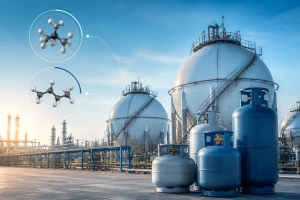
Liquefied Petroleum Gas (LPG) is a mixture of light hydrocarbons, primarily propane (C₃H₈) and butane (C₄H₁₀). It is produced during crude oil refining and natural gas processing. When stored under moderate pressure, LPG becomes a liquid, which allows it to be transported and stored efficiently.
Because of its versatility and high calorific value, LPG is widely used in residential, commercial, and industrial sectors.
Common uses include:
- Residential cooking and heating
- Industrial heating and furnaces
- Petrochemical feedstock
- Agricultural drying processes
- Autogas (LPG‑powered vehicles)
If you want a deeper explanation of LPG composition, production, and applications, see our detailed guide on “LPG articles” section.
LPG is also closely connected to other petroleum products such as Gasoline, which is produced in the same refining processes, and Kerosene, another widely traded fuel used in aviation and heating markets.
What is LNG?
Liquefied Natural Gas (LNG) is natural gas that has been cooled to approximately −162°C (−260°F), transforming it into a liquid state. The primary component of LNG is methane (CH₄).
Liquefaction reduces the gas volume by about 600 times, allowing natural gas to be transported economically across long distances, particularly between continents.
LNG plays a crucial role in global energy supply, particularly in regions that lack domestic natural gas resources but rely on imports.
Typical LNG uses include:
- Power generation
- Industrial fuel for large facilities
- Marine fuel for ships
- Natural gas supply to cities without pipelines
Unlike LPG, LNG requires specialized cryogenic storage and transportation infrastructure, making it more suitable for large‑scale energy systems.
How LPG and LNG are Produced
LPG Production
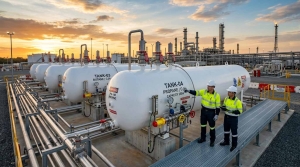
LPG is produced mainly through two processes:
-
Natural Gas Processing
When natural gas is extracted from reservoirs, heavier hydrocarbons such as propane and butane are separated during processing.
-
Crude Oil Refining
During refinery operations such as distillation and cracking, LPG emerges as a valuable by‑product.
Refineries that produce fuels like gasoline and kerosene often generate LPG as part of the same refining stream.
Global production is concentrated in countries with large oil and gas industries. For example, you can explore the Top LPG‑producing countries to understand which regions dominate the market.
LNG Production
LNG production follows a more complex process:
- Natural gas extraction
- Removal of impurities such as water, carbon dioxide, and sulfur compounds
- Liquefaction in cryogenic facilities
- Storage and transport via LNG carriers
Removing impurities like Sulfur is critical because contaminants can freeze during liquefaction and damage equipment.
LNG plants are usually built near large gas fields or coastal export terminals.
Key Physical and Chemical Properties
Understanding the properties of each fuel helps explain why they are used differently in industry.
| Property | LPG | LNG |
|---|---|---|
| Composition | Propane and butane mixture | Mostly methane |
| Production Source | Oil refining and gas processing | Natural gas fields |
| Storage Temperature | Ambient temperature | −162°C |
| Storage Pressure | Moderate pressure | Low pressure but cryogenic |
| Energy Density | Higher energy per unit volume | Lower energy density |
| Transportation | Cylinders, pressurized tanks, ships, trucks | Cryogenic LNG tankers and insulated tanks |
| Infrastructure | Relatively simple | Complex liquefaction and regasification facilities |
| Industrial Uses | Heating, petrochemicals, vehicles | Power generation, city gas supply |
| Safety Considerations | Flammable heavier‑than‑air gas | Flammable but lighter than air when vaporized |
Industrial Applications of LPG and LNG
Both fuels are widely used in industry, but their applications differ due to physical characteristics and infrastructure requirements.
LPG Industrial Applications
LPG is particularly attractive for industries requiring portable, flexible energy sources.
Common industrial uses include:
- Metal cutting and heating
- Ceramic and glass manufacturing
- Food processing
- Agricultural crop drying
- Petrochemical feedstock
Because LPG can be stored in pressurized tanks without extreme cooling, it is ideal for industrial facilities located far from natural gas pipelines.
LNG Industrial Applications
LNG is primarily used for large‑scale energy supply.
Typical uses include:
- Power plants
- Industrial boilers
- Marine fuel for large vessels
- City gas distribution networks
LNG is also becoming increasingly important in global shipping due to stricter emission regulations.
Advantages and Disadvantages of Each Fuel
Advantages of LPG
- Easier storage and transport
- Widely available cylinders and tanks
- High energy density
- Suitable for remote locations
Disadvantages of LPG
- Limited scale compared to natural gas pipelines
- Price influenced by crude oil markets
Advantages of LNG
- Massive supply potential
- Efficient for large‑scale energy consumption
- Lower emissions than coal and oil
Disadvantages of LNG
- Requires expensive liquefaction infrastructure
- Complex storage and transportation systems
Transportation and Storage Differences
Transportation logistics represent one of the most important differences between LPG and LNG.
LPG transportation
- Pressurized cylinders
- Tanker trucks
- Rail tank cars
- LPG carriers for maritime transport
These flexible logistics allow LPG to reach smaller markets and remote industries.
LNG transportation
- Cryogenic LNG tankers
- Insulated storage tanks
- Regasification terminals
Because of these requirements, LNG trade is dominated by large international energy projects.
Global Market Role of LPG and LNG
Both fuels play key roles in global energy markets.
LPG markets are closely linked with oil refining output and petrochemical demand. It is widely traded across Asia, the Middle East, and Europe.
LNG markets, meanwhile, are dominated by major exporters such as:
- Qatar
- Australia
- United States
These suppliers ship LNG worldwide to regions such as Europe and East Asia.
Energy traders often analyze LPG markets alongside other refined fuels such as gasoline and kerosene because all are connected to refinery production patterns.
Which Fuel is Better for Different Industrial Needs?
The choice between LPG and LNG depends on infrastructure, energy demand, and location.
| Use Case | Better Option | Reason |
|---|---|---|
| Household energy | LPG | Easy storage in cylinders |
| Industrial heating | LPG | High energy density and flexible storage |
| Petrochemical feedstock | LPG | Propane and butane are key feedstocks |
| Marine fuel | LNG | Lower emissions for large vessels |
| Remote energy supply | LPG | No pipeline or cryogenic facilities needed |
| Transportation fuel | LPG (Autogas) | Widely used vehicle fuel |
| Large power plants | LNG | Suitable for high‑volume energy supply |
In short, LPG is generally better for distributed and smaller‑scale applications, while LNG is optimal for large centralized energy systems.
Conclusion
The LPG vs LNG comparison highlights two important fuels that serve different roles in the global energy system.
- LPG is a versatile fuel that is easy to store and transport, making it ideal for industrial heating, residential energy, and petrochemical applications.
- LNG is better suited for large‑scale energy infrastructure such as power generation and international natural gas trade.
For many industries—especially those located far from natural gas pipelines—LPG remains the most practical and flexible option. Meanwhile, LNG continues to expand its role in global energy markets as countries seek cleaner alternatives to coal and oil.
Global Petroleum Trade Solutions | Universal Trades
As a reputable international petroleum trading enterprise, Universal Trades specializes in the reliable procurement, export, and supply chain management of high-grade petroleum commodities, refined fuels, and industrial feedstocks designed to meet rigorous global standards.







Leave a Reply
Want to join the discussion?Feel free to contribute!