
EN590 Diesel Explained: Specifications, Sulfur Levels, and Quality Tests
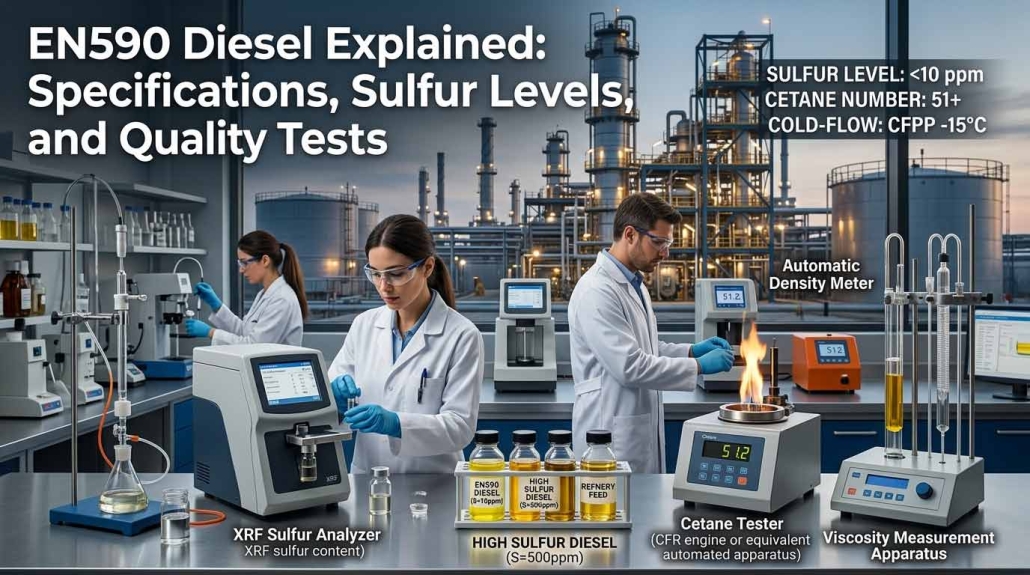
EN590—often called ULSD, European Standard Diesel, 10 ppm diesel, road diesel, or EN590:2013—is the internationally recognized specification for automotive diesel fuel. Established originally in the European Union, EN590 has become the global benchmark for road‑grade diesel because it guarantees strict quality, ultra‑low sulfur content, and compatibility with modern emission‑control technologies.
Today, EN590 is the most widely traded and exported diesel grade in international fuel markets. Importers, distributors, refineries, and logistics companies rely on EN590 because it ensures predictable performance and compliance with environmental standards. Readers who want to explore related topics can refer to “Diesel Articles” or “Types of Diesel Fuel” for broader context on how EN590 fits into the global diesel family.
What Is EN590 Diesel? A Clear Expert-Level Explanation
EN590 is a technical fuel specification, not a brand. It defines precise physical and chemical properties that diesel must meet before being sold for road use in Europe and many other regions.
EN590 standards ensure:
• Clean combustion
• Low emissions and protection of DPF/SCR systems
• High efficiency and lower maintenance costs
• Consistent fuel quality across regions
• Engine compatibility from Euro 4 to Euro 6
In global energy trade, EN590’s consistency makes it the preferred grade for cross-border contracts, certificates of quality (COQ/COA), and SGS inspections.
If you want to understand how EN590 fuels are produced in refineries, the “Diesel Production Process” provides helpful background.
EN590 Diesel Specification Table (EN590:2013+)
Below is a complete and reader‑friendly table of EN590 diesel parameters and their required limits. These values come from the EN590:2013+ standard, currently used across Europe and markets that rely on European road fuels.
EN590 Diesel Specifications (Technical Table)
| Parameter | EN590 Required Value | Why It Matters |
|---|---|---|
| Sulfur Content | ≤ 10 ppm | Defines ULSD; protects emission systems |
| Density @ 15°C | 820–845 kg/m³ | Ensures energy content & proper atomization |
| Cetane Number | ≥ 51 | Higher CN gives cleaner ignition (see “Cetane Number”) |
| Cetane Index | ≥ 46 | Used if CN test method unavailable |
| Flash Point | ≥ 55°C | Safety for storage & transportation |
| Viscosity @ 40°C | 2.0–4.5 mm²/s | Ensures injector lubrication |
| CFPP (Cold Flow Properties) | –5°C to –34°C depending on climate | Prevents winter gelling (see “Winter Diesel”) |
| Lubricity (HFRR) | ≤ 460 µm | Protects high‑pressure injection systems |
| Water Content | ≤ 200 mg/kg | Prevents corrosion and microbial growth |
| Distillation (T95) | ≤ 360°C | Ensures clean combustion and low soot |
| Ash Content | ≤ 0.01% mass | Reduces deposits in injectors and EGR |
| Aromatic Content | ≤ 8% | Lower aromatics = reduced emissions |
| Polycyclic Aromatics (PAH) | ≤ 11% | Cleaner combustion |
| FAME (Biodiesel) Content | ≤ 7% (B7) | Required for modern diesel blends |
| Oxidation Stability | ≥ 20 hours | Ensures storage stability |
| Copper Corrosion Test | Max Class 1 | Confirms no corrosive effects |
Understanding these properties is essential for importers, refiners, and inspection agencies. Density, sulfur content, and CFPP are especially important during SGS inspections and contract verification.
Alternative Names for EN590 Diesel Used Worldwide
Depending on region and trading terminology, EN590 may be listed as:
• ULSD (Ultra‑Low Sulfur Diesel)
• Euro Diesel / European Standard Diesel
• 10 ppm Diesel
• EN590:2013 / EN590:2013+
• Automotive Road Diesel
• A‑grade Diesel Fuel
These names are interchangeable as long as the product meets EN590 test limits on its quality certificate.
EN590 vs. Non‑Standard Diesel Fuels
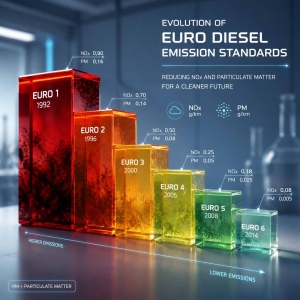
In many regions, diesel on the local market does not match EN590 specifications. Such fuels may have:
• Higher sulfur levels (50–5,000 ppm)
• Lower cetane values
• Density outside the acceptable range
• Higher aromatics and ash content
• Inconsistent cold‑flow performance
For example, high‑sulfur fuels can create heavy soot deposits and cause premature DPF/SCR failure—one of the warning signs discussed in the “Low‑Quality Diesel” article.
Why the Difference Matters
International buyers prefer EN590 because:
• It reduces engine wear, smoke, and emissions
• It meets environmental regulations in Europe and sensitive regions
• It ensures predictable performance for fleets and equipment
• It reduces disputes during SGS inspections and customs clearance
Non‑standard diesels are often cheaper but may increase operational costs through maintenance, repairs, and fuel inefficiencies.
Why Sulfur Limits Are Critical for Engines and Emissions
Sulfur is one of the most important parameters in diesel fuel. High sulfur levels create sulfur oxides (SOx), corrosive acids, and particulate matter.
EN590’s 10 ppm sulfur limit provides:
• Lower vehicle emissions
• Longer DPF filter life
• Smoother combustion
• Fewer injector deposits
• Better compatibility with after‑treatment technologies
This is especially important in regions with strict air‑quality rules. For additional insights on how sulfur influences fuel price and quality, you can also review topics related to the “Diesel Price Forecast.”
EN590 vs. Off‑Road Diesel (High‑Sulfur Diesel)
Off‑road diesel—often visually identified by a red or colored dye—has significantly different characteristics:
| Feature | EN590 Road Diesel | Off‑Road / High‑Sulfur Diesel |
|---|---|---|
| Sulfur Content | ≤10 ppm | 50–10,000 ppm |
| Use Case | Road vehicles | Industrial, agricultural, generators |
| Color | Natural (see “Diesel Color”) | Dyed (usually red) |
| Emissions | Very low | High |
| Engine Compatibility | Euro 4–6 engines | Older or heavy-duty engines |
Using off‑road diesel in road vehicles is illegal in many regions and can cause serious engine damage.
How EN590 Quality Is Tested in Professional Laboratories
Laboratory testing ensures compliance with EN590:2013+ parameters and prevents disputes between buyers and sellers.
Key Laboratory Tests
• Sulfur → XRF analyzer
• Density → ASTM D4052 digital density meter
• Cetane number → CFR engine or IQT method
• Flash point → Pensky‑Martens closed cup tester
• Viscosity → ASTM D445 capillary viscometer
• Distillation curve → ASTM D86
• CFPP → Cold filter plugging apparatus
• Lubricity → HFRR machine
• Water content → Karl Fischer titration
All results appear on the shipment’s Certificate of Quality (COQ) or Certificate of Analysis (COA).
Understanding COQ/COA values is essential for traders, just as understanding upstream diesel production requires knowledge of the “Diesel Production Process.”

What International Buyers Should Check Before Purchasing EN590 Shipments
To avoid off‑spec or misrepresented shipments, buyers should carefully verify:
• The COQ/COA from a certified laboratory
• Sulfur content (must be ≤10 ppm)
• Density within 820–845 kg/m³
• Cetane number ≥51
• CFPP suitable for the destination climate
• Water content below limits
• Tank cleanliness at loading port
• Product age (oxidation stability >20 hrs)
• Third‑party inspection (SGS, Bureau Veritas, Intertek)
• Contract terms (FOB, CIF, CFR)
These checks can prevent costly disputes. Buyers who follow global supply trends may also benefit from reading “Top 10 Diesel‑Producing Countries.”
Common EN590 Problems and How to Avoid Them
Even standard-compliant EN590 can encounter issues during transportation or storage.
Typical Problems
• Water contamination → leads to corrosion & microbial growth
• Oxidation and aging → darkening and sediment formation
• Contamination from dirty tanks → sludge or metal particles
• Wrong CFPP grade delivered → gelling in cold regions
• Off‑spec blending → occurs when sellers mix products to lower costs
Preventive Actions
• Use clean storage tanks
• Install water‑separation filters
• Order winter‑grade EN590 for cold climates
• Request SGS inspection for every major shipment
• Verify parameters against contract specifications
Conclusion: EN590 Remains the Global Benchmark for Clean and Reliable Diesel
EN590 diesel sets the highest standard for modern road fuel. Its strict specifications—especially the 10 ppm sulfur limit, minimum cetane number, and detailed quality tests—ensure cleaner combustion, better engine performance, and consistent quality worldwide.
For general readers, EN590 provides cleaner emissions and better vehicle performance.
For international buyers, it offers predictable quality, regulatory compliance, and reduced operational risks.
Related reading to deepen understanding:
Global Petroleum Trade Solutions | Universal Trades
As a reputable international petroleum trading enterprise, Universal Trades specializes in the reliable procurement, export, and supply chain management of high-grade petroleum commodities, refined fuels, and industrial feedstocks designed to meet rigorous global standards.






Leave a Reply
Want to join the discussion?Feel free to contribute!