
Light Lube Cut vs Heavy Lube Cut
What Is a Lube Cut?
In the petroleum refining and lubricant industry, lube cut refers to a specific fraction obtained during the vacuum distillation of crude oil that serves as a key feedstock for base oil production. These fractions are further processed through various lubricant refining techniques such as solvent extraction, hydrocracking, and dewaxing to produce base oils used in industrial lubricants, automotive oils, and specialty petroleum products.
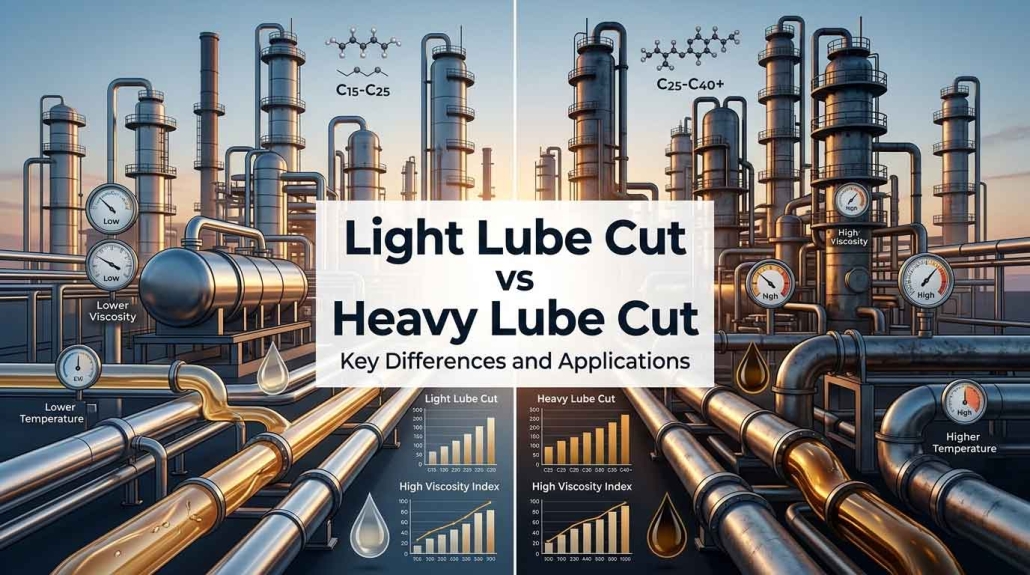
Lube cuts are generally classified based on their boiling range and viscosity characteristics. The two primary categories are Light Lube Cut (LLC) and Heavy Lube Cut (HLC). Understanding the difference between these two fractions is important for refiners, lubricant manufacturers, and buyers in the petroleum supply chain because it directly influences base oil quality, viscosity grade, processing requirements, and final product applications.
If you are new to this topic, you may also want to explore our guide on Introduction to Types of Lube Cut, which explains the different lube fractions produced during refining.
What Is Light Lube Cut?
Light Lube Cut is the lighter fraction obtained from vacuum distillation units. It has a lower viscosity and boiling range, making it suitable for producing lighter base oil grades commonly used in automotive lubricants and light industrial applications.
During base oil production, light lube cut typically undergoes processes such as solvent extraction, hydrotreating, and dewaxing to remove impurities and improve stability.
Light lube cuts are often used to produce base oils that later become engine oils, hydraulic fluids, and turbine oils. These oils are widely used across many industries that rely on high‑performance petroleum derivatives.
To better understand how these oils fit into the broader lubricant industry, see our article on Introduction to Types of Base Oil.
What Is Heavy Lube Cut?
Heavy Lube Cut is a heavier vacuum distillation fraction characterized by higher viscosity and a higher boiling point. Because of its molecular structure, it is typically used to produce heavier viscosity base oils designed for demanding industrial environments.
Heavy lube cuts often require more extensive lubricant refining processes to improve color, oxidation stability, and viscosity index. After refining, these fractions are commonly used in products such as gear oils, marine lubricants, heavy industrial oils, and greases.
Heavy lube cut is also an important feedstock for producing certain grades of mineral base oil, which are widely used in industrial machinery and heavy‑duty lubrication systems.
Light Lube Cut vs Heavy Lube Cut: Key Differences
Below is a simplified comparison highlighting the most important technical and commercial differences.
| Feature | Light Lube Cut | Heavy Lube Cut |
|---|---|---|
| Boiling Range | Lower boiling range | Higher boiling range |
| Viscosity | Lower viscosity | Higher viscosity |
| Molecular Weight | Lighter hydrocarbon molecules | Heavier hydrocarbon molecules |
| Refining Complexity | Generally easier to refine | Often requires deeper refining |
| Base Oil Grades Produced | Light viscosity base oils | Heavy viscosity base oils |
| Typical Applications | Engine oils, turbine oils, hydraulic fluids | Gear oils, marine lubricants, heavy industrial oils |
| Economic Value | High demand in automotive lubrication | Strong demand in industrial sectors |
| Processing Units | Vacuum distillation followed by hydrotreating | Vacuum distillation with extensive solvent extraction and finishing |
Role of Lube Cuts in Base Oil Production
Both light and heavy lube cuts are essential feedstocks in base oil production, forming the foundation of most lubricant formulations. After refining, these streams can produce different categories of base oils, including mineral base oils and synthetic base oils.
If you want to explore how these base oils differ in composition and performance, read our articles on Mineral Base Oil and Synthetic Base Oil.
Refiners also increasingly use advanced technologies and recycling methods to improve sustainability. For example, Recycled Base Oil production is becoming an important part of the modern lubricant industry.
Applications in the Lubricant Industry
The choice between light lube cut and heavy lube cut depends largely on the target lubricant viscosity grade and application environment.
Light lube cut–derived oils are preferred when:
- Low viscosity is required
- High flow at low temperatures is important
- Automotive engines or light machinery are involved
Heavy lube cut–derived oils are preferred when:
- High load capacity is required
- Equipment operates at high temperatures
- Industrial gear systems or marine engines are involved
These products are part of a broader group of petroleum products that serve essential roles in transportation, manufacturing, and heavy industry.

Global Market and Production
The availability of light and heavy lube cuts depends heavily on refinery configuration, crude oil type, and regional refining capacity. Major refining hubs in Asia, the Middle East, and North America produce large volumes of these feedstocks to support global lubricant demand.
To learn more about the global industry landscape, see our guide on Top Base Oil Producing Countries, which highlights the regions dominating modern base oil manufacturing.
For additional resources and industry insights, visit More Articles About Lube Cut and More Articles About Base Oil.
Conclusion
Both Light Lube Cut and Heavy Lube Cut are critical components in the petroleum refining chain and play a major role in lubricant refining and base oil production. The primary difference lies in their boiling range, viscosity, molecular composition, and end‑use applications.
Light lube cuts generally support the production of lower‑viscosity oils used in automotive and light industrial equipment, while heavy lube cuts are essential for high‑viscosity lubricants used in heavy machinery and industrial systems.
Understanding these differences helps refiners, lubricant manufacturers, and buyers choose the right feedstock for specific lubrication requirements.
Global Petroleum Trade Solutions | Universal Trades
As a reputable international petroleum trading enterprise, Universal Trades specializes in the reliable procurement, export, and supply chain management of high-grade petroleum commodities, refined fuels, and industrial feedstocks designed to meet rigorous global standards.








Leave a Reply
Want to join the discussion?Feel free to contribute!