
Top 10 Oil Producers in the World (2026 Rankings)
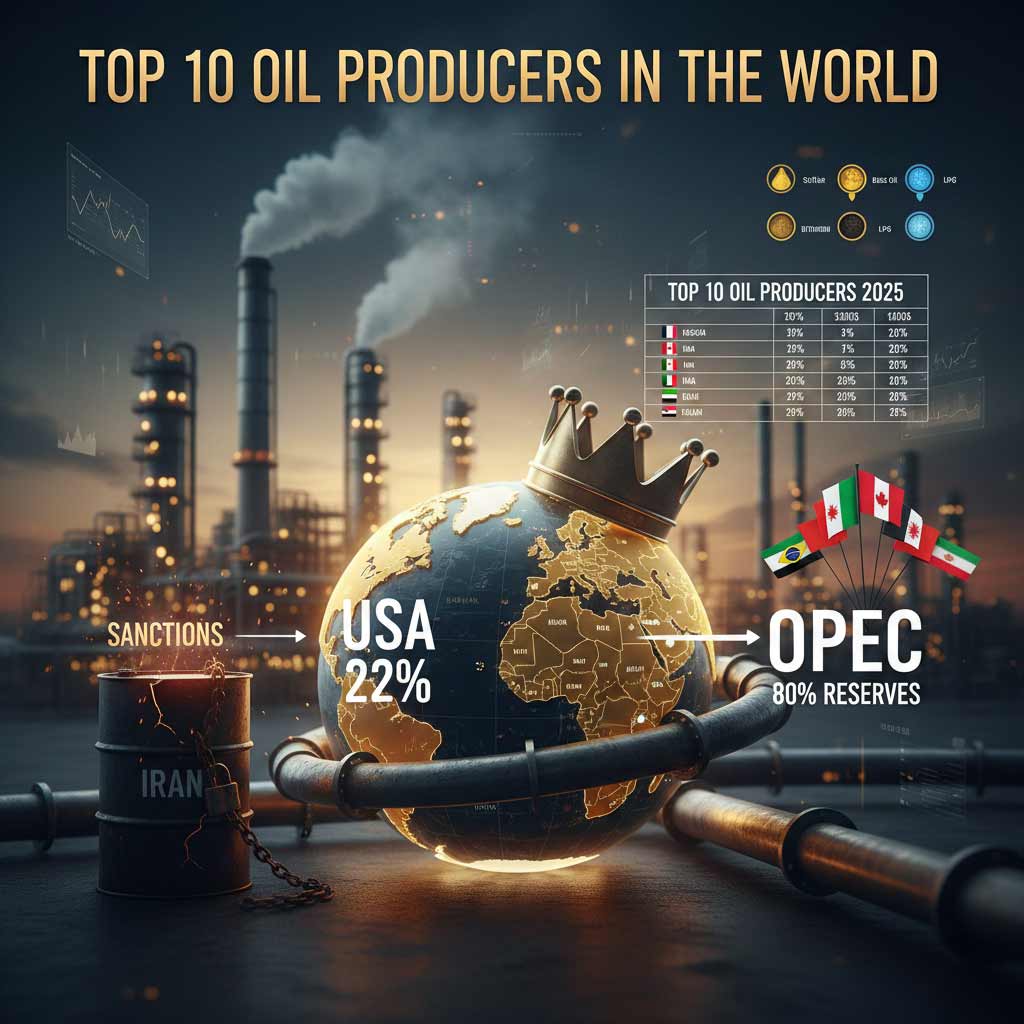
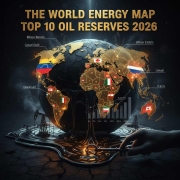
As of 2026, the United States is the largest oil producer in the world, producing about 23.4 million barrels per day and accounting for roughly 22% of global oil supply. Saudi Arabia and Russia rank next.
The global energy landscape is constantly shifting, but the dominance of a few key nations remains a cornerstone of the world economy. Understanding who the top 10 oil producers in the world are—and the percentage of global output they control—is essential for grasping international trade and energy security.
Who is the Largest Producer of Oil in the World?
As of late 2024 and early 2026, the United States remains the world’s largest oil producer. Thanks to advancements in shale technology, the U.S. produces approximately 22% of the world’s total oil supply.
- The U.S. leads primarily because of shale output, especially from the Permian Basin.
- Advanced drilling technology, private-sector investment, and flexible production systems support its top ranking.
- However, future leadership depends on oil prices, drilling economics, and environmental policy.
Top 10 Oil Producing Countries & Market Share
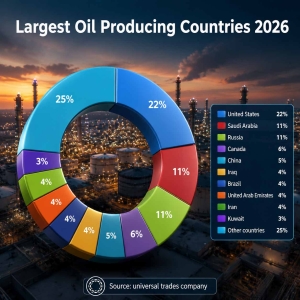
Below is the ranking of the leading producers and their approximate share of global production:
| Rank | Country | % of World Oil Production | Production (mb/d) |
|---|---|---|---|
| 1 | United States | 22% | 23.4 |
| 2 | Saudi Arabia | 11% | 11.7 |
| 3 | Russia | 11% | 11.7 |
| 4 | Canada | 6% | 6.4 |
| 5 | China | 5% | 5.3 |
| 6 | Iraq | 4% | 4.3 |
| 7 | Brazil | 4% | 4.3 |
| 8 | United Arab Emirates | 4% | 4.3 |
| 9 | Iran | 4% | 4.3 |
| 10 | Kuwait | 3% | 3.2 |
| OPEC Total (approx.) | 36% | 38.3 | |
| World Total | 100% | 106.3 |
Which country has the “best” oil in the world?
Crude oil quality is commonly evaluated using two key metrics: API gravity and sulfur content. Oils with higher API gravity and lower sulfur levels are classified as light sweet crude, which generally has higher refining value because it can be processed more easily into gasoline and other high‑value fuels.
| Benchmark | Country/Region | API Gravity | Sulfur | Quality |
|---|---|---|---|---|
| WTI | United States | ~39.6 | 0.24% | Light Sweet |
| Brent | North Sea | ~38 | 0.37% | Light Sweet |
| Bonny Light | Nigeria | ~35 | 0.14% | Light Sweet |
| Murban | UAE | ~40 | 0.78% | Light |
| Arab Light | Saudi Arabia | ~33 | 1.8% | Medium Sour |
For this reason, crudes such as WTI, Brent, and Bonny Light are often considered among the highest‑quality oils in the world. However, there is no single “best oil,” as value also depends on refinery configuration and market conditions.
For further reading about the best crude oil in the world, please read the article: “Which Country Has the Best Crude Oil in the World?”
Impact of Iran-US Tensions & Hormuz Crisis on Top Oil Producers
Military tensions in the Persian Gulf and threats to the Strait of Hormuz affect global producers differently. While some face logistical bottlenecks, others ramp up production to fill the supply gap.
| Country | Estimated Output/Supply Change | Hormuz Dependency | Primary Driver |
|---|---|---|---|
| USA | +5% to +8% (Increase) | None | Filling global supply gaps; higher price incentive |
| Saudi Arabia | -15% to -25% (Decrease) | High | Disruption of primary export routes |
| Russia | +2% to +5% (Increase) | None | Leveraging alternative routes and high crude prices |
| Canada | +3% to +5% (Increase) | None | Increased extraction due to market profitability |
| Iraq | -30% to -40% (Decrease) | Absolute | Total reliance on southern ports via the Strait |
| China | -1% to -3% (Decrease) | Low | Shift to strategic reserves due to import risks |
| UAE | -20% to -30% (Decrease) | High | Significant reliance on Gulf maritime routes |
| Brazil | Stable / No Change | None | Geographical distance from the conflict zone |
| Kuwait | -35% to -50% (Decrease) | Absolute | Lack of alternative export routes outside the Gulf |
| Iran | ±20% to 40% (Fluctuation) | Conflict Core | Infrastructure risks or strategic supply adjustments |
| OPEC Members Total | Estimated decline / disruption across members | High | Exposure of Gulf producers and supply-route concentration |
| World Oil Production | 106.3 mb/d | — | Global benchmark total |
Oil Production vs Oil Exports vs Proven Reserves
In global energy analysis, the terms oil production, oil exports, and proven reserves are often confused, although they describe different aspects of a country’s oil sector.
Oil production refers to the amount of crude oil a country extracts from its oil fields each day.
Oil exports represent the portion of that production sold to international markets after domestic consumption is met.
Proven reserves, on the other hand, indicate the total volume of oil that can be economically and technically recovered with current technology and market conditions.
As a result, a country may be one of the world’s largest producers but not a leading exporter, or it may hold vast reserves while producing relatively less oil.
| Country | Production | Exports | Proven Reserves |
|---|---|---|---|
| United States | ~13 million barrels/day | Lower exports (high domestic consumption) | ~69 billion barrels |
| Saudi Arabia | ~10 million barrels/day | Very high | ~267 billion barrels |
| Russia | ~10–11 million barrels/day | High | ~108 billion barrels |
| Canada | ~5 million barrels/day | High | ~168 billion barrels |
| Iran | ~3–4 million barrels/day | Moderate | ~208 billion barrels |
To better understand the global energy landscape, you can also explore our related articles on the largest oil consumers, the nations with the biggest proven oil reserves, and the top oil‑exporting countries in the world.
Top 10 Oil Producing Countries in the World in 2026
1. United States – 23.4 Million Barrels per Day
The United States is the world’s largest oil producer in 2026, accounting for roughly 22% of global supply. Its leadership is largely driven by the shale revolution and advanced drilling technologies such as hydraulic fracturing. Major producing regions include the Permian Basin, Eagle Ford, and Bakken formations. While much of the output is consumed domestically, the U.S. has also become a significant exporter of crude oil and petroleum products. Continued investment in shale production is expected to keep the country at the top in the coming years.
2. Saudi Arabia – 11.7 Million Barrels per Day
Saudi Arabia ranks second globally and remains the largest producer within OPEC. The country benefits from giant oil fields such as Ghawar, one of the largest in the world. A large share of Saudi oil is exported, particularly to Asia, Europe, and the United States. Its spare production capacity allows the kingdom to play a major role in stabilizing global oil markets.
3. Russia – 11.7 Million Barrels per Day
Russia is one of the leading oil producers, with major output coming from Western and Eastern Siberia. A large portion of Russian crude is exported to Europe and Asia. The country’s vast hydrocarbon resources and developed energy infrastructure make it a key player in global energy markets, though geopolitical developments can influence export patterns.
4. Canada – 6.4 Million Barrels per Day
Most of Canada’s production comes from Alberta’s oil sands. The majority of its crude exports go to the United States, making Canada a crucial supplier for North America.
5. China – 5.3 Million Barrels per Day
China is both a major oil producer and the world’s largest oil importer. Domestic production mainly comes from fields such as Daqing, though demand still exceeds supply.
6. Iraq – 4.3 Million Barrels per Day
Iraq holds vast oil reserves, with production concentrated in southern fields around Basra. Oil exports are a central pillar of the country’s economy.
7. Brazil – 4.3 Million Barrels per Day
Brazil’s output has grown rapidly due to deepwater pre‑salt fields in the Atlantic Ocean, making it a key producer in the Southern Hemisphere.
8. United Arab Emirates – 4.3 Million Barrels per Day
The UAE is a major OPEC producer, with most output coming from Abu Dhabi. Significant investments have increased its production capacity in recent years.
9. Iran – 4.3 Million Barrels per Day
Iran possesses some of the world’s largest oil and gas reserves. Despite sanctions, it remains among the top global oil producers.
10. Kuwait – 3.2 Million Barrels per Day
Kuwait is a major exporter with relatively small population but large reserves. Much of its production comes from the giant Burgan oil field.
Key Industry Players and Control
-
Who is the largest oil producer company? Saudi Aramco is the undisputed leader, holding the largest daily production capacity and market capitalization globally.
-
Who controls 80% of the world’s oil? While the U.S. leads in production, OPEC (Organization of the Petroleum Exporting Countries) members collectively control nearly 80% of the world’s proven oil reserves.
Is Iran a Large Oil Producer?
Yes, Iran consistently ranks in the top 10 globally. It holds roughly 4% of global production and possesses some of the largest proven reserves of crude oil and natural gas.
Why is Iran Not Rich from Oil?
Despite its status as an “energy superpower,” Iran faces economic challenges due to:
-
International Sanctions: Heavily restricting the export of gasoline, diesel, and crude.
-
Infrastructure Aging: Lack of investment in refineries to produce high-value Oil derivatives.
-
Domestic Subsidies: Massive spending on cheap kerosene and fuel for domestic use.
The Value of Oil Products
The industry is not just about crude. Refineries process oil into essential products like sulfur, base oil for lubricants, bitumen for roads, and LPG (Liquefied Petroleum Gas) for heating and cooking.
Read More: Expand Your Energy Knowledge
- Top Oil Consuming Nations: Discover the countries with the highest energy demand and consumption rates.
- Top Countries by Proven Oil Reserves: In-depth analysis of nations holding the world’s largest underground oil wealth.
- Top 15 Global Oil Refineries: Introducing the world’s largest and most advanced refining facilities in 2026.
- Leading Gasoline Producers: Ranking the global refining powerhouses and their share of the fuel market.
- Top Diesel Producers: A look at the giants of heavy fuel production and their role in global logistics.
- Leading Kerosene (Jet Fuel) Producers: A guide to the key players in aviation and heating fuel manufacturing.
- Top Base Oil Producers: Ranking the world’s largest producers of the core ingredient for industrial lubricants.
Frequently Asked Questions (FAQ)
Which country produces the most oil in 2026?
Based on estimated average daily production, the United States remains the world’s largest oil producer in 2026, followed by Saudi Arabia and Russia.
Is Saudi Arabia still the largest oil exporter?
Yes. Although the U.S. leads in production, Saudi Arabia remains one of the largest crude oil exporters due to its lower domestic consumption and high export capacity.
What is the difference between light and heavy crude?
The main differences lie in API gravity and sulfur content. Light crude has higher API gravity and lower sulfur, making it easier and more valuable to refine.
Which country has the best quality crude oil?
In terms of refining quality, benchmarks such as U.S. WTI, North Sea Brent, and Nigeria’s Bonny Light are considered among the highest-quality crude oils globally.
How much of the world’s oil reserves does OPEC control?
OPEC member countries collectively hold roughly 70–80% of the world’s proven oil reserves.
Is Iran still one of the top oil producers?
Yes. Iran typically accounts for around 3–4% of global daily oil production, although its output can fluctuate depending on market conditions and geopolitical factors.
Methodology and Data Sources
The figures in this article are based on estimated average daily oil production, with country rankings compiled from widely trusted statistical sources. Because methodologies may differ slightly across institutions, some figures can vary marginally. Data has been compiled from reliable references such as EIA, OPEC, IEA, and international energy reports.



Leave a Reply
Want to join the discussion?Feel free to contribute!