
Recycled Base Oil vs Virgin Base Oil: Complete Comparison for Buyers

Choosing between recycled (re‑refined) base oil and virgin base oil is a key decision for lubricant manufacturers, industrial buyers, and traders. Price differences, performance expectations, and supply‑chain reliability all influence the final choice.
In this article, we provide a clear, data‑driven comparison, answer the most common questions from buyers, and help you understand which type of base oil is best for your specific application.
What Is Recycled (Re‑Refined) Base Oil?
Recycled base oil—also known as re‑refined base oil—is produced by collecting used lubricants and processing them through advanced refining technologies such as clay treatment, vacuum distillation, hydrotreating, or hydro‑processing.
Key Characteristics:
- Quality depends heavily on feedstock and refining technology
- Usually comparable to Group 1 Base Oil or low‑end Group 2 Base Oil
- More cost‑effective for price‑sensitive markets
- Better environmental footprint
For more comparisons, see Mineral vs Synthetic Base Oil and Synthetic Base Oil.
What Is Virgin Base Oil?
Virgin base oil is produced directly from crude oil through traditional refining methods such as solvent extraction and hydrocracking.
It includes Group 1, Group 2, Group 3, Group 4, and Group 5 Base Oil, each offering different purity, viscosity index, and performance levels.
Key Characteristics:
- High consistency and stable quality
- Preferred for automotive, industrial, and OEM‑approved lubricants
- Less variability between batches
- Higher market price compared to recycled oils
Comparison Table: Recycled vs Virgin Base Oil
| Feature | Recycled Base Oil (Re‑Refined) | Virgin Base Oil |
|---|---|---|
| Price Level | 20–40% cheaper depending on region and quality | Higher and tied to crude oil market trends |
| Quality Consistency | Moderate; depends on feedstock and equipment | High; uniform across all batches |
| Advantages | Cost‑effective; lower carbon footprint; suitable for general lubricants | High performance; broader application range; stable supply for large buyers |
| Disadvantages | Variability risk; limited OEM approvals; may require extra additives | Higher price; sensitive to crude oil fluctuations |
| Applications | Industrial oils, hydraulic oils, metalworking fluids | Automotive lubricants, high‑performance oils, OEM‑certified products |
| Buyer Risk Level | Medium to high | Low |
Price & Market Considerations
Price is one of the biggest reasons buyers consider recycled base oil.
Re‑refined oils typically offer significant cost savings, making them attractive for:
- Price‑sensitive producers
- Markets without strict performance requirements
- Industrial applications with moderate operating conditions
For up‑to‑date market trends, see: Global Base Oil Price Forecast
Quality, Performance & Applications
Where Recycled Base Oil Performs Well:
- Hydraulic systems
- Industrial gearboxes
- General‑purpose lubricants
Where Virgin Base Oil Is Essential:
- Modern engines
- High‑temperature or high‑pressure environments
- OEM‑approved lubricants
- Synthetic or semi‑synthetic formulations
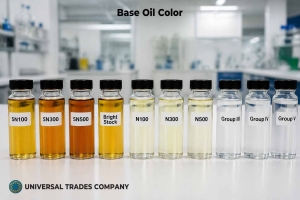
Base Oil Groups and Their Relationship to Each Type
Recycled base oil often falls into:
- Group 1 Base Oil
- Lower-quality Group 2 Base Oil
Virgin base oils are available across all categories:
- Group 1 – traditional refining, lower VI
- Group 2 – higher purity
- Group 3 – high‑VI mineral base oils
- Group 4 – PAO (fully synthetic)
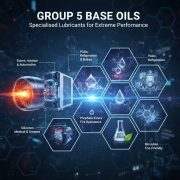
- Group 5 – esters and specialty oils
For detailed technical specifications, refer to our internal pages on each base oil group.
Production & Supply Considerations
Virgin base oil supply depends heavily on petroleum prices and refinery output.
See our internal coverage of Top Base Oil Producing Countries and Base Oil Production for deeper insights.
Re‑refined oil production depends on:
- Availability of used oil collection
- Investment in re‑refining facilities
- Environmental regulations supporting recycling
Which One Should You Choose?
Here is a simple buyer‑oriented guideline:
Choose Recycled Base Oil if:
- You need lower cost materials
- Applications operate in moderate conditions
- OEM approvals are not required
- Sustainability is a priority
Choose Virgin Base Oil if:
- You need consistent, high‑performance lubricants
- Products must pass OEM or industry standards
- You operate in automotive, heavy machinery, or high‑stress environments
- You manufacture synthetic or semi‑synthetic oils
Frequently Asked Questions (FAQ)
1. Can recycled base oil replace virgin base oil?
Yes—but only in certain applications such as hydraulic oils, industrial lubricants, and general mechanical systems.
For high‑performance engines or OEM‑approved oils, virgin base oil remains essential.
2. Is recycled base oil lower quality?
Not necessarily. Modern re‑refining technology can produce high‑quality oils, but batch consistency is usually lower than virgin oils.
3. Which one is better for engine oil production?
Virgin base oil—especially Group 2, Group 3, or Group 4 Base Oil—is typically required for engine oils.
4. Why is re‑refined base oil cheaper?
Because it uses spent lubricants as feedstock and avoids many costs associated with crude oil processing.
5. Is recycled base oil environmentally friendly?
Yes, significantly more. It reduces waste, cuts emissions, and decreases petroleum dependency.
Conclusion
Both Recycled Base Oil and Virgin Base Oil have clear advantages depending on your application, quality expectations, and budget.
Re‑refined oils offer cost savings and sustainability, while virgin oils offer performance, purity, and reliability.
To explore more related topics, visit:








Leave a Reply
Want to join the discussion?Feel free to contribute!