
euro 5 vs euro 6 diesel key differences benefits and environmental impacts
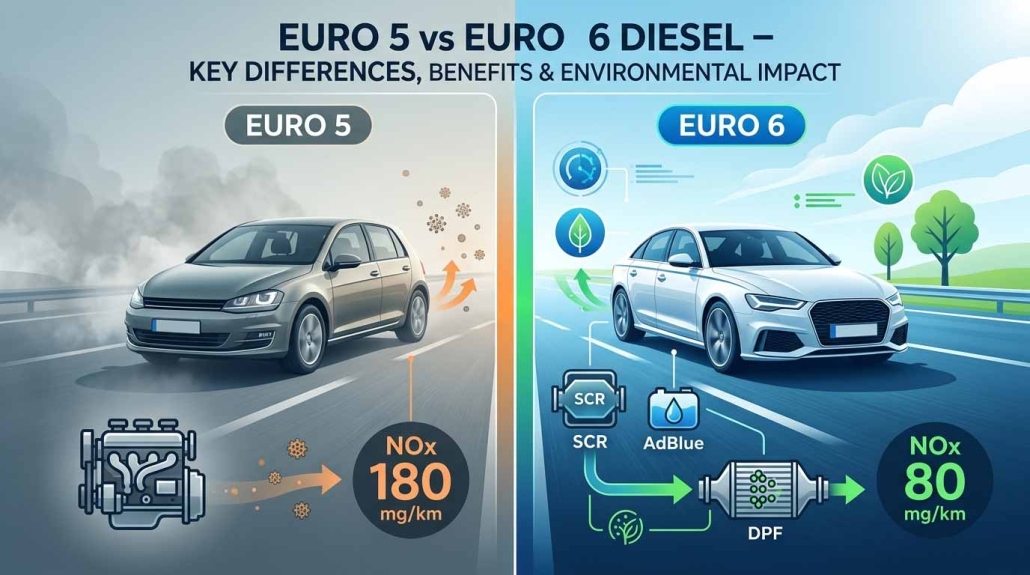
Understanding the difference between Euro 5 and Euro 6 diesel standards is essential for drivers, fleet operators, car buyers, and businesses aiming to reduce emissions and comply with modern environmental regulations. This article provides a clear comparison of both standards, their technical specifications, advantages, drawbacks, and real‑world implications.
Below is a summarized comparison table to help you quickly identify the major distinctions between Euro 5 and Euro 6 diesel engines and fuels.
Euro 5 vs Euro 6 Diesel – Comparison Table
| Characteristic | Euro 5 Diesel | Euro 6 Diesel |
| NOx Emission Limit | 180 mg/km | 80 mg/km (over 55% reduction) |
| Particulate Matter (PM) | Low | Extremely low (due to enhanced DPF systems) |
| Fuel Quality Requirement | Ultra‑low sulfur diesel (≤10 ppm sulfur) | ULSD + compatibility with advanced after‑treatment systems |
| Engine Technology | Basic DPF; limited NOx control | SCR, AdBlue, advanced EGR, improved sensors |
| Environmental Impact | Moderate emissions | Significantly reduced emissions |
| Vehicle Compatibility | 2009–2014 diesel vehicles | 2014–present diesel vehicles |
| Maintenance Needs | Lower but less efficient | Higher, due to AdBlue and SCR components |
What Are Euro Emission Standards?
Euro emission standards are regulatory limits set by the European Union to reduce pollution from vehicles. Each new standard becomes stricter, targeting pollutants such as:
- Nitrogen oxides (NOx)
- Carbon monoxide (CO)
- Particulate matter (PM)
- Hydrocarbons (HC)
Euro 5 and Euro 6 specifically transformed the diesel engine landscape, forcing manufacturers to adopt cleaner technologies.
Euro 5 Diesel Standard Explained
Introduced in September 2009, Euro 5 significantly reduced particulate matter emissions by encouraging the adoption of Diesel Particulate Filters (DPF). It marked a turning point in diesel engine design, though it did not impose aggressive limits on nitrogen oxides (NOx).
Euro 5 Technical Specifications
- NOx limit: 180 mg/km
- PM limit: 5 mg/km
- Sulfur content in fuel: ≤10 ppm (Ultra-Low Sulfur Diesel)
- Required technologies: Basic DPF systems
- Fuel compatibility: Standard ULSD; no requirement for AdBlue
Euro 5 diesel vehicles are often praised for simple maintenance, but they produce higher NOx emissions.
Pros of Euro 5 Diesel
- Lower maintenance cost
- No need for AdBlue refills
- Widely available used vehicle options
- Lower purchasing cost
Cons of Euro 5 Diesel
- Much higher NOx emissions than Euro 6
- Restricted in some low‑emission zones
- Less fuel‑efficient in some engines
- Older technology with limited environmental benefits
Euro 6 Diesel Standard Explained
Euro 6 came into effect in September 2014, drastically reducing NOx emissions—especially for diesel-powered vehicles. It pushed manufacturers to integrate advanced emission‑control systems such as:
- SCR (Selective Catalytic Reduction)
- AdBlue (urea–based exhaust treatment)
- Advanced EGR (Exhaust Gas Recirculation)
- More efficient Diesel Particulate Filters
Euro 6 Technical Specifications
NOx limit: 80 mg/km
PM limit: 5 mg/km
- Improved real‑world testing (RDE) requirements
- Mandatory after‑treatment systems: SCR, AdBlue
- Fuel compatibility: ULSD with very low sulfur
Pros of Euro 6 Diesel
- Up to 55–60% cleaner NOx emissions vs Euro 5
- Reduced particulate emissions
- Better fuel efficiency in many modern engines
- Required for compliance in low‑emission and ultra‑low‑emission zones
Cons of Euro 6 Diesel
- Higher maintenance requirements
- AdBlue refills needed regularly
- More complex and expensive repair costs
- Higher vehicle purchase price
The amount of power generated by various standard gasoline engines
Euro 5 vs Euro 6: Which Is Better?
Euro 6 diesel is undoubtedly cleaner and more future‑proof, especially for cities enforcing strict emission policies. However, Euro 5 diesel vehicles remain popular for their lower cost and simpler maintenance.
Your choice depends on:
- Environmental restrictionsin your area
- Budget
- Maintenance preferences
- Driving patterns (urban vs highway)
Environmental Impact Comparison
Euro 6 diesel stands out due to:
- Lower NOx emissions
- Improved particulate filtering
- Reduced smog‑forming pollutants
- Increased compatibility with renewable fuel blends, including biodiesel
If reducing emissions is a priority, Euro 6 is the clear winner.
Related Topics You Should Explore
To deepen your understanding of diesel fuel types, production, and performance, explore these related internal resources:
- Learn how fuel appearance affects quality in our diesel color guide
- See global cost trends in diesel price forecast
- Explore top global exporters in diesel producing countries
- Understand ignition quality with cetane number
- Read about how diesel fuel is made in diesel production
- Compare engine types in gasoline vs diesel
- Understand fuel standards in ultra low sulfur diesel
- Learn about the full range of diesel types in types of diesel
Conclusion
The comparison between Euro 5 vs Euro 6 diesel highlights the significant evolution in emission regulations. While Euro 5 offered a solid balance of performance and simplicity, Euro 6 delivers cleaner, more environmentally responsible diesel technology, making it the preferred choice for modern vehicles and urban driving conditions.







Leave a Reply
Want to join the discussion?Feel free to contribute!