
Signs of Fake and Low‑Quality Diesel Fuel: A Guide for Operators and Fuel Buyers
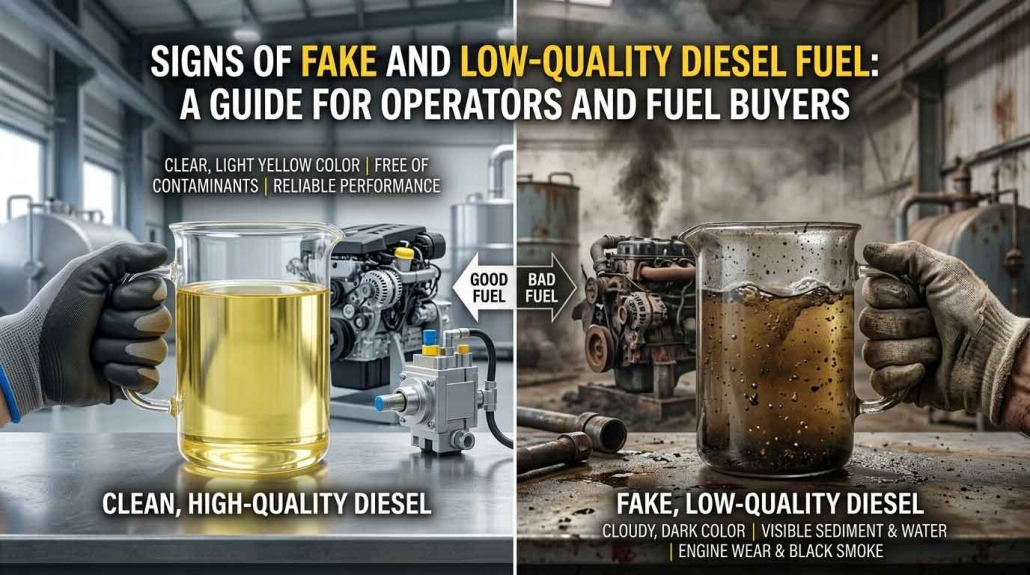
Diesel quality directly affects engine performance, operational costs, and the lifespan of heavy machinery. Whether you manage a fleet, operate generators, or purchase fuel in bulk, the ability to identify fake or low‑quality diesel is essential. Contaminated or adulterated fuel leads to injector damage, higher fuel consumption, unexpected downtime, and costly repairs.
With global supply fluctuations and increasing demand across major markets (explored in Top 10 Diesel Producing Countries), the risk of encountering off‑spec diesel continues to grow. This guide will help you identify the warning signs, test for quality, and understand what separates premium diesel from harmful, low‑grade fuel.
Comparison Table: High‑Quality Diesel vs. Fake / Low‑Quality Diesel
Below is a simple, clear comparison table highlighting the key differences:
| High‑quality diesel | Fake / Low‑quality diesel |
|---|---|
| Clear, consistent color (usually light yellow) | Dark, cloudy, or inconsistent color |
| Neutral, clean smell | Strong chemical, burnt, or sour odor |
| High cetane number for efficient ignition | Low cetane; delayed ignition and rough combustion |
| Low sulfur content (especially in ULSD) | High sulfur levels leading to corrosion and emissions |
| Free of sediments, water, and microbial growth | Contains dirt, rust particles, water droplets, or sludge |
| Smooth engine operation | Engine knocking, misfires, loss of power |
| Lower fuel consumption | Higher consumption due to incomplete combustion |
| Protects injectors and pumps | Causes wear, clogging, and expensive maintenance |
Key Signs of Fake or Low‑Quality Diesel Fuel
Low‑quality diesel typically shows several warning signs. Operators should watch for the following:
• Unusual color or cloudiness
A major indicator of water contamination, oxidation, or mixing with cheaper fuels like kerosene.
• Strange or sour odor
Burnt or pungent smells often indicate adulteration or high sulfur content (related to Sulfur).
• Sediment, floating particles, or sludge
This suggests microbial contamination or improper storage—common in areas with poor fuel handling standards.
• Black smoke or excessive exhaust
A result of low cetane or high impurity levels, often linked to poorly refined diesel (learn more in Diesel Production Process).
• Engine performance problems
Knocking, slow acceleration, or difficulty starting typically points to poor combustion quality.
• Reduced fuel efficiency
Fake diesel often contains non‑combustible materials or diluted components, leading to higher consumption.
• Frequent injector or filter failures
If your injectors clog repeatedly, the fuel quality is likely to blame, not the machinery.

Industrial Additives That Improve Diesel Quality
Many fuel suppliers offer custom‑blended additives to improve performance, stability, and engine protection. Below are the most common industrial diesel additives and their effects:
Cetane Improvers
Increase the cetane number, resulting in faster ignition, smoother combustion, and reduced engine noise.
(Connect to Cetane Number)
Lubricity Enhancers
Compensate for low sulfur diesel (especially ULSD) by improving lubrication inside injectors and pumps, extending equipment life.
Anti‑Gel / Cold‑Flow Improvers
Prevent wax crystals from forming in cold temperatures, ensuring smooth fuel flow during winter operations.
Detergents
Clean injectors, reduce deposits, and maintain optimal spray patterns—critical for fuel efficiency.
Corrosion Inhibitors
Protect metal surfaces in fuel tanks and pipelines from oxidation and corrosion caused by sulfur or moisture.
Demulsifiers
Separate water from diesel, helping filtration systems remove moisture more effectively.

Stabilizers and Anti‑Oxidants
Prevent fuel degradation and color changes during long‑term storage—especially important for generators and backup systems.
These additives significantly reduce wear, prevent breakdowns, and improve the overall reliability of diesel-powered equipment.
Why Fake Diesel Exists and How It Affects Costs
Low‑quality diesel often results from illegal blending, poor refining standards, or improper storage conditions. With global market fluctuations—discussed in Diesel Price Forecast 2026—some suppliers cut corners to lower costs.
However, using adulterated fuel leads to much higher expenses long‑term:
• increased maintenance
• engine failures
• downtime in industrial operations
• higher emissions penalties in regulated markets
• lower resale value of equipment
High‑purity fuels such as Biodiesel and ULSD provide cleaner combustion, fewer deposits, and more consistent performance—especially for modern engines.
Best Practices to Avoid Fake or Low‑Quality Diesel
• Buy from certified suppliers with transparent documentation
• Inspect color and clarity before filling large tanks
• Perform periodic fuel quality tests
• Use additives when appropriate
• Maintain storage tanks to prevent water and microbial growth
• Monitor fuel consumption patterns for unusual changes
These practices are essential components of high‑quality fuel management used throughout the Petroleum Products industry.
Learn More
For more technical, market‑based, and operational insights, check out:
• Base Oil
Global Petroleum Trade Solutions | Universal Trades
As a reputable international petroleum trading enterprise, Universal Trades specializes in the reliable procurement, export, and supply chain management of high-grade petroleum commodities, refined fuels, and industrial feedstocks designed to meet rigorous global standards.








Leave a Reply
Want to join the discussion?Feel free to contribute!