
Types of Group 5 Base Oil Grades and Their Applications

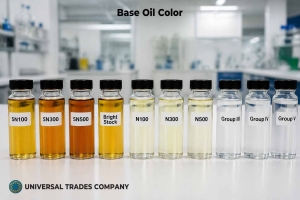
Base oils are the fundamental components of virtually all lubricating products, forming 80% to 95% of their composition before additives are included. They are essential for reducing friction and wear in machinery, from small automotive engines to complex industrial equipment. The American Petroleum Institute (API) has established a classification system dividing base oils into five groups (I to V) based on their saturation levels, sulfur content, and viscosity index (VI). While Groups I, II, and III are derived from petroleum crude oil, Group IV consists of pure synthetics (Polyalphaolefins or PAOs). Group 5 base oils stand out as the most diverse category, housing all other types of base oils that don’t fit into the preceding groups, making them the choice for highly specialised and high-performance applications.
Distinguishing Base Oil Grades and Their Applications
The five API base oil groups differ significantly in their chemical structure, refining process, and consequently, their performance characteristics and suitability for various applications.
| API Group | Composition Origin | Refining/Production Method | Key Features | Primary Applications |
| Group I | Mineral Oil | Solvent Refining | Low saturation/High sulfur, moderate VI (80-120), simplest and cheapest. | General-purpose, older, less demanding industrial lubricants. |
| Group II | Mineral Oil | Hydrocracking | High saturation/Low sulfur, better stability, VI (80-120). | Standard engine oils, hydraulic fluids, and many industrial lubricants. |
| Group III | Mineral Oil | Severe Hydrocracking/Isomerization | Very high purity, VI (>120), close to synthetic performance. | High-performance and synthetic blend motor oils, high-end industrial lubricants. |
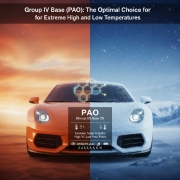
| Group IV | Synthetic | Polymerization (PAOs) | Fully synthetic, excellent thermal/oxidative stability, very high VI, superb cold-flow properties. | Extreme temperature and high-stress automotive (e.g., racing) and aerospace applications. |
| Group V | Various (Synthetic/Others) | Diverse Chemical Synthesis | Unique and targeted properties (e.g., high solvency, flame resistance), widest chemical diversity. | Highly specialized additives, aviation, refrigeration, food-grade, and specialty industrial fluids. |
The core difference lies in the level of purity and molecular uniformity. Groups I and II are less pure and offer moderate stability, suitable for general use. Group III and IV offer superior performance due to high purity and uniform molecular structure, excelling in high-stress and high-temperature environments. Group V, however, is a category of speciality fluids with unique, tailored properties for niche roles that the others cannot fill.
Group 5 Base Oil: Main Features and Applications
Group 5 is defined as the “catch-all” category, encompassing any base oil that is not classified as Group I, II, III, or IV (PAO). This group is characterised by its chemical diversity, which translates into a wide array of highly specialized performance features.
Main Features
-
Exceptional Solvency: Many Group 5 oils (especially Esters) have excellent solvency, meaning they can effectively dissolve additives and keep surfaces clean, a feature often used to enhance the performance of other base oil blends.
-
High Thermal and Oxidative Stability: Certain types, like Esters and PAGs, offer stability under extremely high temperatures and resistance to degradation.
-
Targeted Functional Properties: This group includes fluids engineered for specific traits, such as flame resistance (Phosphate Esters), biodegradability (Bio-lubes), or superior lubricity and detergency.
-
Good Additive Compatibility: Group 5 base stocks are frequently used as co-base oils or additives to enhance the properties of Groups III and IV lubricants.
Main Applications
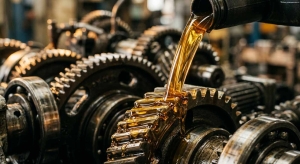
Due to their specialised nature, Group 5 base oils are rarely used alone as the main bulk of a lubricant but rather in demanding, niche, and high-specification areas:
-
Aviation and Aerospace Lubricants: For high-temperature jet engine oils, often utilising Polyolesters.
-
Refrigeration Compressor Oils: Polyalkylene Glycols (PAGs) are critical for modern HVAC and refrigeration systems due to their compatibility with refrigerants.
-
Transformer and Hydraulic Fluids: Phosphate esters are used for their fire resistance in sensitive hydraulic systems and power generation equipment.
-
Food-Grade and Pharmaceutical Lubricants: Silicone and other specialised synthetics are used where accidental contact with consumables is possible.
-
Enhancing Additive Packages: Esters are commonly blended with PAO (Group IV) to improve seal compatibility and additive solvency.
Types of Group 5 Base Oil Grades and Their Applications
Group 5 is not a single chemical family but a collection of distinct chemistries. Here are the most prominent grades:
-
Esters (Diesters and Polyolesters):
-
Features: Excellent thermal stability, high detergency, good lubricity, and improved seal compatibility compared to PAOs.
-
Applications: High-performance synthetic engine oils, jet engine lubricants (Polyolesters), and as an additive in Group IV formulations to boost solvency and reduce seal shrinkage.
-
-
Polyalkylene Glycols (PAGs):
-
Features: Extremely high viscosity index, excellent thermal and shear stability. They are also known to be completely incompatible with mineral oils, making them distinct.
-
Applications: Brake fluids, refrigeration compressor oils (especially R-134a systems), and high-performance gear and worm-drive lubricants.
-
-
Phosphate Esters:
-
Features: Superior fire resistance (non-flammable/self-extinguishing).
-
Applications: Aviation hydraulic fluids and lubricants for high-risk industrial equipment where fire hazard is a major concern (e.g., turbine control systems).
-
-
Silicones:
-
Features: Extreme temperature range performance, high oxidation resistance, and excellent release properties.
-
Applications: Specialty greases, damping fluids, and medical/food-grade lubricants.
-
-
Naphthenic Oils and Bio-lubes:
-
Features: Naphthenics have naturally low pour points and good solvency. Bio-lubes (based on vegetable oils) offer biodegradability.
-
Applications: Naphthenics are often used in transformer oils and process oils. Bio-lubes are used in environmentally sensitive areas (e.g., forestry, marine).
-
Conclusion: The Future of High-Performance Lubrication
Group 5 base oils represent the pinnacle of specialised lubricant technology. They fill the performance gaps left by the mineral and PAO groups, offering unique properties such as fire resistance, superior detergency, and compatibility with specific refrigerants. As industrial and automotive technologies demand higher operating temperatures, longer drain intervals, and greater environmental responsibility, the importance of Group 5 base oils—particularly Esters and PAGs—will continue to grow. They are crucial components in formulating the next generation of high-end lubricants, ensuring critical equipment runs efficiently and safely under the most challenging conditions.




It’s interesting how Group 5 base oils encompass so many different types of oils. I imagine this diversity makes them a go-to for very specific, high-performance industries.
What exactly does Group V Base Oil include, and what’s the key difference between Group V and Group IV (PAO)? Can they be blended together?
Group V is the “catch-all” category, including any base oil not classified as Group I, II, III, or IV (PAO), such as Esters, PAGs, and Silicones. The key difference from Group IV (PAO) is that PAO is a synthetic hydrocarbon, while Group V covers a wide chemical variety like Esters, which offer specialized properties (e.g., high solvency). Yes, Esters (Group V) are often blended with PAO (Group IV) to improve the solvency of the PAO, which is poor at dissolving additives.
Why is the combination of Group 5 and Group 4 (PAO) base oils so common in advanced engine oils?
Group 5 oils (such as esters) have very high solvency. This feature ensures that additives dissolve well in the oil and that engine deposits remain suspended in the oil instead of settling on components, keeping the engine cleaner.