
Naphtha vs. Gasoline: Understanding the Key Differences in Petroleum Products

The world runs on petroleum products, but not all liquids derived from crude oil are created equal. Naphtha and gasoline are two such petroleum-derived hydrocarbon mixtures, often confused but serving distinct purposes in industry and transportation.
What is Gasoline?
Gasoline (or Petrol) is a complex, refined, and blended liquid fuel primarily used in spark-ignited internal combustion engines for vehicles. It is the finished product we pump at the station.
The bulk of gasoline consists of a homogeneous mixture of hydrocarbons with four to twelve carbon atoms per molecule (C4–C12). Its formulation includes various additives to improve performance, reduce emissions, and, crucially, to increase its Octane Number (a measure of a fuel’s resistance to premature ignition, or “knocking”). Standard gasoline in the US typically has an Anti-Knock Index (AKI) of 87 to 94.
What is Naphtha?
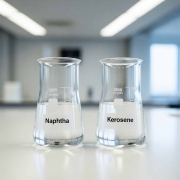
Naphtha is an intermediate product in the petroleum refining process, essentially falling between the lightest crude oil components (like refinery gas and LPG) and heavier products (like kerosene and diesel). It is a volatile, flammable liquid hydrocarbon mixture.
Summary – Naphtha vs Gasoline: Naphtha and gasoline are petroleum-derived hydrocarbon mixtures. The key difference between naphtha and gasoline is that the term naphtha describes the more volatile forms of petroleum whereas gasoline is a petroleum-derived fuel.
Naphtha has an interesting history; in ancient times, the term often referred to crude oil itself or highly flammable light fractions. Today, it is an incredibly versatile substance, making it a highly valuable resource in the petrochemical industry.
Naphtha and Gasoline: Are They the Same?
No, naphtha and gasoline are not the same. They are related products derived from the same raw material (crude oil), but they differ in composition, refinement level, and primary application. Naphtha is often a precursor or blending component of gasoline, not the final consumer product.
The Use of Naphtha
Naphtha’s primary uses are generally not as a finished fuel, but as:
-
Petrochemical Feedstock: The most significant use is as a raw material for steam crackers to produce essential chemical building blocks like ethylene and propylene.
-
Gasoline Component: Heavy naphtha is reformed to create high-octane gasoline blend components. Light naphtha can also be isomerized and blended.
-
Solvent: Various types of naphtha (often called mineral spirits, petroleum spirit, or white gas) are used as solvents in paints, varnishes, cleaning agents, and for certain camping stove fuels.
-
Diluent: Used to thin highly viscous heavy crude oil, making it easier to transport via pipeline.
Converting Naphtha to Gasoline: The Catalytic Reforming Process
The most important connection between heavy naphtha and finished gasoline is the conversion process known as Catalytic Reforming. Straight-run naphtha, the initial product from crude oil distillation, has a low Octane Number (typically around 40–70 RON) and is not suitable for modern engines.
In catalytic reforming, heavy naphtha is run over a platinum-based catalyst at high temperatures and pressures. This process rearranges the naphtha’s low-octane hydrocarbon molecules (paraffins and naphthenes) into high-octane aromatic hydrocarbons (like toluene and xylene). The resulting product, called Reformate, is a high-octane gasoline blending stock. This explains the reason for combining them: naphtha provides the raw material that, once reformed, forms the high-octane base necessary to create marketable gasoline.
Can Naphtha Be Used as a Fuel or Instead of Gasoline?
In its raw, unrefined state, naphtha cannot be used as a direct substitute for standard automotive gasoline.
While it is flammable and can technically combust, petroleum naphtha has a very low octane rating (typically between 40 and 70 RON). Using this low-octane fuel in a typical modern gasoline engine would cause severe engine knocking (premature ignition) and likely lead to serious engine damage.
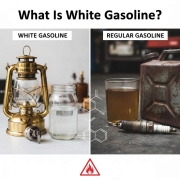
However, certain highly-refined naphtha products, like “white gas,” are used as specialized fuels for camping stoves and lanterns. Furthermore, in controlled industrial or advanced research engines, low-octane naphtha is being explored as a potential fuel for new high-efficiency combustion strategies.
Is Naphtha Explosive?
Like all highly volatile, flammable liquid hydrocarbons, naphtha is flammable, and its vapors can form explosive mixtures with air.
Naphtha itself is not a physical explosive, but its flammability is very high, and its vapor is heavier than air, meaning it can travel along the ground and collect in low areas. If an ignition source is present, a fire or flash explosion can occur, making it a significant fire and explosion hazard, especially in confined spaces.
Naphtha vs. Gasoline: Key Differences
Here is a summary of the main distinctions between these two critical petroleum products:
| Feature | Naphtha (e.g., Heavy Naphtha) | Gasoline (Petrol) |
| Primary Role | Intermediate product, Feedstock for petrochemicals & reforming, Solvent. | Finished consumer fuel for vehicles. |
| Carbon Atoms ($C_n$) | Generally C5 to C12 | Generally C4 to C12 |
| Octane Number (RON) | Low (typically 40 to 70) – requires processing. | High (typically 87 to 94+) – meets regulatory standards. |
| Refining Status | Less refined; precursor to other products. | Highly refined and blended final product. |
| Typical Boiling Point | Wider range: from 30°C to 200°C | Narrower range: from 30°C to 200° |
Frequently Asked Questions (FAQ)
What is another name for Naphtha?
The term “naphtha” is often used interchangeably with other names like petroleum ether, petroleum spirit, ligroin, or mineral spirits, depending on the specific boiling range and use.
Why is naphtha blended into gasoline?
Heavy naphtha is converted into high-octane “reformate,” a key blending component, while lighter, treated naphtha is added for specific volatility characteristics to meet fuel quality standards.
Is Naphtha dangerous?
Yes, it is highly flammable and toxic. Due to its volatility and the potential for its vapors to form explosive mixtures, it requires careful handling and storage.





Why is raw Naphtha unsuitable for use in modern car engines?
Raw Naphtha has a very low Octane number (typically 40-70 RON), which causes severe engine knocking (premature ignition) in modern spark-ignition engines, potentially leading to serious engine damage.