
Gasoline Octane Number: A Comprehensive Guide to Choosing the Right Gasoline
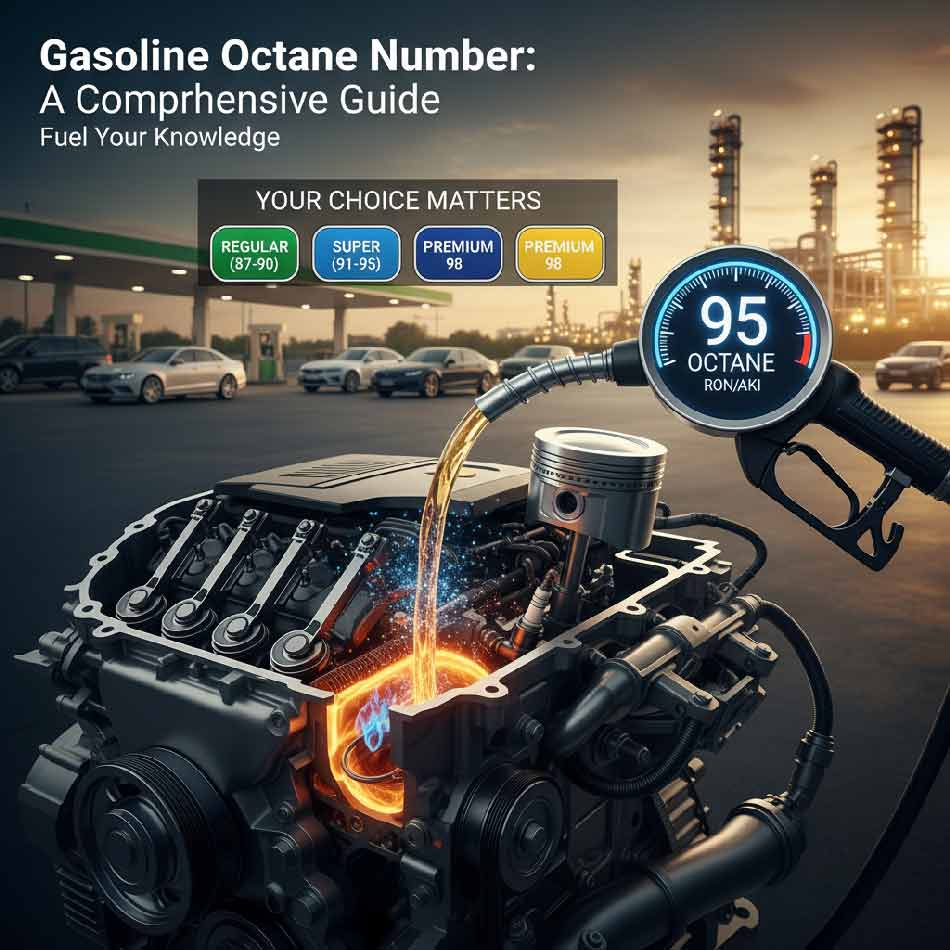
Gasoline is a vital fuel for countless vehicles and industries. But have you ever wondered what determines its quality, and why some types are more expensive than others? The answer lies in a key term: the octane number. This number is a crucial indicator of gasoline’s resistance to self-ignition, directly impacting engine health, vehicle performance, and even air pollution. In the world of petroleum product trading, a deep understanding of the octane number is essential not only for consumers but also for suppliers and traders.
What is Gasoline Octane Number? A Simple Understanding of a Critical Concept
The octane number is a measure of gasoline’s resistance to knocking or pre-ignition. Knocking occurs when the fuel-air mixture in the cylinder ignites spontaneously and explosively before the spark plug fires. This premature and uncontrolled combustion creates a “pinging” or “knocking” sound and can severely damage internal engine components over time.
Imagine gasoline as a spring. Higher-octane gasoline, like a stiffer spring, shows greater resistance to pressure and heat, taking longer to compress. This property ensures that the gasoline remains stable until the precise moment the spark plug fires, leading to controlled and optimal combustion.
Why is Octane Number Important for Your Vehicle? Preventing “Knock” and Preserving Engine Health
The importance of the octane number extends beyond a mere figure; it directly impacts your engine’s performance, your vehicle’s lifespan, and even your fuel consumption:
- Preventing Engine Knock: The primary and most crucial function of the octane number is to prevent knocking. Knocking not only produces an irritating sound but can also damage components like pistons, valves, and the crankshaft, leading to costly repairs in the long run.
- Increasing Engine Efficiency: Engines designed for appropriate gasoline perform best when combustion occurs completely and controllably. This means more power, better acceleration, and higher responsiveness.
- Optimizing Fuel Consumption: When gasoline burns correctly and efficiently, less energy is wasted, resulting in optimized fuel consumption. Modern engines with advanced fuel management systems can adjust ignition timing based on octane levels to prevent knock and improve efficiency.
- Reducing Emissions: Incomplete combustion caused by low octane can lead to higher pollutant emissions. Gasoline with the correct octane helps ensure more complete combustion, thereby reducing exhaust emissions.
Types of Octane Numbers and Global Standards (RON, MON, AKI)
Octane numbers are measured using different methods, each with varying laboratory conditions, which may lead to slightly different results:
- Research Octane Number (RON): This is the most common measurement method, conducted under laboratory conditions with low engine speed and light load. RON primarily indicates gasoline performance during starting or low-speed driving. The number typically displayed on fuel pumps in Iran and Europe is the RON.
- Motor Octane Number (MON): This method is measured under more severe conditions with high engine speed and heavy load. MON indicates gasoline performance in highway driving or under heavy load. The MON is typically lower than the RON.
- Anti-Knock Index (AKI) or Pump Octane Number (PON): This index, primarily used in North America, is the average of RON and MON: . This number attempts to provide a more realistic representation of gasoline’s resistance to knocking under actual driving conditions.
Differences Between Regular, Super, and Euro 4 Gasoline: Which is Best for Your Vehicle?
we typically encounter three main types of gasoline that differ in octane number and composition:
- Regular Gasoline: This type of gasoline usually has an octane number of 87 to 90 RON. It’s suitable for most older vehicles or those with simpler engines and lower compression ratios.
- Super Gasoline: With a higher octane number, typically 91 to 95 RON, Super gasoline offers greater resistance to knocking. This fuel is recommended for modern vehicles, luxury cars, turbocharged or supercharged engines, and vehicles with high compression ratios. Using Super gasoline in these vehicles prevents knocking and helps maintain engine efficiency and longevity.
- Euro 4/5 Gasoline: In addition to meeting higher emission standards (such as reduced sulfur content), this type of gasoline usually has an octane number of 90 to 95 RON. Its primary goal is to reduce pollutant emissions and improve air quality, but its octane level can be similar to Regular or Super gasoline.
Which gasoline is best for your vehicle? The answer lies in your vehicle’s owner’s manual. Vehicle manufacturers recommend a specific octane number for their engineered engines. Using gasoline with an octane lower than recommended can damage the engine. However, using gasoline with a higher octane than recommended is usually unnecessary and, in most cases, does not provide any significant benefit to the engine, only incurring additional costs. This is unless your vehicle’s fuel system can intelligently benefit from higher octane.
Octane Boosters: An Effective Way to Increase Gasoline Octane?
Octane boosters are chemical products that claim to increase the octane number of gasoline. These additives typically contain compounds like MTBE (Methyl Tertiary-Butyl Ether), MMT (Methylcyclopentadienyl Manganese Tricarbonyl), or alcohols.
Are they effective? Some high-quality boosters can slightly increase the octane number (usually 1 to 3 points). However, many boosters on the market do not have a significant impact or may even damage fuel system components in the long run.
When should you use them? The use of octane boosters is recommended only in specific situations:
- Unavailability of Suitable Gasoline: If you are forced to use gasoline with a lower octane than recommended for any reason.
- Older Engines: Some older vehicles accustomed to leaded gasoline might perform better with specific additives.
- Sports Cars or Tuned Vehicles: Some high-performance vehicles that require very high octane and have limited access to it.
Important Note: Before using any additive, conduct thorough research, review user feedback, and opt for products from reputable and well-known brands. The best approach is always to use gasoline with the appropriate octane recommended by your vehicle manufacturer.
Quality Gasoline Supply and Trading: The Role of Octane Number in Petroleum Product Business
In the petroleum product trading industry, the octane number is one of the most critical quality parameters for gasoline. For companies like Universal Trades that specialize in supplying and distributing gasoline, ensuring the quality and standard octane number is crucial.
- International and National Standards: Gasoline supplied in global and domestic markets must comply with specific octane number standards. These standards guarantee proper engine performance and reduced emissions. Non-compliance can lead to technical problems for consumers and legal penalties for suppliers.
- Quality Assurance in the Supply Chain: From refinery production to the end-consumer, continuous quality control of the octane number is essential. This includes periodic testing in storage tanks, during transportation, and at distribution terminals.
- Diverse Market Needs: In trading, understanding customers’ varying needs regarding gasoline octane is vital. Some industries or transport fleets may require gasoline with a specific octane, which the supplier must be able to provide.
- Market Competitiveness: Providing gasoline with a guaranteed octane number that meets current standards enables trading companies to solidify their position in the competitive petroleum products market.
At Universal Trades, relying on our extensive technical knowledge and experience in petroleum product supply and trading, we guarantee that the gasoline supplied to our customers meets the highest quality standards and has an octane number in line with market needs and vehicle manufacturers’ recommendations. For consultation and supply of various types of gasoline with different octane levels, please contact our experts.
Conclusion: Informed Choice for Performance and Durability
As comprehensively explored in this article, the octane number of gasoline is not just a figure; it’s a critical indicator that directly impacts your engine’s health, fuel efficiency, and even emission levels. Understanding the concept of knocking and how to prevent it by using appropriately octaned gasoline is key to maintaining optimal performance and extending the lifespan of your vehicle.
From regular gasoline for lower compression ratio vehicles to super gasoline for advanced and turbocharged engines, choosing the correct type of gasoline based on the vehicle manufacturer’s recommendation is the best approach. While octane boosters can be helpful in emergencies, nothing replaces the inherent quality of gasoline produced to recognized standards.
For us at Universal Trades, a deep understanding of the importance of the octane number is at the core of our commitment to supplying and trading petroleum products of the highest quality. We know that ensuring the standardized octane of gasoline at every stage of the supply chain not only benefits end-consumers but also contributes to the stability and competitiveness of the fuel trading industry.
By making informed choices and relying on credible sources for fuel supply, you can ensure that your vehicle’s engine operates under the best conditions and that you are contributing to environmental preservation. For any questions or consultation needs regarding the supply of various types of gasoline with appropriate octane, our expert team is ready to assist you.
Frequently Asked Questions (FAQ)
What is the Gasoline Octane Number?
Octane number is a measure of gasoline’s ability to resist knocking or premature, uncontrolled combustion in the engine cylinder. A higher number indicates greater resistance.
Why is the Octane Number Important for my vehicle?
Its primary function is to prevent engine knock, which can severely damage internal engine components. Using the correct octane enhances engine efficiency, performance, and longevity.
What is the difference between RON, MON, and AKI?
RON (Research Octane Number) is measured under mild conditions (common in Europe/Iran). MON (Motor Octane Number) is measured under severe conditions (high speed/load). AKI (Anti-Knock Index) is the average of RON and MON, mainly used in North America.
Which gasoline type (Regular or Super) is best for my car?
The best choice is the octane level recommended in your vehicle’s owner’s manual. Using lower than recommended octane can harm the engine, while using higher than recommended octane is usually unnecessary and costly.
Are Octane Boosters effective?
Some quality boosters can temporarily increase the octane rating by 1 to 3 points. However, they are generally recommended only for specific situations (e.g., when suitable gasoline is unavailable) and should not replace using standard, recommended fuel.






Is it always recommended to use octane supplements? When should you use them?
Thank you for bringing up this important topic! The use of octane boosters is not always recommended, as many of them do not have a significant effect or can even damage the fuel system in the long run. However, their use is recommended only under specific circumstances:
When gasoline with the appropriate octane is not available and you are forced to use lower-octane gasoline.
For some older engines that were accustomed to leaded gasoline.
For some sports cars or tuned vehicles that require very high octane and access to it is limited.
The best approach is always to use gasoline with the octane recommended by the vehicle manufacturer.