
Key Differences Between Fuel Grade and Calcined Grade Petroleum Coke

Petroleum Coke is a carbonaceous solid derived from oil refining processes, serving vastly different roles based on its grade. Understanding the distinction between Fuel Grade Petcoke and Calcined Grade Petcoke is essential for industries dealing with.
1. Fuel Grade Petroleum Coke (Green Coke)
-
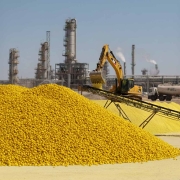
What it is: This is the unprocessed, raw form of coke (often called Green Coke) remaining after the coking unit processes heavy residues like Lub Cut and Fuel Oil. It contains high levels of sulfur, ash, and volatile matter.
-
Main Use: Energy production. Petroleum coke can be used as fuel due to its high calorific value.
-
Applications: Primarily burned in cement kilns, electric power plants, and industrial boilers.
-
Key Feature: Lower carbon purity, higher contaminants, and thus, lower cost compared to the calcined version.
2. Calcined Grade Petroleum Coke (CPC)
-
What it is: Calcined Grade Petroleum Coke (CPC) is the result of subjecting Green Coke to a calcination process—intense heating in a rotary kiln. This process removes moisture and volatile hydrocarbons, drastically increasing carbon purity and enhancing electrical conductivity. The difference between calcined and uncalcined coke is the purification and processing step.
-
Main Use: High-purity carbon feedstock, not combustion for energy.
-
Applications:
-
Aluminum Smelting: A vital component in manufacturing carbon anodes.
-
Steelmaking: Used as a carbon additive (Carbon Raiser).
-
Titanium Dioxide (TiO2) Production.
-
-
Key Feature: Extremely high carbon purity (98–99%), low volatile matter, and excellent electrical conductivity, making it suitable for electrode and anode applications.
Key Differences Summarized
| Feature | Fuel Grade Petcoke (Green Coke) | Calcined Grade Petcoke (CPC) |
| Processing | Raw, uncalcined | Processed (Calcined) |
| Purity | Lower carbon, high sulfur ([Sulfur]) & volatiles | Very High carbon (98%+), very low volatiles |
| Primary Role | Energy source | Carbon source/Feedstock |
| Main Industries | Power Plants, Cement | Aluminum, Steel, TiO2 |





The distinction between Fuel Grade and Calcined Grade petroleum coke is fascinating. I hadn’t realized how much the calcination process can elevate carbon purity and conductivity, especially for aluminum smelting. It’s interesting how the coke’s application completely shifts depending on that treatment.
Thank you so much for your wonderfully insightful comment! We’re delighted you found the distinction between Fuel Grade and Calcined Grade petroleum coke fascinating. We agree that the calcination process fundamentally transforms the coke, shifting its use from a simple fuel source to a high-purity industrial material vital for applications like aluminum smelting. We appreciate your engagement!