
Mineral Base Oil vs. Synthetic: Which One Should You Choose?
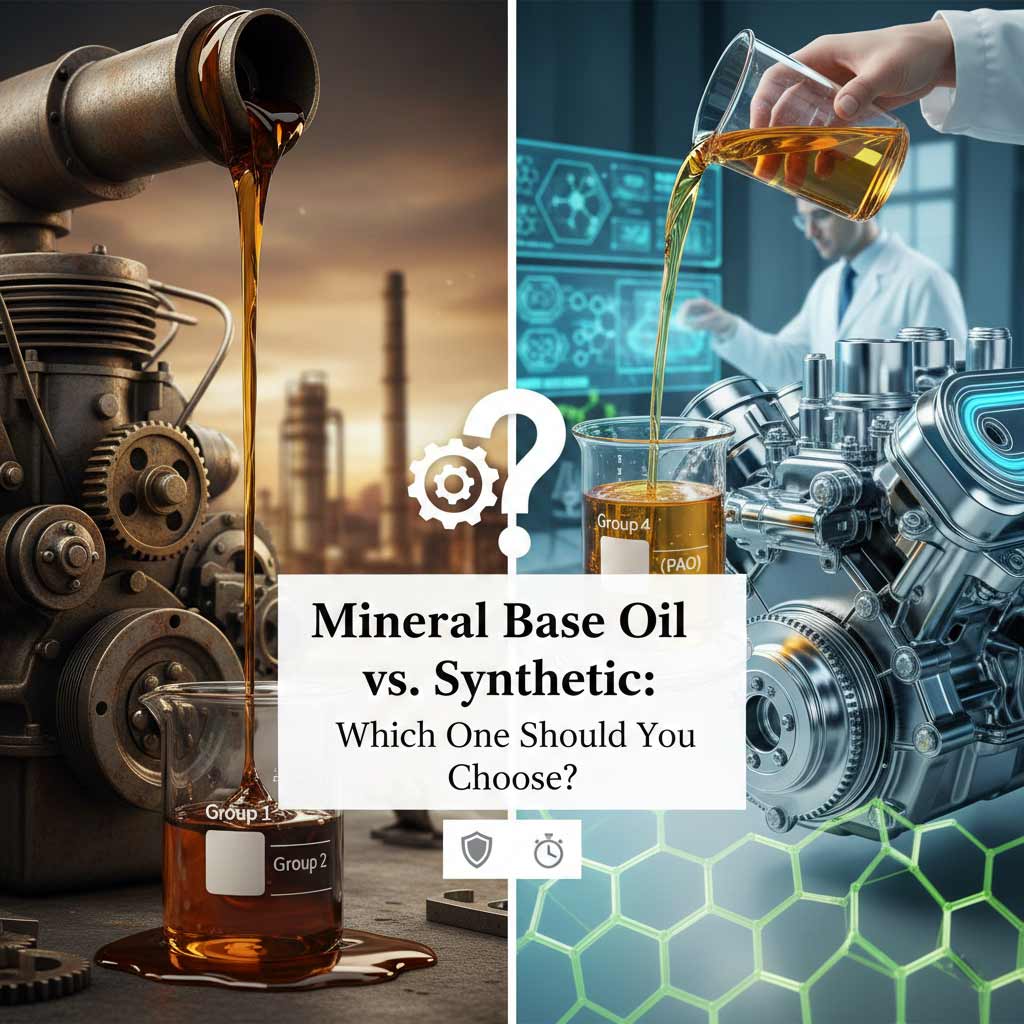
In the world of lubrication, the foundation of every high-performance lubricant is its base oil. Whether you are maintaining industrial machinery or a passenger car, understanding the difference between mineral base oil and synthetic base oil is crucial for longevity and efficiency.
While both serve the same primary purpose—reducing friction and heat—their chemical structures, performance limits, and production methods differ significantly.
What is Mineral Base Oil?
Mineral base oil is a natural product derived directly from the refinement of crude oil. Through the base oil production process, crude oil undergoes fractional distillation to separate various petroleum derivatives like bitumen, diesel, and kerosene.
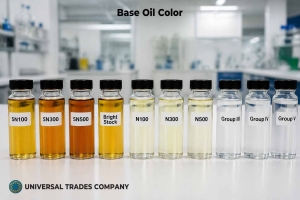
Mineral oils are generally categorized into Group 1 base oil and Group 2 base oil and Group 3 base oil based on their sulfur content and viscosity index. A common question arises: Is naphthenic base oil mineral or synthetic? Naphthenic oil is a type of mineral oil. For a deeper dive, you can read the comparison of paraffinic and naphthenic base oil.
Common Uses of Mineral Base Oil:
-
Older Vehicle Engines: Ideal for vintage engines with seals that might leak if exposed to synthetic detergents.
-
Break-in Oil: Used during the initial hours of a new engine’s life to allow parts to seat properly.
-
Industrial Lubricants: Widely used in hydraulic systems and gearboxes where extreme temperature fluctuations are not a concern.
-
Cost-Sensitive Applications: Since it is “natural” and requires less processing, it is the most economical choice.
What is Synthetic Base Oil?
Synthetic base oil is engineered in a laboratory. Unlike mineral oil, which contains a mix of different sized molecules and impurities, synthetic oil is built molecule-by-molecule to be uniform. This category includes Group 4 base oil (PAOs), and Group 5 base oil (Esters and others).
Why use Synthetic?
Synthetic oils are designed to withstand extreme heat without breaking down and stay fluid in freezing temperatures. They are essential for modern, high-performance engines and specialized industrial tasks.
Mineral vs. Synthetic: Comparison, Advantages, and Disadvantages
When deciding between the two, it often comes down to a trade-off between cost and performance. Synthetic oil generally has a longer useful life and provides better protection, but it comes at a higher price point.
| Feature | Mineral Base Oil | Synthetic Base Oil |
| Origin | Natural (Refined Crude) | Lab-engineered (Man-made) |
| Molecular Structure | Non-uniform | Uniform and stable |
| High Temp Stability | Moderate (Tends to oxidize) | Excellent |
| Low Temp Flow | Thickens quickly | Remains fluid |
| Price | Affordable | Premium |
| Change Interval | Shorter | Longer |
Advantages and Disadvantages
Mineral Base Oil
-
Pros: Cost-effective; compatible with older seals; widely available.
-
Cons: Higher sulfur and impurities; breaks down faster under stress; poor performance in extreme cold.
Synthetic Base Oil
-
Pros: Superior engine protection; reduces friction better; lasts 2-3 times longer than mineral; handles extreme heat.
-
Cons: Expensive; not always necessary for simple, low-stress machinery.
Frequently Asked Questions
What happens if we use mineral base oil instead of synthetic?
If your engine or machine specifies synthetic oil, using mineral oil can lead to premature wear, sludge buildup, and potential engine failure. The mineral oil will break down much faster than the system expects, leaving vital components unprotected.
What happens if we use synthetic base oil instead of mineral?
In most modern machines, this is an upgrade. However, in very old engines (classic cars), the superior cleaning properties of synthetic oil might wash away old deposits that were actually helping “seal” worn gaskets, potentially leading to leaks.
Does mineral base oil damage the engine?
No, provided the engine was designed for it and you change the oil frequently. It only becomes “damaging” if you exceed its shorter service life or use it in a high-heat turbocharged engine that requires synthetic.
Can synthetic and mineral base oils be combined?
Yes. This is exactly what “Synthetic Blend” or “Semi-Synthetic” oil is. While they can be mixed, you will lose the premium benefits of the pure synthetic oil by diluting it with mineral stock.








I never realized how important the base oil’s structure is in determining its application. It makes sense that synthetic oils would be the go-to for high-performance machinery, especially in extreme conditions.