
Hot Bitumen vs. Cold Bitumen: Which One Should You Choose?
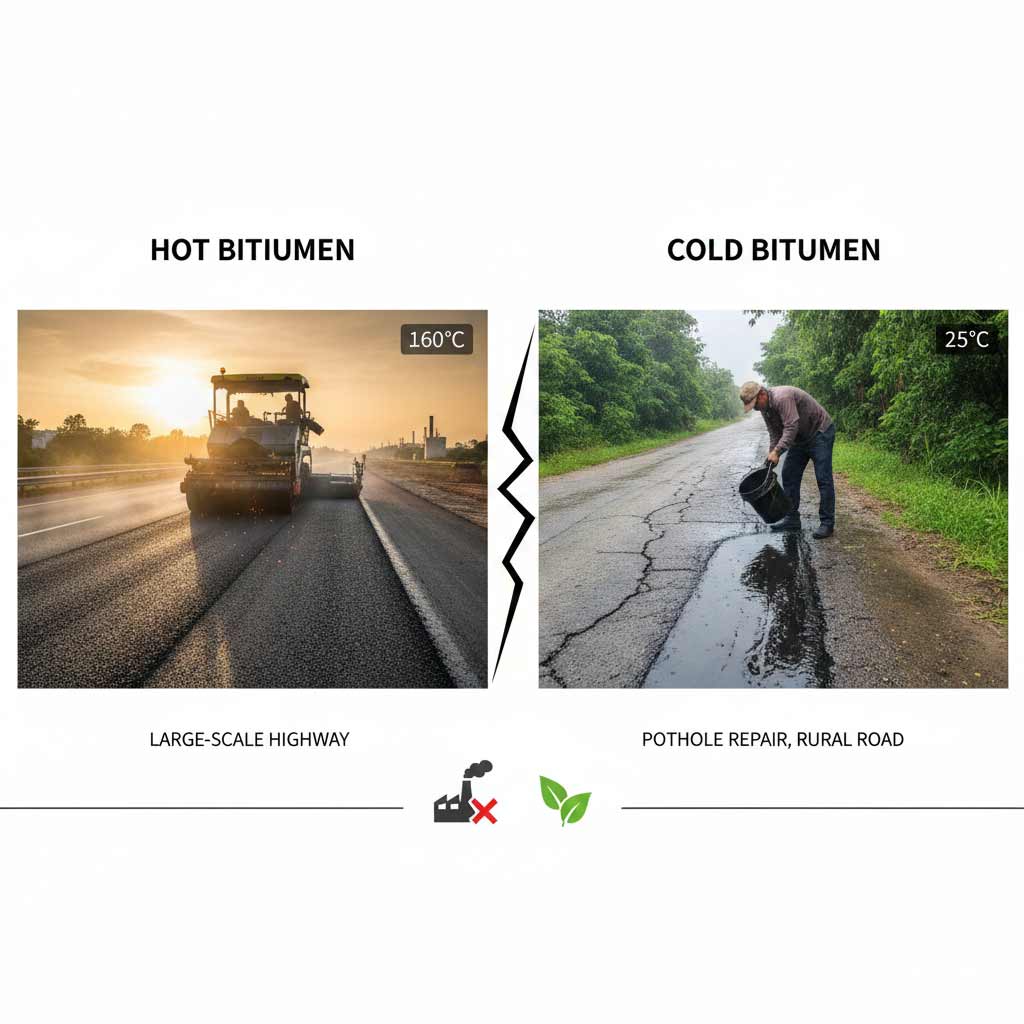
Bitumen is the backbone of modern road construction. However, the choice between hot and cold applications can significantly impact the durability, cost, and environmental footprint of a project.
Understanding the Basics
-
Hot Bitumen: This refers to bitumen that must be heated to high temperatures (usually above 150C) to become fluid enough for coating aggregates. It is the primary component of Hot Mix Asphalt (HMA).
-
Cold Bitumen: This includes Emulsion Bitumen or Cutback Bitumen that remains liquid at ambient temperatures. It is used to create Cold Mix Asphalt, which doesn’t require high-heat plants.
Production and Classification
The Bitumen production process differs vastly for both:
-
Hot Bitumen: Produced through the distillation of crude oil. It is categorized into grades like penetration or viscosity grades (e.g., 60/70).
-
Cold Bitumen: * Emulsion bitumen: Bitumen suspended in water with chemical agents.
-
Cutback bitumen: Bitumen dissolved in solvents like Gasoline or kerosene.
-

Comparison Table: Pros and Cons
| Feature | Hot Bitumen | Cold Bitumen |
| Durability | High; ideal for heavy traffic. | Moderate; best for repairs/low traffic. |
| Environment | High energy consumption/emissions. | Eco-friendly (especially emulsions). |
| Cost | Higher due to heating equipment. | Lower logistics and energy costs. |
| Application | Fast setting, high structural strength. | Versatile for remote areas and patches. |
Which is Better?
There is no “better” overall—it depends on the Bitumen applications. For highways and runways, Hot Bitumen is superior. For rural roads, maintenance, or wet climates, Cold Bitumen is more efficient.






Thanks for the excellent article. For repairing potholes during winter or in rainy weather, is it better to use cold bitumen or hot bitumen?
Great question, Chloe! In rainy or cold conditions, cold bitumen (especially bitumen emulsion) is much better. Hot bitumen cools down and hardens too quickly when it touches a cold or wet surface, leading to poor adhesion.