
Lumpy Sulfur and Its Applications

Sulfur, also known as brimstone, is a bright yellow, odorless, brittle, non-metallic element represented by the symbol S and atomic number 16. It is a vital industrial chemical and is essential for all life, often found in nature as pure element or as sulfide and sulfate minerals.
Types of Sulfur
Sulfur is processed into various forms to suit different industrial and agricultural needs. The main commercial types include:
-
Prilled Sulfur: Small, bead-shaped, uniform particles, often used in fertilizer blending.
-
Granular Sulfur: Larger, solid, spherical granules, popular for bulk handling and transportation.
-
Lumpy Sulfur (Crude Sulfur): Irregular, large, solid chunks, typically the form in which it’s mined or initially solidified.
-
Powdered Sulfur (Wettable Sulfur): Very fine particles, often used as a fungicide or soil amendment.
-
Liquid Sulfur (Molten Sulfur): Sulfur heated above 115°C, used for bulk transport and immediate industrial processing (e.g., sulfuric acid production).
Comparison: Granular vs. Lumpy Sulfur
While both forms are solid, their physical characteristics make them suitable for different applications and handling methods.
| Feature | Granular Sulfur | Lumpy Sulfur (Crude) |
| Particle Size & Shape | Uniform, spherical granules (typically 2-4 mm) | Irregular, large, non-uniform chunks |
| Handling | Excellent flow, easy to convey and load | Difficult to convey, requires heavy machinery |
| Dust Generation | Low dust (safer for handling and environment) | Higher dust potential during crushing/handling |
| Purity | Often higher due to subsequent processing | Varies, can contain impurities (crude form) |
| Primary Use | Fertilizers, exports, long-distance transport | Feedstock for in-house melting, sulfuric acid plants |
Focus on Lumpy Sulfur
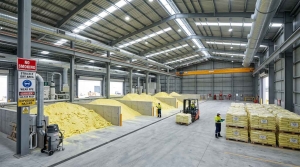
Lumpy sulfur, often referred to as crude sulfur or run-of-mine sulfur, is typically the raw or initial form.
Types of Lumpy Sulfur
The classification of lumpy sulfur is generally based on its source and purity:
-
Mined/Frasch Process Sulfur: Highly pure (often >99.9\%), solidified after extraction.
-
Recovered/Refinery Sulfur: Sulfur recovered from natural gas or petroleum (by-product of H₂S removal). It is usually solidified into a block and then broken into lumps.
-
Volcanic/Surface Sulfur: Sulfur collected directly from volcanic deposits, often with lower purity and requiring more processing.
When is Lumpy Sulfur Used Most?
Lumpy sulfur is most predominantly used when:
-
Bulk Melting is Required: It serves as the direct feedstock for plants that melt sulfur to produce sulfuric acid ( H2 SO4) or carbon disulfide.
-
Local Processing is Cheaper: When the cost of converting the lumps into granules or prills is high, the lumps are shipped directly to the processing facility.
-
Long-Term Storage: Large blocks or lumps are sometimes stored in reserve piles as they are less susceptible to degradation than fine powders.
Can Lumpy Sulfur Be Turned into Powder?
Yes, absolutely. Lumpy sulfur must be converted into smaller, more manageable forms for most applications, especially in agriculture (fungicides, soil amendments) and fine chemical production.
The process involves milling or grinding the lumps:
-
Crushing: Large lumps are first broken down into smaller pieces using a jaw or cone crusher.
-
Grinding/Milling: The smaller pieces are then fed into a hammer mill, ball mill, or roller mill to achieve the required fineness (e.g., passing through a 200 or 325 mesh screen).
-
Screening: The resulting powder is sieved to ensure uniform particle size.
Sulfur and Human Health: Is it Poisonous?
Elemental sulfur is generally not considered poisonous to humans. It is an essential element, and sulfur compounds (like sulfates and sulfites) are common in food.
However, certain sulfur compounds are highly toxic:
-
Hydrogen Sulfide (H2 S): A highly toxic gas that can be fatal even at low concentrations, often smelling of rotten eggs.
-
Sulfur Dioxide (SO2): A toxic gas often released from burning sulfur, which is a respiratory irritant.
Sulfur in Food and Health
Sulfur is a macromineral vital for life. It is a key component of two essential amino acids: methionine and cysteine, which are critical for protein structure, enzyme function, and detoxification.
Foods that contain Sulfur:
-
Alliums: Onions, garlic, leeks (contain powerful organosulfur compounds).
-
Cruciferous Vegetables: Broccoli, cauliflower, cabbage, Brussels sprouts.
-
Protein Sources: Eggs (especially the yolk), meat, poultry, fish.
-
Nuts and Seeds: Particularly walnuts and sunflower seeds.
Is it bad for the body? No. Sulfur is essential. Deficiency can impact protein synthesis and liver function. However, excessive intake of sulfur-containing additives (like sulfites in wine or dried fruit) can trigger allergic or asthmatic reactions in sensitive individuals, but this is distinct from sulfur in natural food proteins.
Comprehensive Sulfur Type Comparison Table
| Sulfur Type | Form/Appearance | Primary Use Case | Key Advantage |
| Lumpy | Large, irregular, solid chunks | Sulfuric acid production feedstock | Lowest processing cost initially |
| Granular | Uniform, spherical granules | Fertilizer blends, bulk export | Excellent handling, low dust |
| Prilled | Small, uniform beads | Agricultural blending | Very fine and consistent application |
| Powdered | Very fine dust/particles | Fungicides, soil pH adjustment | Highest surface area, quick reaction |
| Liquid (Molten) | Hot liquid | Immediate industrial processing | Transport efficiency, ready for reaction |
Conclusion
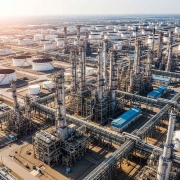
In conclusion, as we have explored, Lumpy Sulfur, despite its crude and initial form, plays the role of a vital industrial raw material. The processing of sulfur, which often begins in its lumpy form, converts it into more useful products like granular and powdered sulfur used across diverse sectors, including agriculture and chemical manufacturing. Crucially, a vast portion of this commercial sulfur is recovered during the refining and processing of petroleum products and gas, specifically from fuels such as gasoline, kerosene, and diesel (gasoil). This cements sulfur’s status as a strategic by-product of the oil industry. Beyond chemical applications, sulfur is also utilized in the production of asphalt and bitumen to enhance road-paving properties, further underscoring its indispensable link to the oil and gas value chain. In summary, sulfur, whether in its lumpy state or processed forms, is a cornerstone of sustainable development across various industries, from agriculture to infrastructure.





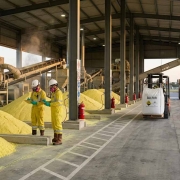


Why do large acid production plants prefer buying lumpy sulfur over granular sulfur?
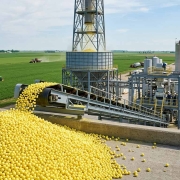
The main reason is cost. Lumpy sulfur undergoes less processing than granules and is therefore cheaper. Since large sulfuric acid plants have their own internal melting and purification systems, buying the raw form (lumps) is more economical for them.