
Natural vs. Refinery Bitumen: A Comprehensive Guide to Choosing the Right Bitumen

Bitumen is a hydrocarbon, paste-like, black to dark brown, semi-solid, high-viscosity material that is typically solid at ambient temperature but transforms into a paste and then a liquid as temperature increases. Key properties of this material include impermeability to water and moisture, high adhesion, and resistance to acids, bases, and salts, making it a vital component in various industries.
The significance of bitumen in diverse industries is remarkable. The majority of global bitumen consumption, approximately 85% to 90%, is dedicated to road construction and paving, where bitumen acts as a binder for aggregate particles in asphalt. Additionally, bitumen is used in waterproofing buildings (such as roofing, basements, and tanks), producing waterproofing membranes (Isogum) and bitumen-soaked burlap, paint and coating industries (due to resistance to temperature changes and corrosion), paper manufacturing (for protective packaging), and even as an electrical insulator.
The bitumen industry has evolved over centuries beyond traditional applications, experiencing significant technological advancements. The introduction of Polymer Modified Bitumen (PMB) and Warm Mix Asphalt (WMA) are examples of these developments that have dramatically improved the quality and durability of infrastructure. This evolution in bitumen production signifies a continuous movement in the industry towards achieving higher-performance materials and greater adaptability to modern engineering challenges. This trend extends beyond merely producing new types of bitumen; it moves towards improving properties to overcome the limitations of traditional bitumens, such as temperature sensitivity or durability. This indicates that bitumen is not just a raw commodity but a strategic material whose quality directly impacts the durability and efficiency of national and industrial projects.
Bitumen is generally divided into two main categories: natural bitumen (mineral), which is found naturally in nature, and refinery bitumen (petroleum), which is produced from the distillation of crude oil in refineries. A precise understanding of the differences in origin, properties, production process, and applications of each of these two types of bitumen is crucial for professionals and decision-makers in related industries. This in-depth understanding allows them to select the appropriate bitumen based on the project type, climatic conditions, budget, and technical requirements, thereby achieving optimal performance and economic efficiency.
What is Natural Bitumen? Understanding its Origin and Formation
Natural bitumen, sometimes referred to as mineral bitumen, Gilsonite, or Uintaite, is a solid, black, lightweight organic material naturally formed from the hardening of crude oil over millions of years under high pressure and heat in underground mines. This complex geological process involves three main stages: first, the death of living organisms in swamps and ponds; then, the sedimentation of their remains and being covered by deposits; and finally, chemical changes and fermentation of the remains under high pressure and temperature and in the absence of oxygen over time, leading to the conversion to oil, bitumen, or kerogen. Prominent examples of natural bitumen sources include Behbahan Bitumen Lake in Iran and Trinidad Pitch Lake in America. Gilsonite, as crude oil hardened by pressure, is considered the purest output of a natural bitumen mine and is found as black, shiny lumps in vertical veins on the Earth’s surface, extracted with modern mining equipment.
Specific Physical and Chemical Properties of Natural Bitumen
Natural bitumen possesses unique physical and chemical properties that distinguish it from refinery bitumen:
- High Sulfur Content: Mineral bitumens have higher sulfur content than petroleum bitumens; this amount can vary up to 4% or more. For instance, Trinidad mineral bitumen has 3.8% sulfur. Gilsonite’s chemical composition generally includes 1% to 5% sulfur.
- Presence of Mineral Impurities (Ash): Mineral bitumens usually contain a small percentage of mineral impurities, including ash (approximately 1% on average). In Gilsonite, the lower the ash content (e.g., 5% ash versus 10% ash), the higher the quality of the bitumen and the better its performance.
- Lower Oil Content: The oil content in natural bitumens is significantly lower than in petroleum bitumens; while oil can constitute up to 70% of the weight of petroleum bitumens.
- Higher Acidity and Saponification Value: The acid content and saponification value in natural bitumen are higher than in petroleum bitumen.
- Greater Stability Against UV Radiation and Erosion (Higher Durability): Natural bitumens show higher durability in asphalt pavements and waterproofing coatings compared to petroleum bitumens. Gilsonite offers high resistance in very high-temperature environments and against moisture and ultraviolet radiation.
- Varying Penetration Grade and Hardness Depending on Source: The softening point of natural bitumens can range from 130 to 250 degrees Celsius. Gilsonite has a melting point between 160 and 220 degrees Celsius.
- Other Features: Natural bitumen has high compatibility with petroleum materials, boasts high purity (especially Gilsonite), contains high amounts of asphaltenes and nitrogen, exhibits excellent solubility in organic solvents, shows high hydrophobicity and excellent luster, and has high resistance to acidic and basic substances. However, in lump form, it can be brittle. The quality of natural bitumen improves with higher solubility and finer mesh sizing (smaller particle size).
Major Natural Bitumen Mines in the World and Iran
The largest natural bitumen reserves in the world are currently located in Canada, Venezuela, and Oman. Iran is also known as the third richest country in terms of natural bitumen mines, holding over 15% of the total global reserves of this valuable mineral. The largest natural bitumen mine in the Middle East is located in Ilam Province, Iran.
Most active bitumen mines in Iran are located in the western regions of the country, including Ilam, Kermanshah, Khuzestan, and Lorestan provinces. Kermanshah Province, especially Gilan-e Gharb County, has high-quality mines, with over 70,000 tons of natural bitumen extracted and exported annually. Other important regions with natural bitumen mines in Iran include Pataq and Goshan in Kermanshah, Pishkooh and Posht-e Kooh of Lorestan (Gheiran Block), and near Bileh Savar Moghan (Ghireh Darreh).
Despite Iran’s vast natural bitumen reserves, the processing of this material domestically is weak, with over 90% exported raw to other countries. Meanwhile, processed products from the same bitumen are re-imported into Iran at exorbitant prices. This situation highlights a tremendous opportunity for domestic value-added and reduced reliance on imported finished products. By developing domestic processing technologies, the economic value of this natural resource can be significantly increased, contributing to industrial development and job creation in the country.
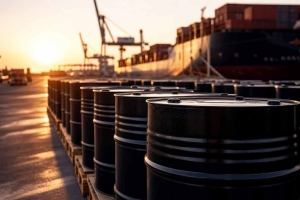
Major Industrial Applications of Natural Bitumen
Natural bitumen, due to its unique properties, finds application in various industries:
- Special Asphalts and Road Construction: Gilsonite is used as an asphalt binder modifier to improve the performance and durability of asphalt pavements. This material increases asphalt’s resistance to deformation, cracking, and rutting and prevents the effects of moisture. Furthermore, using mineral bitumen in road construction can reduce asphalt paving costs compared to petroleum bitumen.
- Oil and Gas Industries: Natural bitumen is highly effective for insulating oil and gas pipelines to prevent corrosion and decay. It is also used as an additive in drilling fluids to stabilize boreholes, reduce fluid loss, and prevent shale swelling. In oil well cementing, it is used as an additive to improve compressive strength and reduce cement permeability.
- Printing Ink: Gilsonite is used as a black pigment and resin in printing inks, providing high gloss, fast drying, and excellent adhesive properties.
- Paint, Resin, and Coating Industries: This material is used in paints and coatings to improve durability, water resistance, and adhesion, protecting metal surfaces, wood, and other materials.
- Foundry: It is used as an additive in foundry sands to improve strength and surface finish, and also as a core binder in the production of sand cores.
- Construction and Building Materials: Used in the production of waterproofing membranes for roofs, basements, and other structures, and also in adhesives and sealants with strong bonding properties and flexibility. Gilsonite is also used as an additive in concrete to improve its strength, durability, and resistance to water and chemicals.
- Other Applications: Production of coke (as fuel), furnace fuel, medical industry, as filler and reinforcing agent in rubber and plastics, in the manufacture of battery electrodes, and in the production of friction materials such as brake pads.
Natural bitumen, despite impurities and the need for processing, possesses unique properties such as high resistance to UV and erosion, greater durability, and a higher softening point. These characteristics make it superior for specific applications such as crack-resistant asphalts, insulation of oil and gas pipelines in corrosive environments, and protective coatings requiring high chemical stability and durability. This indicates that natural bitumen is not a direct competitor to refinery bitumen in all applications but rather complements it, offering a significant competitive advantage in niche markets that demand exceptional performance under harsh conditions.
What is Refinery Bitumen? The Production Process in Refineries
Refinery bitumen, also known as petroleum bitumen or distilled bitumen, is a byproduct of the crude oil distillation process in refineries. This material is obtained from the residue after separating lighter and more valuable crude oil products such as gasoline, diesel, kerosene, and naphtha.
Production Process in Refineries
The production process of refinery bitumen involves several main and controlled stages:
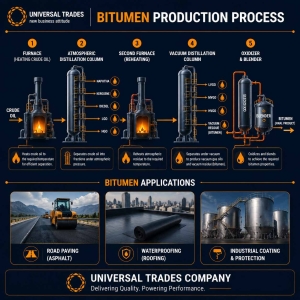
- Atmospheric Distillation: In this stage, crude oil is heated in a furnace to about 350 degrees Celsius and then enters an atmospheric distillation column. In this column, lighter components such as propane and butane are vaporized and separated. Middle sections such as naphtha, kerosene, and gas oil are also removed from the column for further processing, and the heavier, non-volatile portion remains at the bottom of the column.
- Vacuum Distillation: The heavy residue from atmospheric distillation is heated to about 425 degrees Celsius and enters a vacuum distillation column. In this stage, by applying vacuum pressure, the boiling point of heavier compounds is reduced, preventing thermal cracking of molecules. As a result, the last traces of lighter components (such as gas oil) are separated, and “vacuum bottom,” which is the main raw material for bitumen production, remains at the bottom of the column.
- Oxidation (Air Blowing): The vacuum bottom obtained from vacuum distillation can be transferred to the oxidation unit. In this unit, by blowing mild air through it at high temperatures (around 280 degrees Celsius), bitumen molecules react with oxygen to produce more asphaltene molecules. This process leads to an increase in bitumen’s viscosity and softening point and a decrease in its penetration grade. This method is used to produce blown bitumen.
- Other Methods: Other methods such as solvent deasphalting, which involves adding propane or butane to the vacuum residue, and blending, where different types of bitumen are mixed to achieve desired properties, are also used to produce refinery bitumen.
The refinery process of bitumen allows for precise control over the physical and chemical properties of the final product. This controllability leads to the mass production of standardized bitumen with various grades. This engineered capability makes refinery bitumen ideal for large-volume and extensive applications like road construction, which require uniformity and predictable performance.
Types of Refinery Bitumen
Refinery bitumen is produced in various types, each with its specific properties and applications:
- Pure/Penetration Grade Bitumen: This type of bitumen is obtained directly from the refinery and is classified based on its hardness (penetration grade). Penetration grade is the depth a standard needle penetrates into the bitumen at 25 degrees Celsius under a 100-gram load for 5 seconds. The lower the penetration grade, the harder the bitumen. Common grades in road construction range from 25 to 200. Grades 60/70 and 85/100 are among the most widely used in Iran. This type of bitumen is primarily used in hot mix asphalt production.
- Blown Bitumen/Oxidized Bitumen: Produced by blowing air through pure bitumen at high temperatures. This process increases hardness, softening point (80 to 150 degrees Celsius), and reduces temperature sensitivity. It also has less ductility. Blown bitumen is used in pipe insulation, roofing, roofing sheets, and car batteries.
- Cutback Bitumen: Obtained by mixing pure bitumen with volatile hydrocarbon solvents (such as gasoline or kerosene) to reduce its viscosity and keep it fluid at lower temperatures. Its setting speed depends on the type of solvent. This bitumen is used in cold asphalt, surface dressings, protective coatings, and macadam.
- Emulsion Bitumen: A mixture of bitumen, water, and an emulsifying agent. This bitumen can be used as a free-flowing liquid without the need for high heat, and bitumen remains on the surface as water evaporates or its electrical charge is neutralized. Its advantages include reduced environmental pollution and use in cold asphalt in wet environments or waterproofing.
- Polymer Modified Bitumen (PMB): Produced by adding polymeric compounds (such as styrene-butadiene copolymers, natural and recycled rubber polymers, and thermoplastic polymers) to pure bitumen. The aim of this modification is to improve the mechanical properties of bitumen, including integrity, fracture resistance, ductility, greater durability, better temperature tolerance, lower maintenance costs, and better resistance to water and oxidation. This bitumen is also considered a more environmentally friendly choice.
Physical and Chemical Properties of Refinery Bitumen
Refinery bitumen has specific properties that make it suitable for a wide range of applications:
- Lower Sulfur Content: Petroleum bitumens have low sulfur content, typically less than 1%.
- Higher Purity (Lower Impurities): Petroleum bitumen is purer and has fewer mineral impurities (ash) than natural bitumen.
- Higher Oil Content: Oil can account for up to 70% of the weight of petroleum bitumens, a lower amount in natural bitumen.
- Lower Acidity and Saponification Value: The acid content and saponification value of petroleum bitumen are lower than those of mineral bitumens.
- Greater Temperature Sensitivity: Refinery bitumen (pure) is a thermoplastic material that is sensitive to temperature changes; it softens at high temperatures and hardens at low temperatures. This sensitivity is lower in blown bitumen. Its durability is less than that of natural bitumen.
- Other Features: Specific gravity between 0.97 and 1.02, a mixture of heavy organic molecules (asphaltenes and maltenes which affect hardness and adhesion respectively), no specific melting, boiling, and freezing points (which is why a softening point is defined for it), chemically inert, insoluble in water, and slow resistance to oxidation which contributes to its lifespan.
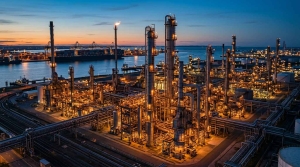
Main Industrial Applications of Refinery Bitumen
Refinery bitumen, due to its mass production capability and controllable properties, is used in various industries, the most important of which are:
- Road Construction and Asphalt Paving: The largest consumption of refinery bitumen (approximately 90%) is in the construction of roads, highways, airports, and runways. This application includes creating adhesion between different pavement layers, sealing existing and old asphalts, and mixing with aggregates in hot and cold asphalt production.
- Building Waterproofing: Refinery bitumen is widely used in building waterproofing, including roofing, basements, walls, bitumen-soaked burlap, and other structures.
- Other Applications: Production of roofing sheets, car batteries, and coatings.
Refinery bitumen, due to its direct price dependence on crude oil, is affected by global market fluctuations and geopolitical factors. This dependence leads to price volatility that can impact the costs of large projects and highlights the need for risk management strategies in bitumen procurement. However, the development of Polymer Modified Bitumen (PMB) demonstrates the refinery industry’s efforts to overcome the inherent limitations of pure bitumen (such as temperature sensitivity) and compete with the superior properties of natural bitumen in terms of durability and resistance. These innovations ensure the future of refinery bitumen in high-performance applications.

Comparison of Physical and Chemical Properties of Natural and Refinery Bitumen
The table below serves as a quick visual reference, summarizing key information and main differences between the two types of bitumen at a glance. This helps users quickly compare desired properties and gain a comprehensive understanding of each bitumen type.
Major Industrial Applications of Natural Bitumen
Natural bitumen, due to its unique properties, finds application in a wide range of industries, many of which extend beyond traditional bitumen uses:
- Asphalt Modifier and Road Construction: Gilsonite, as an asphalt binder modifier, significantly improves the performance and durability of asphalt pavements. This material increases asphalt’s resistance to deformation, cracking, and rutting, making roads more durable and long-lasting. It also prevents the effects of moisture on asphalt mixtures. Using mineral bitumen in road construction can help pave roads at a lower cost than petroleum bitumen, as its higher durability leads to reduced long-term maintenance costs.
- Oil and Gas Industries: Natural bitumen holds a special place in this industry. It is used to insulate oil and gas pipelines to prevent their corrosion and decay. It is also used as an additive in drilling fluids to stabilize boreholes, reduce fluid loss, and prevent shale swelling. In oil well cementing operations, it is used as an additive to improve compressive strength and reduce cement permeability.
- Ink and Coating Industry: Gilsonite is used as a black pigment and resin in printing inks, providing high gloss, fast drying, and excellent adhesive properties. In paints and coatings, it is also used to improve durability, water resistance, and adhesion, protecting metal surfaces, wood, and other materials.
- Foundry: Natural bitumen is used as an additive in foundry sands to improve the strength and surface finish of metal castings. It is also used as a core binder in the production of sand cores, providing excellent thermal stability and reducing casting defects.
- Construction and Building Materials: Used in the production of waterproofing membranes for roofs, basements, and other structures, providing excellent water resistance and high durability. It is also used in adhesives and sealants for construction applications, possessing strong bonding properties and flexibility. As an additive in concrete, it is also used to improve its strength, durability, and resistance to water and chemicals.
- Other Applications: Production of coke (as fuel), furnace fuel, in the pharmaceutical industry, as a filler and reinforcing agent in rubber and plastic products (increasing mechanical properties and UV resistance), in the manufacture of battery electrodes (to improve conductivity and performance), and in the production of friction materials such as brake pads and clutch facings.
Main Industrial Applications of Refinery Bitumen
Refinery bitumen, due to its mass production capability and controllable properties, is used in various industries, the most important of which are:
- Road Construction and Asphalt Paving: The largest consumption of refinery bitumen, approximately 90% of total global production, is in road construction. This bitumen is used as the primary binder in asphalt production for roads, highways, airports, and runways. Its applications include creating adhesion between different pavement layers, sealing existing and old asphalts, and mixing with aggregates in hot and cold asphalt production.
- Building Waterproofing: Refinery bitumen is widely used in building waterproofing, including roofing, basements, walls, and bitumen-soaked burlap for services and tanks. Specific types such as blown bitumen and emulsion bitumen are also used for this purpose.
- Other Applications: Refinery bitumen is also used in the production of roofing sheets, car batteries, and coatings. It is also utilized in the paper industry for protective packaging and in paint manufacturing as a vital and economical component.
Advantages and Disadvantages of Each Bitumen Type
Choosing between natural and refinery bitumen requires a precise understanding of the advantages and disadvantages of each:
Natural Bitumen:
Advantages:
- High Durability and Erosion Resistance: Natural bitumen, especially Gilsonite, exhibits very high resistance to temperature changes, weather conditions, UV radiation, and erosion, leading to longer durability and lifespan in applications such as asphalt and insulation. Its durability in asphalt pavements and waterproofing coatings is greater than that of petroleum bitumens.
- Resistance to Corrosion and Decay: Due to its excellent insulating properties, it can easily insulate oil and gas pipelines and prevent their corrosion and decay.
- Special Adhesive Properties and Compatibility with Petroleum Derivatives: Has very high compatibility with petroleum derivatives and provides excellent adhesion.
- Chemical Stability and High Softening Point: Has a high molecular weight and nitrogen content, and its softening point can range from 130 to 250 degrees Celsius, indicating its high thermal stability.
- Natural Waterproofing Insulator: Known as the best natural waterproofing insulator.
- Easier and Cheaper Production of Modified Bitumen: Has high blendability with petroleum bitumen and can be used without the need for aeration to produce standard road construction bitumens.
Disadvantages:
- Presence of Impurities: Mineral bitumens, unlike petroleum bitumens, contain various impurities such as ash (approximately 1% or more) and mineral substances. The quality of shipments can vary if extraction is not done properly.
- High Sulfur Content: Contains a higher amount of sulfur (usually over 3%) compared to petroleum bitumen.
- Lower Oil Content: Has less oil, which may affect some of its physical properties.
- Less Variation in Properties: Its properties can vary depending on the mineral source and has less controllability in the production process.
- Needs Processing for Some Applications: Requires processing to achieve precise technical specifications in certain applications.
- Higher Price (in some cases): The extraction and processing of natural bitumen can be more expensive than refinery bitumen.
Refinery Bitumen:
Advantages:
- High Purity and Lower Impurities: Refinery bitumen is purer and has fewer mineral impurities.
- Controllability of Properties in Production Process: The refinery process allows for precise control over the physical and chemical properties of the final product, leading to mass production of standardized bitumen with various grades.
- Easier Access and Mass Production: Due to its production from crude oil, it is more accessible, and mass production is possible.
- More Competitive Price: Due to mass production and industrial processes, it usually has a more competitive price than natural bitumen.
- Variety of Types: Includes pure, blown, cutback, emulsion, and polymer-modified bitumen, each optimized for specific applications.
Disadvantages:
- Temperature Sensitivity: Refinery bitumen is a thermoplastic material and exhibits greater sensitivity to temperature changes; it becomes softer at high temperatures and harder at low temperatures. This limits its performance in extreme weather conditions.
- Lower Durability Against Environmental Factors: Shows less durability against environmental factors compared to pure natural bitumen.
- Price Dependence on Crude Oil: Its price is highly dependent on global crude oil prices and factors affecting its supply and demand, leading to price fluctuations.
Factors Affecting the Price of Natural and Refinery Bitumen
The price of bitumen, whether natural or refinery, is influenced by several factors that are essential to understand for project planning:
Factors Affecting the Price of Natural Bitumen:
The price of natural bitumen (Gilsonite) is influenced by a complex set of factors that reflect its status as a mineral commodity with variable purity and supply chain. These factors include:
- Currency Fluctuations, International Sanctions, and Domestic Regulations: These macroeconomic and political factors directly impact the domestic and export prices of natural bitumen.
- Extraction and Mining Season: During rainy seasons, due to the impossibility of extraction, the purchase and sale of mineral bitumen are affected.
- Global Natural Bitumen Prices: This factor influences sales and pricing in international markets.
- Bitumen Analysis and Quality: Factors such as ash content (lower is better quality and higher price), solubility (higher is better quality), mesh sizing (finer is better quality), penetration grade, softening point, and carbon and nitrogen content all affect the quality and thus the price of Gilsonite.
- Form (Powder or Lump) and Packaging Method: Powdered bitumen usually has a different price due to more processing.
- Volume and Quantity of Bitumen: Purchasing in large volumes can affect the unit price.
- Bitumen Extraction Region: The quality and properties of natural bitumen vary depending on the mine and extraction region.
Factors Affecting the Price of Refinery Bitumen:
The price of refinery bitumen is primarily determined by the crude oil market, but other factors also influence it. These factors include:
- Crude Oil (Vacuum Bottom) Price: As the main feedstock for bitumen production, the price of crude oil is the most important factor determining the price of refinery bitumen. Fluctuations in Brent crude oil prices directly impact the price of petroleum derivatives, including bitumen.
- Supply and Demand: Domestic and global market conditions, bitumen demand, and supply influence its price.
- Production Costs: Increased costs of raw materials (vacuum bottom), labor wages, and transportation can affect bitumen prices.
- Government Policies: Mandated pricing, export tariffs, and subsidies can play a decisive role in the domestic bitumen market price.
- Quality and Type of Bitumen: The price of bitumen varies depending on its technical specifications (such as penetration grade, softening point, flash point, and solubility) and its type (pure, blown, cutback, emulsion). Higher quality bitumen has a higher price. Emulsion bitumens are generally considered the most cost-effective type of refinery bitumen.
- Brand and Manufacturer: More famous bitumen brands usually have higher prices.
- Method of Supply (Bulk or Drummed): Bulk bitumen is usually cheaper than drummed bitumen, especially for large projects.
- Exchange Rate and Inflation: Exchange rate fluctuations and inflation can also increase the price of bitumen in the domestic market.
The price of refinery bitumen in Iran’s oil products exchange is usually adjusted twice a week based on changes in vacuum bottom prices. This indicates a relatively transparent and standardized market for this commodity.

How to Choose the Right Bitumen for Your Project?
Choosing the right bitumen is a critical decision that impacts the durability, performance, and overall cost of a project. This choice depends on several factors:
Project Type:
- Road Construction: For road paving, refinery bitumen (especially pure bitumens with penetration grades 60/70 or 85/100) is most commonly used. In projects requiring high durability and resistance to cracking and deformation, polymer-modified bitumens (PMB) or natural bitumen (as a modifier) are recommended. For cold asphalt or in wet environments, emulsion bitumen or cutback bitumen is more suitable.
- Waterproofing: For waterproofing roofs, services, and tanks, soft bitumen (60/70) or blended refinery bitumen is common. Natural bitumen is also known as the best natural waterproofing insulator and is used in the production of waterproofing membranes and Isogum.
- Specialized Applications: For applications such as printing ink, drilling fluids, highly durable protective coatings, or additives in foundry, natural bitumen (Gilsonite) is the preferred option due to its specific chemical and physical properties.
Climatic Conditions:
- Hot Regions: In regions with high temperatures and direct sunlight, bitumens with a higher softening point and less temperature sensitivity are recommended. Blown refinery bitumen or natural bitumen are suitable due to their greater stability at high temperatures. Blended refinery bitumen is also used to prevent bitumen movement in hot regions.
- Cold Regions: At low temperatures, bitumen must maintain its flexibility to prevent cracking. Bitumens with a higher penetration grade or polymer-modified bitumens that have better resistance to low-temperature cracking are more suitable.
Budget:
- Refinery bitumen, due to mass production, usually has a more competitive price and is a suitable option for large projects with limited budgets. Emulsion bitumen is also considered one of the most cost-effective types of refinery bitumen.
- Natural bitumen, especially purer grades, may have a higher price, but its superior durability and performance can lead to reduced maintenance and repair costs in the long run.
Technical Requirements and Standards:
- Projects may require adherence to specific standards (such as ASTM, AASHTO, EN) that specify the type and grade of bitumen.
- In some cases, specific properties such as high resistance to chemicals, excellent adhesion, or UV resistance are required, which natural bitumen or polymer-modified bitumens can meet.
In summary, choosing the right bitumen is a multi-faceted decision-making process that must be carried out by carefully considering project needs, environmental conditions, and the advantages and disadvantages of both natural and refinery bitumen.
The Future of Natural and Refinery Bitumen in the Industry
The bitumen industry, both in the natural and refinery sectors, has a bright and sustainable future due to continuous global construction and the ongoing need for road and infrastructure repair and construction. The global bitumen market is growing and is projected to reach $126.96 billion by 2032. However, the industry also faces significant challenges that will shape its future trajectory.
Challenges:
- Environmental Concerns: The production and use of bitumen, especially refinery bitumen, are associated with significant environmental concerns due to greenhouse gas emissions, high energy and water consumption, and the production of pollutants such as volatile organic compounds (VOCs) and polycyclic aromatic hydrocarbons (PAHs). The extraction of bitumen from oil sands can also lead to extensive land degradation and water pollution.
- Crude Oil Price Fluctuations: Since refinery bitumen is derived from crude oil, fluctuations in crude oil prices directly impact bitumen production costs and final prices.
- Non-Renewable Nature: Bitumen is a non-renewable resource, creating increasing pressure to find sustainable and environmentally friendly alternatives.
Opportunities and Future Trends:
The bitumen industry is responding to these challenges through innovation and a focus on sustainability:
- Increased Use of Recycled Asphalt Pavement (RAP): The recycling of asphalt from old roads and roofing materials is increasing. This approach not only offers environmental benefits but also reduces costs. In the United States and Europe, over 20% of recycled materials are used in asphalt production, and road asphalt is 100% recyclable. The use of RAP reduces the need for virgin bitumen and aggregates.
- Development of Polymer Modified Bitumen (PMB): PMB has become a preferred choice for high-stress applications such as highways and airports due to its improved durability, elasticity, and resistance to deformation and cracking. These innovations are continuously improving the performance and cost-effectiveness of PMB, including through the use of recycled polymers.
- Shift Towards Bio-Based Bitumen: Research and development in bio-based alternatives to traditional bitumen are increasing. These bitumens are derived from renewable sources such as vegetable oils, algae, wood, or waste biomass and are a more sustainable option to reduce the carbon footprint of construction projects.
- Warm Mix Asphalt (WMA): These bitumens are produced and compacted at lower temperatures than traditional hot mix asphalt, leading to significant reductions in energy consumption and carbon emissions during the production, transportation, and compaction processes.
- Technological Innovations:
- Nanotechnology: The integration of nanomaterials into bitumen formulations to enhance road strength and resistance to wear and tear is revolutionizing the durability of modern road surfaces.
- Self-Healing Bitumens and AI-Optimized Mixes: Ongoing research into self-healing binders and AI-assisted mix optimization promises further advancements in bitumen performance.
Overall, given global investments in infrastructure development and increasing urbanization, the need for bitumen will continue. At the same time, the industry is moving towards more sustainable, higher-performing, and environmentally friendly solutions to address environmental and economic challenges. These developments are driving the bitumen industry towards sustainability and innovation.

Specialized Articles About Bitumen:
Bitumen 40/50 vs 60/70 Comparison | Comparison of applications, characteristics, advantages, and disadvantages of 40/50 and 60/70 bitumen grades.
Bitumen 60/70 vs 80/100 Comparison | Comparison of applications, properties, advantages, and disadvantages of 60/70 and 80/100 bitumen grades.
Most Commonly Used Bitumen Grades | Introduction and comparison of the most widely used bitumen grades, their advantages and disadvantages, and their share in the bitumen market.
Bitumen Shelf Life | Overview of the shelf life of different types of bitumen and factors affecting bitumen quality over time.
Important Bitumen Quality Tests | Introduction to the most important parameters that determine bitumen quality and the related laboratory tests.
Vacuum Bottom vs Bitumen | Comparison of the properties of vacuum bottom (bitumen feedstock) and finished bitumen.
Global Bitumen Price Forecast for 2026 | Analysis and forecast of global bitumen prices in international markets.
Top 10 Bitumen Producing Countries | Introduction to leading countries in the production of various types of bitumen.
Cold Mix vs Hot Mix Bitumen | Introduction to cold and hot bitumen types and comparison of their advantages and disadvantages.
Bitumen Refineries | Overview of the refining processes through which different types of bitumen are produced in refineries.
Conclusion
Bitumen, whether natural or refinery, as a vital hydrocarbon material, plays a pivotal role in infrastructure development and various industries. While refinery bitumen, a product of crude oil distillation, forms the backbone of modern road construction and waterproofing due to its mass production capability and controllable properties, natural bitumen, with its unique geological origin, offers inherently superior properties in terms of durability, UV resistance, and chemical stability.
Key differences between these two types of bitumen are evident in their origin, production process, chemical composition (such as sulfur, ash, and oil content), and physical properties (such as softening point and temperature sensitivity). Despite its greater sensitivity to temperature changes, refinery bitumen, through modified types such as polymer-modified bitumen, has been able to elevate its performance to higher levels and respond to more complex market needs. In contrast, natural bitumen, despite challenges such as inherent impurities and the need for specialized processing, maintains its competitive advantage in specific high-value-added applications requiring unparalleled durability and resistance (such as oil and gas pipeline insulation or printing ink).
Global Petroleum Trade Solutions | Universal Trades
As a reputable international petroleum trading enterprise, Universal Trades specializes in the reliable procurement, export, and supply chain management of high-grade petroleum commodities, refined fuels, and industrial feedstocks designed to meet rigorous global standards.










Given the detailed explanations in the article about natural bitumen and refinery bitumen, and the advantages and disadvantages of each, if I am an engineer responsible for designing and constructing an international airport runway in a region with extremely hot summers and intense sunlight, and relatively cold winters, which type of bitumen or combination thereof would you recommend to achieve the highest durability and resistance to wear from heavy aircraft traffic and severe temperature fluctuations? Please justify your choice based on the specific properties of the bitumen.
Your question presents a very challenging and critical scenario in road and runway engineering, requiring a precise and justified choice based on the characteristics of both types of bitumen. For an international airport runway under the specified conditions (very heavy aircraft traffic, extremely hot summers with intense sunlight, and relatively cold winters), my strong recommendation would be to use Polymer Modified Bitumen (PMB) as the primary binder, and if feasible, enhance it further by incorporating natural bitumen (Gilsonite) as a complementary modifier.
Justification for the Choice Based on Properties:
Primary Choice: Polymer Modified Bitumen (PMB):
Resistance to Deformation and Rutting from Heavy Traffic: As mentioned in the article, PMB significantly improves the mechanical properties of bitumen by adding polymers, including its resistance to permanent deformation. Aircraft traffic, especially during stopping and turning maneuvers, imparts very high shear stresses on the asphalt that conventional bitumen cannot withstand. PMB dramatically increases this resistance.
Resistance to Low-Temperature Cracking: In relatively cold winters, conventional asphalt can become brittle and suffer from thermal cracking. PMB addresses this issue by increasing the elasticity and flexibility of the bitumen at low temperatures.
Reduced Temperature Susceptibility: PMB exhibits less temperature sensitivity compared to pure refinery bitumen; meaning it softens less in heat and becomes less brittle in cold. This property is crucial for a region with severe temperature fluctuations.
Increased Durability and Reduced Maintenance Costs: By significantly improving resistance to rutting, cracking, and fatigue, the lifespan of the runway is extended, and the need for frequent, costly repairs is reduced.
Complementary Enhancement: Adding Natural Bitumen (Gilsonite) as a Modifier:
Exceptional Resistance to UV Radiation and Erosion: The article emphasizes that natural bitumen has very high resistance to UV radiation and erosion. In extremely hot summers with intense sunlight, the asphalt surface is continuously exposed to solar radiation and atmospheric elements. Adding Gilsonite can help the PMB resist aging caused by UV exposure and oxidation, further extending the pavement’s lifespan.
Increased Softening Point and Hardness at High Temperatures: Gilsonite has a higher softening point and can contribute to increasing the hardness of asphalt at very high temperatures, providing an additional advantage against rutting in hot weather.
Special Adhesive Properties: Gilsonite can improve the adhesive properties of the asphalt mixture, which is vital for the overall stability of the runway.
Reduced Long-Term Costs: While the initial cost of adding Gilsonite might slightly increase, the enhanced durability and reduced long-term maintenance needs compensate for this investment.
Why pure refinery bitumen or natural bitumen alone are insufficient:
Pure Refinery Bitumen: It has high-temperature sensitivity, softens in heat, becomes brittle in cold, and lacks sufficient resistance to heavy aircraft traffic (especially rutting).
Natural Bitumen Alone: Although it offers high durability and good UV resistance, it might not provide sufficient flexibility and low-temperature crack resistance on its own. Furthermore, it often requires processing and modification to meet the precise engineering specifications for an airport runway.
Conclusion:
For an airport runway with such stringent conditions, the optimal strategy is to use Polymer Modified Bitumen (PMB) as the primary binder to optimize resistance to deformation, cracking, and temperature sensitivity. Subsequently, to address the specific challenges of extremely hot summers with intense sunlight and enhance resistance to aging and surface erosion, adding Gilsonite (natural bitumen) as a secondary modifier is highly recommended. This combined approach will result in a runway that not only ensures flight safety but also boasts the highest durability and lowest long-term maintenance costs.
What are the key differences between natural bitumen (Gilsonite) and refinery bitumen?
Natural bitumen is formed by the solidification of crude oil in underground deposits over millions of years, characterized by higher sulfur content, presence of mineral impurities (ash), lower oil content, very high stability against UV radiation and erosion, and a higher softening point (130 to 250 degrees Celsius).
In contrast, refinery bitumen is obtained from the distillation of crude oil in refineries, possessing characteristics such as lower sulfur content, higher purity (fewer impurities), higher oil content, and greater sensitivity to temperature changes. The ability to control properties during the refining process is significantly higher.
It is perfect time to make a few plans for the future and it is time to be happy. I’ve learn this post and if I may just I want to counsel you some attention-grabbing things or suggestions. Maybe you can write next articles relating to this article. I wish to read even more things approximately it!
Thank you so much for reading the post and for your kind words! I’m genuinely interested in the suggestions or interesting things you wanted to counsel me on. Please don’t hesitate to share them!
The article mentions that Refinery Bitumen production allows for High Control over properties. What is the main process that determines the final grade (e.g., $60/70$ vs. $85/100$) and is the primary factor differentiating it from the variable nature of Natural Bitumen?
The key process is Oxidation (Air Blowing) applied to the Vacuum Bottom. By controlling the temperature and duration of air blowing, the refiner precisely adjusts the content of asphaltenes and maltenes, thus directly manipulating the penetration grade and softening point to achieve the required standard grade (like $60/70$ or $85/100$). This level of control is impossible with Natural Bitumen.
Why is blending natural bitumen (Gilsonite) with refinery bitumen recommended for heavy-traffic areas?
Because natural bitumen has a very high “softening point.” When added to refinery bitumen, the asphalt does not deform (rut) under the heavy weight of trucks and summer heat. This extends the road’s lifespan and reduces cracking.