
What Is Naphtha? Types, Properties, and Industrial Uses

Naphtha is a clear, liquid refinery fraction extracted between light gases and kerosene during crude oil distillation. It typically consists of hydrocarbon molecules with 5 to 12 carbon atoms and has a boiling range of approximately 30°C to 200°C.
What Is Naphtha?
Naphtha is a flammable liquid hydrocarbon mixture derived primarily from crude oil refining. It serves as a vital feedstock in petrochemical production, a key component in gasoline blending, and an industrial solvent. In this article, we explore the properties, classifications, and essential functions of naphtha in the modern industry.
Main Naphtha Uses and Applications
Naphtha is utilized extensively in the following industries:
- Petrochemical Feedstock: Primary feed for producing ethylene, propylene, and butadiene.
- Gasoline Production: Converted to high-octane gasoline via catalytic reforming.
- Industrial Solvents: Used in the manufacturing of paints, coatings, adhesives, and inks.
- Crude Oil Dilution: Acts as a diluent to reduce the viscosity of heavy crude oil.
- Specialized Fuels: Used in camping stoves, lanterns, and lighters.
Naphtha vs Gasoline vs Kerosene vs Diesel
Naphtha is an intermediate petroleum fraction obtained during crude oil refining. Its boiling range and industrial role differ from other petroleum products such as gasoline, kerosene, and diesel. The table below provides a simple comparison.
| Product | Approximate Boiling Range | Main Use |
|---|---|---|
| Naphtha | 30–200°C | Petrochemical feedstock and chemical production |
| Gasoline | 30–210°C | Fuel for cars and spark‑ignition engines |
| Kerosene | 150–300°C | Jet fuel and heating applications |
| Diesel | 200–350°C | Fuel for diesel engines in transport and industry |

The Production Process of Naphtha from Crude Oil
Crude oil is a complex mixture of various hydrocarbons with different molecular structures. The refining process, primarily carried out through fractional distillation, allows for the separation of these compounds based on the differences in their boiling points. In an atmospheric distillation tower, crude oil, after preheating to about 350 degrees Celsius, enters the tower, and its various components vaporize. Lighter compounds ascend to the top of the tower and condense at higher levels, while heavier components remain at the bottom.
The naphtha cut in this distillation process, as an intermediate component, is extracted between lighter cuts (such as liquefied petroleum gas) and heavier cuts (such as kerosene) in the distillation tower. This position in the tower determines a specific boiling point range for naphtha. Typically, naphtha is obtained as a liquid from the upper part of the crude oil distillation unit and is known as virgin naphtha or straight-run naphtha. This is the primary source of naphtha in most refineries, constituting about 11 percent of the input crude oil volume.
Types of Naphtha: Light Naphtha and Heavy Naphtha
Naphtha is commonly classified into three main types based on boiling range, carbon number, and end-use: light naphtha, heavy naphtha, and full-range naphtha.
| Type of Naphtha | Approximate Carbon Range | Approximate Boiling Range | Main Application |
|---|---|---|---|
Light Naphtha |
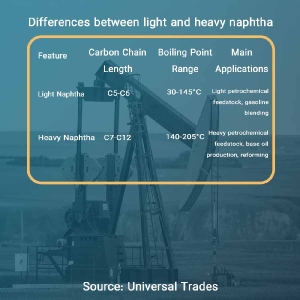
C5–C6 | 30–120°C | Petrochemical feedstock for producing olefins such as ethylene and propylene, as well as light gasoline components |
Heavy Naphtha |
C7–C12 | 120–200°C | Feedstock for catalytic reforming to produce aromatics and high-octane gasoline components |
Full-Range Naphtha |
C5–C12 | 30–200°C | Refinery feedstock that can be split into light and heavy fractions or processed further |
The main difference between naphtha types lies in their carbon-chain length, boiling point, and hydrocarbon composition. As a result, light naphtha is mainly used in petrochemical steam crackers, while heavy naphtha is more suitable for refinery processes such as catalytic reforming.
Other Classifications of Naphtha:
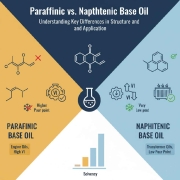
In addition to the main classification based on molecular weight and boiling point, naphtha can also be categorized based on its dominant chemical composition (paraffinic, naphthenic, aromatic) and its end-use (such as solvent naphthas with specific boiling point ranges). Industrial standards such as API and ASTM have also defined numerous specifications and test methods for different types of naphtha, ensuring the quality and consistency of this product in trade and industry.
Diverse Applications of Naphtha in Various Industries:
- Petrochemical Industry: Naphtha is used as the main feedstock in steam cracking units to produce ethylene and propylene, which are raw materials for the production of polymers, synthetic fibers, and other chemical materials.
- Fuel Industry: Naphtha is used as feedstock for catalytic reforming units to produce high-octane gasoline and as a blending component in the formulation of gasoline and jet fuel.
- Solvent Industry: Various types of naphtha with different boiling point ranges are used as industrial solvents in the production of paints, coatings, adhesives, and cleaning agents. VM&P (Varnish Makers’ and Painters’) naphtha is an example of this category.
- Other Applications: In specific applications, naphtha is used as fuel in camping stoves and lanterns (referred to as “white gas”), lighter fluid, and as a diluent in the tar sands mining industry.

The Relationship Between Naphtha and Other Petroleum Products:
In the production chain of petroleum products, naphtha occupies a position between lighter cuts such as liquefied petroleum gas and heavier cuts such as kerosene and diesel fuel. In the refining process, naphtha is extracted as an intermediate component and then undergoes various conversion processes based on its type and end-use, becoming products such as gasoline, solvents, and petrochemical feedstock. In contrast, heavier products like bitumen and base oils are obtained from heavier crude oil cuts after the removal of naphtha, although in some cases, naphtha can also act as a solvent or raw material in the production of these products.
Specialized Articles on Naphtha
Key differences and industrial applications of naphtha and kerosene.
An in‑depth examination of two important industrial substances, their applications, and characteristics.
Understanding the key differences in these hydrocarbons and their respective applications and uses.
Comprehending the key distinctions between naphtha and gasoline and their applications.
Light Naphtha vs. Heavy Naphtha
Key differences and industrial applications of light and heavy naphtha.
Industries that consume naphtha and its role in the petrochemical industry.
Safety and Handling of Naphtha
Naphtha is a highly flammable and volatile liquid that must be handled with strict safety precautions.
- Highly flammable: Vapors can ignite easily in air.
- Toxic and irritating vapors: Inhalation may cause dizziness, headaches, and respiratory irritation.
- Skin contact: May cause dryness and skin irritation.
- Safety requirements: Use only in well-ventilated areas and keep away from sparks and open flames.
- Protective equipment: Wear chemical-resistant gloves, safety goggles, and follow the Material Safety Data Sheet (SDS).
Conclusion: The Strategic Importance of Naphtha
In conclusion, naphtha, as a versatile hydrocarbon fraction, plays a significant role in the oil, petrochemical, and other related industries. Its unique physical and chemical properties allow it to be used as a raw material, solvent, and component of various fuels. Therefore, naphtha is considered a vital intermediate in the value chain of the oil and chemical industries, and its stable supply is of strategic importance.
Frequently Asked Questions (FAQ)
1. Is naphtha the same as gasoline?
No. Naphtha is a refinery intermediate or feedstock, while gasoline is a finished fuel blended with additives and specifically formulated for internal combustion engines.
2. Is naphtha harmful to health?
Yes. Naphtha vapors can be toxic and irritating, and the liquid is highly flammable. It should always be used in well-ventilated areas with proper safety precautions.
3. What is the chemical formula of naphtha?
Naphtha does not have a single chemical formula because it is not a pure compound. It is a mixture of hydrocarbons, typically ranging from C5 to C12, including paraffins, naphthenes, and aromatics.







What is Naphtha and what is its position in the crude oil refining process? Also, what are the main differences between light naphtha and heavy naphtha?
Thank you for your careful reading of the article. Here is the answer to your question:
Naphtha, often known as light gasoline or petroleum solvent, is a liquid hydrocarbon cut obtained from the fractional distillation of crude oil in refineries. This substance typically boils in the temperature range of 30 to 200 degrees Celsius and consists of hydrocarbons with 5 to 12 carbon atoms.
Naphtha’s Position in the Crude Oil Refining Process:
In the atmospheric distillation process of crude oil, naphtha is recovered as an intermediate cut between lighter gases (like LPG) and heavier cuts (such as kerosene and diesel) in the distillation tower. This position means that naphtha typically constitutes about 15 to 30 percent of the crude oil composition and serves as a key intermediate material for producing higher value-added products in the petrochemical and fuel industries.
Main Differences Between Light Naphtha and Heavy Naphtha:
Light Naphtha:
Characteristics: Consists of hydrocarbons with 5 to 6 carbon atoms and has a lower boiling point (typically 30 to 145 degrees Celsius).
Chemical Composition: Rich in paraffinic hydrocarbons (straight or branched chain structures).
Applications: Primarily used as feedstock in petrochemical units for producing light olefins like ethylene and propylene, as a solvent in the paint and printing industries, a blending component in gasoline, and feedstock for isomerization units.
Heavy Naphtha:
Characteristics: Consists of hydrocarbons with 7 to 12 carbon atoms and has a higher boiling point (typically 140 to 205 degrees Celsius).
Chemical Composition: Rich in naphthenic hydrocarbons (saturated cyclic structures).
Applications: Primarily used as main feedstock for catalytic reforming units to produce high-octane gasoline components (like aromatics), and for producing low-sulfur petroleum cuts for jet fuel.
Since Naphtha is an intermediate cut, how significant is the price difference between Light Naphtha (used for petchem feed) and Heavy Naphtha (used for gasoline reforming)? Does one trade more actively than the other?
Light Naphtha generally commands a premium because it’s the primary feedstock for steam crackers (producing high-value ethylene and propylene). Its price often correlates more closely with petrochemical demand than crude oil or gasoline. Heavy Naphtha pricing is typically tied more to gasoline margins and the economics of the catalytic reformer.
Отличная статья, очень подробно освещает типы и применение нафты в промышленности! У меня возник вопрос по медицинскому применению производных нефти. В тексте упоминается использование нафты как растворителя, но я также встречал информацию о ее применении в медицине, в частности, о препарате под названием “Нафталан”. Он, если я не ошибаюсь, производится из очищенной нефти и используется для лечения кожных заболеваний. Не могли бы вы подробнее рассказать, является ли этот медицинский препарат производным от одного из описанных вами типов нафты (легкой или тяжелой) и какой процесс очистки для этого требуется? Для справки, я нашел описание этого препарата здесь: . Буду очень признателен за разъяснение этого момента, так как это соединяет технические аспекты с практическим применением в совершенно другой области.
Нафталан производится из Нафталанской нефти — уникального вида сырой нефти, который добывается исключительно в регионе Нафталан в Азербайджане.
Everyone loves what you guys are usually up too.
This type of clever work and exposure! Keep up
the very good works guys I’ve added you guys to our blogroll.