
Oil Price Forecast 2026: Key Factors Shaping the Global Market

The global energy landscape is a dynamic tapestry woven with geopolitical tensions, technological advancements, and evolving demand patterns. For stakeholders across the oil and gas industry, from producers and refiners to investors and consumers, understanding the trajectory of crude oil prices is paramount. As we look ahead to 2026 and beyond, a confluence of powerful forces will dictate the ebb and flow of this critical commodity.
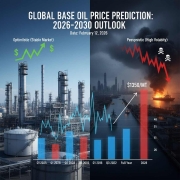
This article delves into the intricate factors influencing oil prices, offering a comprehensive forecast for 2026, 2027, and even a glimpse into 2030, complete with actionable insights and an easy-to-digest price projection chart.
The Crystal Ball: Our Oil Price Projections
Predicting oil prices with absolute certainty is an elusive goal, akin to navigating a ship through uncharted waters. However, by analyzing historical trends and projected influences, we can establish a plausible range. Our forecast considers a range of scenarios, from conservative to optimistic, reflecting the inherent uncertainties of the market.
Oil Price Forecast (Brent Crude – USD/Barrel)
Key Factors Shaping Oil Prices: A Deeper Dive
Understanding the drivers behind these numbers is crucial. Here’s a breakdown of the primary factors and their potential impact:
1. Global Economic Growth & Demand
The health of the global economy is arguably the most significant determinant of oil demand. A robust global GDP generally translates to increased industrial activity, higher transportation needs, and greater consumer spending, all of which boost oil consumption.
-
Impact:
-
Increasing Growth: Higher demand, pushing prices up.
-
Decreasing Growth (Recession): Lower demand, pulling prices down.
-
-
Internal Link: To understand where this demand primarily originates, explore our article on the Top 10 Oil Consuming Countries 2026.
2. Geopolitical Stability & Supply Disruptions
The oil market is notoriously sensitive to geopolitical events. Conflicts, political instability in major producing regions, and trade disputes can directly impact supply lines, causing immediate price spikes.
-
Impact:
-
Instability/Disruptions: Reduced supply, driving prices up.
-
Stability/Resolution of Conflicts: Stable supply, tending to keep prices down or stable.
-
-
Internal Link: For context on where these disruptions might originate, see our analysis of the Top 10 Oil Producers in the World.
3. OPEC+ Production Policies
The Organization of the Petroleum Exporting Countries (OPEC) and its allies (OPEC+), led by Saudi Arabia and Russia, collectively control a significant portion of global oil supply. Their decisions on production quotas can swiftly alter market dynamics.
-
Impact:
-
Production Cuts: Reduced supply, pushing prices up.
-
Production Increases: Higher supply, pulling prices down.
-
4. U.S. Shale Oil Production
The rise of U.S. shale oil production revolutionized the global oil market, establishing the United States as a swing producer. The cost-effectiveness and speed of ramping up or down shale output make it a crucial counter-balance to OPEC+ actions.
-
Impact:
-
Increased Shale Production: Higher supply, tending to pull prices down.
-
Decreased Shale Production: Lower supply, allowing prices to move up.
-
5. Strategic Petroleum Reserves (SPRs) Releases
Major consuming nations, particularly the United States, maintain Strategic Petroleum Reserves. Releases from these reserves can be used to temper price spikes or address significant supply shortfalls.
-
Impact:
-
SPR Releases: Increased immediate supply, exerting downward pressure on prices down.
-
SPR Replenishment: Increased demand for crude, potentially pushing prices up.
-
6. Inventory Levels
Global crude oil and product inventories provide a snapshot of the supply-demand balance. High inventories often signal oversupply and tend to depress prices, while low inventories indicate tightening markets and can support higher prices.
-
Impact:
-
High Inventories: Oversupply indication, pushing prices down.
-
Low Inventories: Tight market indication, pushing prices up.
-
7. Energy Transition & Renewable Adoption
The accelerating global energy transition, driven by climate change concerns and technological advancements in renewables, introduces a structural shift in long-term oil demand. While oil will remain vital for decades, the pace of this transition will influence future demand growth.
-
Impact:
-
Rapid Renewable Adoption: Slower oil demand growth in the long term, potentially capping price increases down.
-
Slow Renewable Adoption: Stronger long-term oil demand, allowing prices to remain robust up.
-
-
Internal Link: To understand the fundamental base of oil availability, review our article on the Top 10 Countries by Oil Reserves 2026.
8. Refining Margins & Product Demand
The demand for specific refined products (gasoline, diesel, jet fuel, naphtha, bitumen, etc.) and the profitability of converting crude oil into these products (refining margins) also influence crude prices. If refineries are struggling with low margins or weak product demand, they will reduce crude purchases, putting downward pressure on crude prices.
-
Impact:
-
Strong Refining Margins/Product Demand: Higher crude demand from refiners, pushing prices up.
-
Weak Refining Margins/Product Demand: Lower crude demand from refiners, pulling prices down.
-
-
Internal Links: Dive deeper into specific product markets with our articles like Top 10 Diesel Supplying Countries, and Top 10 Bitumen Producing Countries in the World in 2026. For a broader overview, check out our resource introducing various Oil Products.
Conclusion: Navigating the Volatile Seas
The oil market will continue to be a fascinating interplay of forces in 2026 and beyond. While short-term volatility is almost guaranteed due to geopolitical shifts and economic cycles, the long-term trend will increasingly be influenced by the pace of the global energy transition. For market participants, a keen eye on global economic indicators, OPEC+ communications, and developments in key producing regions will be essential for making informed decisions.
Stay tuned to our analyses as we continue to monitor these critical factors, providing you with the most up-to-date insights into the world of oil and gas.
Disclaimer: The information provided in this article is for general informational purposes only and does not constitute financial or investment advice. Readers are encouraged to conduct their own due diligence and consult with financial professionals before making any investment decisions.








One thing to keep in mind is that while demand is expected to grow, the pace of the energy transition could have a big impact on long-term pricing. How quickly the world moves towards renewables could reshape the market.
A really good blog and me back again.