
Bitumen Packaging Guide: New Steel Drums, Jumbo Bags, or Bulk?
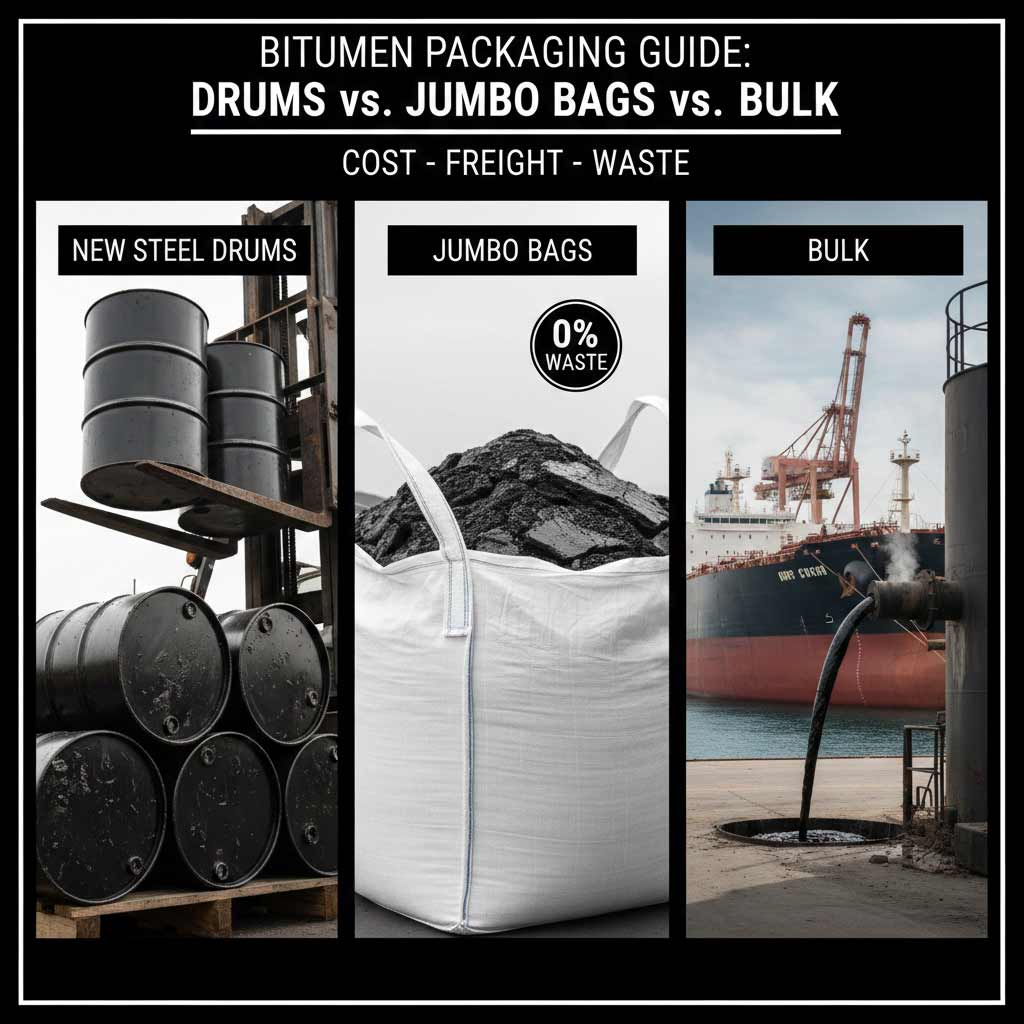
When purchasing bitumen, the price per ton is only half the story. For a savvy importer, the real challenge lies in logistics. The choice between New Steel Drums, Jumbo Bags, or Bulk can fluctuate your final project cost by up to 20% due to ocean freight, heating costs, and product wastage.
In this comprehensive guide, we break down the pros and cons of each packaging type to help you determine the most cost-effective solution for your specific destination.
1. New Steel Drums: The Gold Standard for Safety
Steel drums remain the most traditional and widely used method for transporting refinery bitumen and blown bitumen (oxidized bitumen). They are particularly favored in regions with limited specialized discharge infrastructure.
-
Weight Options: Typically 150kg, 180kg, or 200kg.
-
Best For: Small to medium projects, long-term storage in hot climates, and regions without bitu-tainer facilities.
-
Pros: High structural integrity; protects against UV and moisture; easy to handle with standard forklifts.
-
Cons: Most expensive packaging (steel prices are high); significant wastage (3-5%) as bitumen sticks to the inner walls.
2. Jumbo Bags (Bitu-Bags): The Economical & Eco-Friendly Choice
Jumbo bags are flexible, multi-layer bags (usually 1,000kg to 1,300kg) that have revolutionized the trade of natural bitumen and paving grades.
-
The “Zero Waste” Advantage: Unlike drums, the inner liner of a jumbo bag melts along with the bitumen in the decanter, resulting in 0% wastage.
-
Best For: Large-scale road construction and environmentally conscious projects.
-
Pros: Lower freight costs per ton compared to drums; 100% consumable; lower carbon footprint.
-
Cons: Requires a “Bag Melter” or specialized decanter at the destination; prone to deformation if stacked incorrectly in high temperatures.
3. Bulk Bitumen: For Massive Infrastructure
Bulk shipping involves transporting liquid bitumen in specialized tankers or Bitutainers. This method bypasses packaging entirely but requires sophisticated port infrastructure.
-
Best For: Massive national highway projects near major ports.
-
Pros: Lowest price per ton for the material itself; no packaging disposal issues.
-
Cons: Extremely high Freight (Ocean & Land) costs for small volumes; requires constant heating (consuming energy) to keep the bitumen liquid.
Comparison Table: Cost, Freight, and Wastage
To make the best decision, compare these factors side-by-side:
| Feature | New Steel Drums | Jumbo Bags (1MT) | Bulk Bitumen |
| Packaging Cost | High (Expensive Steel) | Medium (Polyproplyene) | Zero |
| Transport (Freight) | Expensive (Heavy Tare) | Efficient (Max Loading) | Lowest (High Volume) |
| Wastage (Leftover) | 3% – 5% (Significant) | 0% (Meltable) | 1% – 2% (Vessel heel) |
| Storage Requirement | Simple / Outdoors | Specialized / Sheltered | Heated Tanks |
| Safety/Leakage | High Resistance | High (if 3-layered) | Moderate |
Which Packaging is Right for Your Product?
The chemical nature of the product often dictates the packaging. For example:
-
Cutback Bitumen and Emulsion Bitumen are often shipped in drums or IBC tanks due to their liquid/volatile nature.
-
High-viscosity products like Base Oil or heavy Petroleum Products might share similar drum logistics.
-
Standard paving grades from a Bitumen Refinery can be shipped in any of the three, but Jumbo Bags are currently the market trend for cost-saving.
Summary: How to Choose?
Choose Steel Drums if you lack specialized melting equipment or need to store bitumen for more than 12 months.
Choose Jumbo Bags if you want the best type of bitumen delivery for ROI, as you save on both material waste and initial packaging costs.
Choose Bulk only if you are importing 5,000+ tons and have a heated terminal at the destination port.
Frequently Asked Questions (FAQ)
Q: Is it true that Jumbo Bags are cheaper than Drums?
A: Yes. Because polypropylene is cheaper than cold-rolled steel, the initial cost of a Jumbo Bag is significantly lower. Additionally, you can fit more bitumen in a 20ft container using bags than drums, reducing your per-ton freight.
Q: Which packaging is best for the environment?
A: Jumbo bags are considered more sustainable because they eliminate “drum graveyard” issues and the inner liner is fully consumed during the bitumen production process at the job site.
Q: Can I ship Gasoline, Kerosene, or Diesel in Bitumen Jumbo bags?
A: No. Jumbo bags are specifically designed for solid or highly viscous products like bitumen. Light fuels require specialized ISO tanks or steel barrels.





Great breakdown of the packaging types. We are considering switching from drums to Jumbo Bags for a 10,000-ton project in East Africa. However, we’re concerned about the initial investment in a Bag Melter (Decanter). Based on your experience at Universal Trades, what is the typical “break-even point” where the savings on bitumen wastage (3-5%) and lower freight cover the cost of the melting equipment?
Hello Kevin. That’s a classic procurement calculation. Usually, for projects exceeding 3,000 to 5,000 tons, the 3-5% saving on product “wastage” alone—combined with the reduction in Tare Weight freight costs—covers the cost of a standard high-speed decanter within the first year. Moreover, you eliminate the labor cost of cleaning and disposing of thousands of empty steel drums, which is a major hidden expense in traditional logistics.