
Top 10 Countries with the Largest Oil Reserves in 2026: The World Energy Map
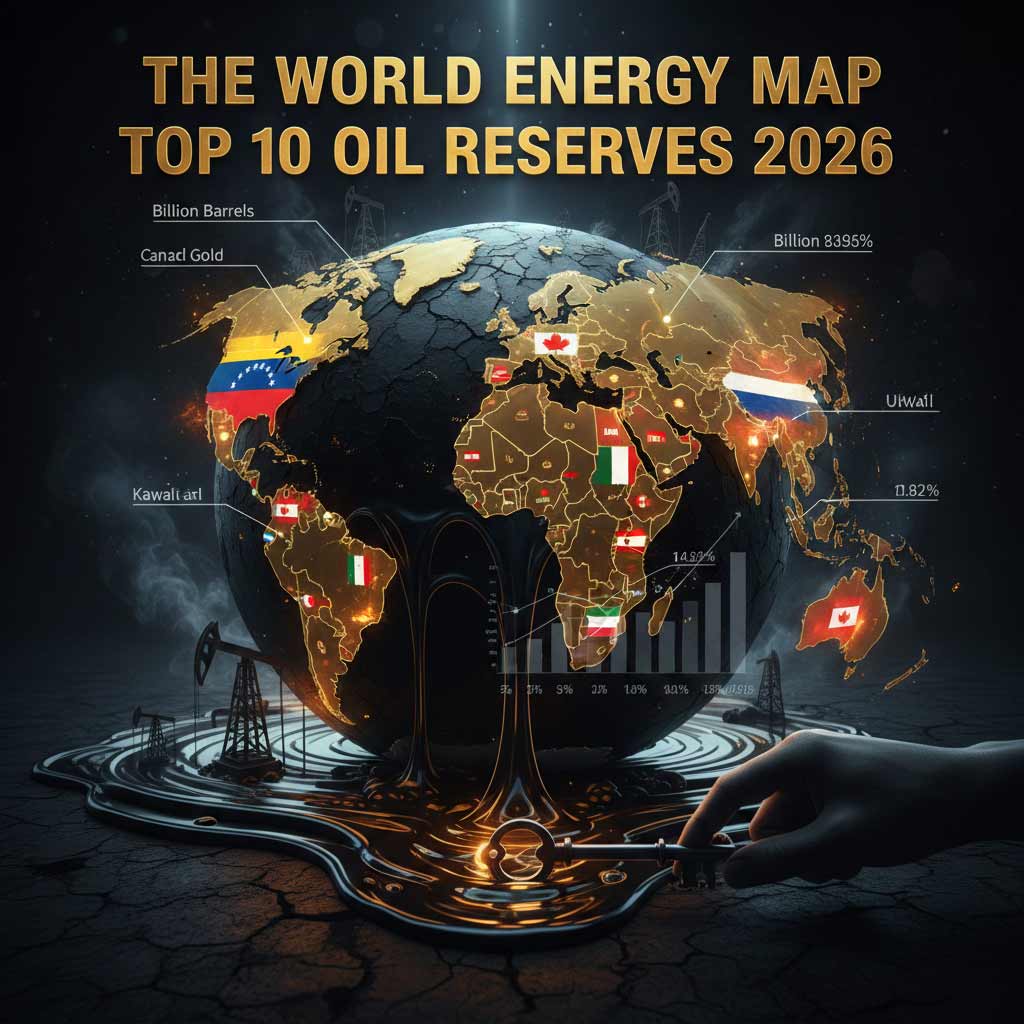
Proven oil reserves remain one of the most important indicators of energy power in the global economy. In this article, we examine the top 10 countries with the largest proven oil reserves in 2026 based on data reported by major international energy sources. We also explain why reserve estimates may vary across sources, what factors influence the ability to extract these resources, and how each of these countries shapes the global oil market and energy landscape.
Below, we explore the top 10 countries that hold the keys to the world’s most significant proven oil reserves as of 2026.
Top 10 Countries by Oil Reserves (2026 Update)
| Rank | Country | Reserves (Billion Barrels) | Global Share | Daily Production (Million b/d) | Years Remaining (R/P) |
|---|---|---|---|---|---|
| 1 | Venezuela | 303.2 | 19.4% | 0.8 | 1030+ |
| 2 | Saudi Arabia | 267.2 | 17.1% | 9.5 | 77 |
| 3 | Iran | 208.6 | 13.3% | 3.3 | 173 |
| 4 | Canada | 163.0 | 10.4% | 4.8 | 93 |
| 5 | Iraq | 145.0 | 9.3% | 4.3 | 92 |
| 6 | UAE | 113.0 | 7.2% | 3.2 | 96 |
| 7 | Kuwait | 101.5 | 6.5% | 2.5 | 111 |
| 8 | Russia | 80.0 | 5.1% | 10.0 | 21 |
| 9 | Libya | 48.4 | 3.1% | 1.2 | 110 |
| 10 | United States | 45.1 | 2.9% | 13.0 | 9 |
Production figures are estimated averages, and the “Years Remaining” column is calculated using a simplified formula: reserves ÷ annual production.
Differences in reserve estimates across sources are mainly due to varying reserve definitions, inclusion of oil sands or shale oil, oil price changes, extraction technology, and domestic policies.

1. Venezuela
Venezuela continues to sit atop the global list with approximately 303 billion barrels. The majority of these reserves are found in the Orinoco Belt, containing extra-heavy crude.
-
The Paradox of Wealth: Despite having the world’s largest reserves, Venezuela’s production remains a fraction of its potential.
-
Political Shifts: Recent geopolitical shifts in early 2026, including major leadership transitions and the potential for eased international pressure, have put these reserves back in the global spotlight.
-
Key Detail: Venezuela’s oil is thick and difficult to refine, requiring specialized technology and significant investment to process.
2. Saudi Arabia
The powerhouse of the Middle East holds roughly 267 billion barrels. Unlike Venezuela, Saudi Arabia’s reserves are among the easiest and cheapest to extract globally.
-
Swing Producer: The Kingdom remains the primary “swing producer” of OPEC+, capable of increasing or decreasing production rapidly to stabilize global prices.
-
Vision 2030: While it has the oil, the country is aggressively using its profits to diversify its economy away from petroleum.
-
Link: As a massive exporter, it often tops the list of the Largest Oil Producing Countries in 2026.
3. Iran
Iran possesses around 209 billion barrels of proven reserves. Its geography provides a strategic advantage with vast onshore and offshore fields.
-
The Sanction Stagnation: Much like Venezuela, Iran has struggled to monetize its underground wealth. Due to ongoing sanctions and underinvestment in aging infrastructure, the country cannot pump at its full capacity.
-
Natural Gas Giant: Beyond oil, Iran also holds some of the world’s largest natural gas reserves, making it a dual-energy titan.
4. Canada
Holding approximately 163 billion barrels, Canada is the only North American country in the top five.
-
Oil Sands: About 97% of Canada’s reserves are in the form of oil sands in Alberta.
-
Environmental Scrutiny: Extraction from oil sands is more carbon-intensive than traditional drilling, leading to constant tension between energy production and climate goals.
-
Market Flow: Most of this oil is destined for the U.S., making Canada a vital partner for the Largest Oil Consuming Countries in 2026.
5. Iraq
Iraq’s reserves stand at 145 billion barrels. The country has a remarkably low cost of production, similar to its neighbor, Saudi Arabia.
-
Untapped Potential: Many of Iraq’s oil fields remain under-explored or under-developed due to decades of conflict and political instability.
-
Economic Dependence: Oil exports account for more than 90% of the Iraqi government’s revenue.
6. United Arab Emirates (UAE)
The UAE holds roughly 113 billion barrels. It has been one of the most proactive nations in modernizing its energy sector.
-
Technology First: The UAE is a leader in using AI and advanced carbon capture technologies within its oil fields.
-
Murban Crude: Its “Murban” crude is a global benchmark, known for being light and sweet (low sulfur).
7. Kuwait
Kuwait sits on 102 billion barrels, a staggering amount for a country of its physical size.
-
Greater Burgan: The Burgan field in Kuwait is the second-largest oil field in the world.
-
Sovereign Wealth: The profits from these reserves are funneled into one of the world’s oldest and largest sovereign wealth funds.
8. Russia
Russia maintains proven reserves of about 80 billion barrels. However, many experts believe its “recoverable” resources in the Arctic could be much higher.
-
Sanction Impact: In 2026, Russia continues to navigate a complex trade environment, shifting its exports toward Asian markets like China and India.
-
Gasoline & Diesel: Russia remains a critical refiner. You can read more about gasoline and read more about diesel to see how these reserves reach your tank.
9. Libya
Libya holds 48 billion barrels, the largest reserves on the African continent.
-
High Quality: Libyan oil is prized because it is “sweet” and easy to process into fuels like kerosene.
-
Volatility: Production often fluctuates due to internal civil unrest, making it one of the most unpredictable players in the market.
10. United States
The U.S. closes the top 10 with approximately 45 billion barrels of proven reserves.
-
Production vs. Reserves: While it ranks 10th in reserves, the U.S. is the world’s top producer due to advanced hydraulic fracturing (fracking) technology.
-
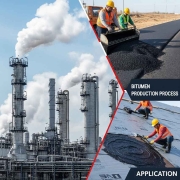
Bitumen & Heavy Oil: While known for light shale, the U.S. also processes significant amounts of heavy oil and bitumen from its neighbors.
Global Oil Reserves by Region (Approximate Totals)
| Region | Total Oil Reserves |
|---|---|
| OPEC Countries | ~1,240 Billion Barrels |
| Middle East | ~855 Billion Barrels |
| World Total | ~1,565 Billion Barrels |
Large Oil Reserves Do Not Always Mean Higher Production
Having large oil reserves does not necessarily mean a country produces more oil every day. Reserves only show the amount of oil that may be economically extracted, while actual production depends on factors such as extraction technology, investment, production costs, energy infrastructure, sanctions, and political stability.
This is why countries like Venezuela and Iran rank very high in proven reserves, yet their daily output can be lower than that of some other producers. By contrast, the United States has smaller reserves than several major oil-rich countries, but advanced technology, strong investment, and shale oil development allow it to maintain very high production levels.
Conclusion
Global oil reserves are concentrated in a limited number of countries, giving them an important role in the future of the energy market. However, large reserves alone do not necessarily translate into higher production or immediate market influence, as actual output depends on technology, investment, infrastructure, extraction costs, and political stability.
Therefore, a proper analysis of the oil market should look beyond reserve size. Understanding the difference between oil reserves, daily production, and market influence is essential to explain why some countries with massive reserves produce relatively less, while others with smaller reserves play a stronger role in global oil supply.
Related Articles
- Largest Oil Producing Countries: A quick overview of countries with the highest crude oil production.
- Largest Oil Consuming Countries: Countries that account for the largest share of global oil demand.
- Countries with the Largest Oil Refining Capacity: Nations operating the world’s biggest oil refining capacity.
- Top Gas and Oil Companies: Companies operating the world’s biggest oil refining capacity.
- Countries with the Highest Gasoline Production: Leading countries in global gasoline production.
- Top Gasoline Exporting Countries: Major exporters supplying gasoline to global markets.
- Countries with the Highest Diesel Production: Countries producing the largest volumes of diesel fuel.
- Top Diesel Exporting Countries: Leading exporters of diesel in international trade.
Frequently Asked Questions About Global Oil Reserves
Which country has the largest oil reserves in the world?
Venezuela has the largest proven oil reserves in the world, with around 303.2 billion barrels of oil.
What is Iran’s rank in global oil reserves?
Iran usually ranks third in the world in proven oil reserves, with approximately 208.6 billion barrels, after Venezuela and Saudi Arabia.
Why do oil reserve estimates differ between sources?
Oil reserve figures vary because sources may use different definitions, include or exclude oil sands and shale oil, and apply different assumptions about prices, technology, and national reporting methods.
What is the difference between proven and probable oil reserves?
Proven reserves refer to oil that can be economically extracted using current technology and market conditions, while probable reserves have a lower level of technical or economic certainty.
Do the largest oil reserves mean the highest oil production?
No. Oil production depends not only on reserves, but also on technology, investment, infrastructure, extraction costs, sanctions, and political stability.
What share of global oil reserves does OPEC hold?
OPEC countries hold a major share of the world’s proven oil reserves, commonly estimated at around 80% of global reserves.
Global Petroleum Trade Solutions | Universal Trades
As a reputable international petroleum trading enterprise, Universal Trades specializes in the reliable procurement, export, and supply chain management of high-grade petroleum commodities, refined fuels, and industrial feedstocks designed to meet rigorous global standards.







Venezuela’s massive oil reserves are impressive, but it’s fascinating how political and economic challenges have kept production far below potential. It’s a perfect example of how resource wealth doesn’t always translate to economic power.